
Ingredients
Rice Water for Skin: The Ancient Ingredient Science Actually Backs
Rice water has been a beauty staple for centuries. Here's what the research actually says about ferulic acid, inositol, and whether it's worth the hype.
Disclosure — This article may contain affiliate links. We earn a small commission at no extra cost to you when you purchase through our links. This supports our ability to create independent, evidence-based skincare content.
My grandmother kept a bowl of rice water on her bathroom shelf. Not for a reason she could explain scientifically — it was just what you did. Soak the rice, save the water, use it on your face. I thought it was charmingly old-fashioned until I started reading the actual research and realized she was onto something real.
Rice water has been a skincare staple across East and South Asia for centuries. Japanese court ladies in the Heian period famously attributed their long, lustrous hair to it. Korean women in the Joseon dynasty used it as a rinse. Now it’s showing up in essences, toners, and serums at every price point, and the claims have gotten considerably bolder: antioxidant protection, brightening, barrier support, anti-aging.
Some of those claims hold up. Some don’t. Here’s what’s actually going on.
What Rice Water Actually Contains
Before we get into what it does, let’s talk about what’s in it. Plain rice water — the starchy liquid left after soaking or cooking rice — is mostly water. But the interesting stuff is in that remaining fraction.
Ferulic acid is the big one. It’s a plant-based polyphenol and antioxidant that you’ve probably already heard about in the context of vitamin C serums (it’s one reason SkinCeuticals C E Ferulic commands $185 a bottle). In rice, ferulic acid is concentrated in the bran layer and leaches into the soaking water. It neutralizes free radicals and has some evidence for reducing UV-induced skin damage.
Inositol is the sleeper ingredient here. It’s a carbohydrate that naturally occurs in rice water and has real data behind it for skin hydration and barrier function. Some research suggests it helps skin cells retain moisture — not dramatically, but measurably.
Allantoin shows up in smaller amounts. If you’ve been using centella asiatica products, you already know allantoin as a soothing, skin-softening compound. It’s part of why rice water has traditionally been used on sensitive and irritated skin.
Then there are the starches, amino acids, and trace minerals. These are harder to pin down in terms of skin benefit, but they contribute to the slightly silky texture that makes rice water feel like something is happening when you apply it.
Fermented vs. Plain: A Real Difference
If you’ve ever looked at SK-II’s ingredient list, you’ll see “Galactomyces Ferment Filtrate” listed near the top. That’s not technically rice water, but it’s born from a similar tradition — fermented rice derivatives. The fermentation process matters because it breaks down larger molecules into smaller ones, potentially improving absorption, and it generates new bioactive compounds in the process.
Plain rice water, by contrast, contains larger molecules that may not penetrate as effectively. Fermented rice water sits somewhere in the middle — the fermentation partly solves the absorption problem. If you’re making your own at home, letting your rice water sit at room temperature for 24-48 hours (until it smells slightly sour) gets you there. Just don’t go past 48 hours or you’re in soup territory.
For a broader look at how fermentation changes skincare efficacy, this guide to fermented skincare is worth a read.
What the Evidence Actually Supports
Let’s be honest about the research landscape here. Most of the studies on rice water and rice bran extract are small, in-vitro (meaning done in a lab dish, not on actual humans), or funded by cosmetic companies with a stake in the results. That doesn’t mean they’re wrong — it just means we should hold the conclusions lightly.
Brightening: Plausible, With Caveats
Rice bran extract has shown inhibition of tyrosinase, the enzyme that triggers melanin production. That’s the same mechanism that niacinamide and kojic acid work through. The ferulic acid content also contributes to this via antioxidant activity — free radicals are one of the drivers of uneven pigmentation.
But here’s the honest caveat: the brightening evidence for rice water specifically (as opposed to isolated rice bran extract or purified ferulic acid) is thin. The concentrations of active compounds in a DIY rice water rinse are going to be much lower than in a standardized cosmetic extract. You’re not going to get dramatic dark spot correction from washing your face with rice water. You might get a gentle cumulative glow. Those are different things.
Barrier Support: Better Evidence
This is actually where rice water looks most promising. Inositol and the amino acid content have some decent evidence for supporting barrier function. A small 2002 study found that bath water supplemented with rice starch improved barrier function in people with atopic dermatitis. The sample was tiny, but the mechanism makes sense — these compounds help the skin hold onto moisture and reinforce the protective lipid layer.
If you’re dealing with a compromised barrier, a gentle rice water toner isn’t going to fix it the way ceramides will, but it’s unlikely to make things worse and may genuinely support recovery.
Antioxidant Protection: Real, But Dependent on Formulation
Ferulic acid is genuinely one of the better-studied topical antioxidants. The problem is that its concentration in plain rice water is low and variable, and ferulic acid oxidizes. By the time your home-brewed rice water has been sitting in a jar for three days, who knows what’s actually active.
Commercially formulated products get around this with stabilization and standardized concentrations. If antioxidant protection is the goal, you’re better served by a properly formulated serum — though rice water can still contribute something in that direction as part of a toner or essence. For the bigger picture on antioxidants beyond vitamin C, this guide covers the field well.
How to Actually Use It
The DIY Route
Rinse about half a cup of white rice (jasmine and white short-grain rice seem to have higher ferulic acid content than brown rice, which is counterintuitive but consistent across a few studies). Soak in two cups of water for 15-30 minutes. Strain. That’s your rice water.
Use it as a toner — soak a cotton pad and swipe it over clean skin, or just press it in with your hands. Let it dry completely before applying anything else. The starch can create a slight film that interferes with absorption if you layer too quickly.
For fermented rice water: same process, but leave the liquid covered at room temperature for 24-48 hours before using. Refrigerate it after that and use within a week. Yes, it will smell a bit. That’s the fermentation working.
What to Look for in Products
If you’d rather skip the DIY project, look for rice water, rice bran extract, or Oryza Sativa (rice) bran water in the ingredient list. Where it appears matters — higher up means a higher concentration. A product where it’s listed 18th, sandwiched between fragrance and phenoxyethanol, is not really a rice water product in any meaningful sense.
Essences and toners are the most natural format for rice water actives, given the watery texture. It also turns up in cleansers (rinsed off, so limited contact time) and sheet masks (reasonable for a single-use hit of hydration).
What Rice Water Won’t Do
A few claims circulating online deserve a reality check.
It won’t replace sunscreen. There are posts suggesting rice water’s antioxidant content means you need less SPF. No. That’s not how sun protection works. Antioxidants neutralize some free radical damage after it’s occurred; they don’t block UV radiation at the source. Wear your sunscreen.
It won’t reverse significant hyperpigmentation on its own. If you have stubborn dark spots from acne or sun damage, rice water as a standalone isn’t going to do it. You need something with more clinical evidence — tranexamic acid, niacinamide, or azelaic acid. Rice water can complement those, not replace them.
It’s not a replacement for a real moisturizer. Inositol helps with hydration, but rice water is largely water. It evaporates. Use it as a hydration step, then follow with something that actually seals moisture in.
Product Options Worth Knowing
If you want to try a fermented rice-adjacent product with real research behind it, SK-II’s Facial Treatment Essence has decades of use data and one of the more studied ferment extracts in the category. It’s not cheap.
SK-II Facial Treatment Essence
SK-II
$99
★★★★½
If brightening is your main goal and you want something that pairs well with a rice water toner, Kiehl’s Clearly Corrective uses a brightening complex that works through a similar tyrosinase-inhibition pathway.
Kiehl's Clearly Corrective Dark Spot Solution
Kiehl's
$57
★★★★☆
If you’re interested in the oil-based side of brightening — combining antioxidant support with a vitamin C treatment in one step — the Kerala Botanics Ayurvedic Vitamin C Face Oil uses a stabilized form of vitamin C that stays active in skin cells significantly longer than standard L-ascorbic acid, alongside bakuchiol. It’s a different format from rice water entirely, but the underlying goal (antioxidant support, brightening, simplified routine) overlaps. Worth considering if you want something that covers more ground in fewer steps.
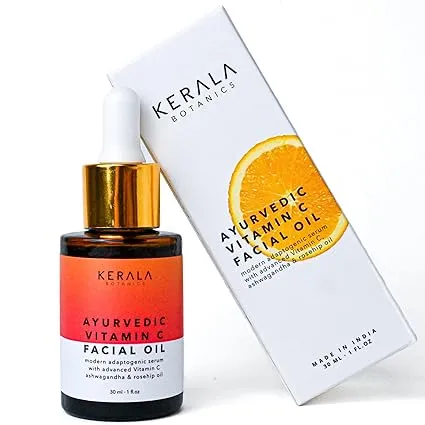
Ayurvedic Vitamin C Face Oil
Kerala Botanics
$49
★★★★☆
Putting It All Together
Rice water is one of the few “ancient remedies” that has actual chemistry behind it — ferulic acid, inositol, allantoin — and not just cultural longevity. Your grandmother wasn’t wrong.
What it isn’t is a miracle. The evidence supports it as a gentle, real toner with mild brightening, soothing, and barrier-supporting properties. Fermented versions are more effective. DIY versions are inconsistent but inexpensive. Commercial formulations solve the stability problem but vary wildly in quality.
The best use case: add a rice water toner between your cleanser and the rest of your routine. Keep expectations calibrated. Don’t skip your vitamin C serum or niacinamide in favor of it. Let it do what it’s genuinely good at, which is being a light, nourishing prep step that happens to have real science in its corner.
For an ingredient with roughly 1,000 years of empirical data and a growing body of modern research, that’s actually a pretty solid recommendation.