
Ingredients
Sea Buckthorn Oil for Skin
Sea buckthorn oil for skin: what omega-7 and carotenoids actually do, fruit oil vs seed oil, and how to avoid the orange staining nobody warns you about.
Disclosure — This article may contain affiliate links. We earn a small commission at no extra cost to you when you purchase through our links. This supports our ability to create independent, evidence-based skincare content.
One of our testers woke up with a faint orange smudge on her cheek and a matching stain on a white pillowcase. The culprit was a “pure” sea buckthorn oil she’d applied the night before. Nobody had warned her. The bottle certainly didn’t.
Here’s what this guide covers. Sea buckthorn oil is a genuinely interesting ingredient, packed with carotenoids and a rare fatty acid called palmitoleic acid (omega-7). But the fruit oil and the seed oil are two different products, the evidence is thinner than the marketing suggests, and the color is a real practical problem. Get those three things straight and you can decide if it belongs on your face.
What Sea Buckthorn Oil Actually Is
Sea buckthorn (Hippophae rhamnoides) is a hardy shrub that grows across Europe and Asia. It produces tiny, tart, bright orange berries. Those berries have been used in Himalayan and Central Asian traditional medicine for centuries, and the oils pressed from them now show up in everything from balms to face oils.
The key word is “oils,” plural. The berry gives you two very different products, and brands often blur the line between them.
Fruit Oil vs Seed Oil: Not the Same Thing
This is the single most useful thing to know before you buy.
Fruit (pulp) oil
This one comes from the flesh of the berry. It’s thick, deep orange to red, and has a strong, slightly fermented, almost smoky smell. It’s where the carotenoids live, along with most of the omega-7 and vitamin E. It’s also the one that stains.
Seed oil
This one comes from the seeds. It’s pale yellow, thinner, and much milder. The fatty acid profile flips: you get more linoleic acid (omega-6) and alpha-linolenic acid (omega-3), with far less palmitoleic acid and far fewer carotenoids.
Think of it like orange juice versus orange zest oil. Same fruit, completely different behavior in the bottle.
| Fruit oil | Seed oil | |
|---|---|---|
| Color | Deep orange to red | Pale yellow |
| Main fatty acids | Palmitoleic (omega-7), palmitic | Linoleic, alpha-linolenic |
| Carotenoids | High | Low |
| Staining risk | High | Low |
| Feel | Rich, sticky | Lighter, silkier |
| Smell | Strong, earthy | Mild |
Check the label for “pulp oil,” “fruit oil,” or Hippophae rhamnoides fruit oil in the ingredient list. If it just says “sea buckthorn oil” and the liquid is pale, you’re probably holding seed oil. If it’s the color of a traffic cone, it’s fruit oil.
Action step: Decide what you want first. Want carotenoids and omega-7? Fruit oil. Want a gentler, lighter, non-staining oil? Seed oil.
The Omega-7 Question
Palmitoleic acid is a monounsaturated fat that’s naturally present in human sebum, and levels of it tend to decline as we age. That’s the origin of the “replenishing” pitch you’ll see on sea buckthorn labels.
The logic sounds neat. Skin loses it, so put it back. But skin biology rarely works as a refill station. What we can say with confidence is that omega-7-rich oils are emollients. They soften skin and slow water loss, much like other plant oils do. That’s useful, just not magic.
Most of the human research on sea buckthorn is on oral supplementation, not topical use. Small studies have looked at skin and mucous membrane hydration from eating the oil. Topical work is mostly lab studies, animal studies, and small trials on wound and burn healing. That’s promising, but it isn’t proof that rubbing it on your face will change your wrinkles.
So the honest take: it’s a nourishing oil with an interesting profile and early-stage evidence, not a proven anti-aging treatment.
Carotenoids: Antioxidants With a Catch
The orange color comes from carotenoids, including beta-carotene, lycopene, and zeaxanthin. These are antioxidants, which means they can neutralize free radicals that form when skin is exposed to UV light and pollution. If you want the broader picture on how they work, our guide on antioxidants beyond vitamin C is a good companion read, and astaxanthin is another carotenoid with a stronger research story.
Two things to keep straight.
Carotenoids are not sunscreen. Sea buckthorn is sometimes sold as “natural SPF,” and that claim doesn’t hold up. We covered the same problem with another orange botanical in the carrot seed oil SPF myth. An antioxidant can support your skin’s defenses. It can’t replace a proper broad-spectrum sunscreen.
Carotenoids “brighten” in a different way than vitamin C. More on that below, because it matters.
The Orange Staining Problem Nobody Warns You About
Here’s the part that rarely makes it onto product pages. Carotenoids are pigments. Fruit oil is a dye with skincare benefits, and it behaves like one.
What can happen:
- Skin tint. A faint yellow-orange cast, most visible on fair to light skin tones and in the creases around your nose and mouth. It tends to build up with repeated use.
- Fabric stains. Pillowcases, towels, collars, and sheets can pick up orange marks that don’t always wash out.
- Hand staining. Palms and fingertips can look tanned after application.
It’s not harmful, and the tint usually fades within a day or two of stopping. But nobody wants to wear it to a meeting.
How to Use It Without the Mess
- Dilute it. Don’t apply fruit oil straight. Mix a few drops into a neutral carrier oil or your moisturizer. Many formulators use it at low percentages, often a few percent or less. Start lower than you think you need.
- Use it at night. Rinse your hands well afterward and give it time to sink in.
- Go dark on bedding. A dark pillowcase or an old one you don’t love is a smart move for the first few weeks.
- Wait before dressing. If you apply it in the morning, let it absorb fully and keep it away from white collars.
- Test a small area first. Stains and tint depend on your skin tone and how much you use. Our patch test guide walks through the right way to do it, and it’ll also catch any irritation.
For more on getting oils to absorb well and where they sit in a routine, see how to use facial oils.
If this all sounds like too much hassle, seed oil gives you the fatty acid benefits with almost none of the staining. You trade away the carotenoids and the omega-7.
Who Should Try It, and Who Should Skip It
Good candidates:
- Dry, mature, or dehydrated skin that likes rich textures
- People curious about natural carotenoids who don’t mind a ritual
- Anyone using it in diluted form at night
Think twice if:
- Your skin is oily or breakout-prone. Fruit oil is rich and heavy, and the fatty acid balance matters for clogged pores. Our explainer on linoleic vs oleic face oils breaks down why.
- You have very fair skin and low tolerance for tinting
- You’re sensitive to strong scents. The smell is not subtle.
- You’re pregnant or nursing. There isn’t enough topical safety data, so check with your doctor before adding it.
Sea buckthorn is generally well tolerated, but any plant oil can irritate. If you get redness, itching, or stinging, stop.
Carotenoid Brightening vs Vitamin C Brightening
This is where people get confused. “Brightening” gets used for several different mechanisms.
Carotenoids work mostly as antioxidants. They help protect skin from oxidative stress, which supports a healthier-looking complexion over time. In the short term, the pigment itself can give a warm, golden look. Yes, partly because it’s literally tinting your skin. That’s a cosmetic effect, not fading of dark spots.
Vitamin C works differently. It’s an antioxidant too, but it also helps regulate the enzyme involved in making melanin (the pigment behind dark spots) and supports collagen production. That’s why it has far more research behind it for tone and pigmentation. If uneven tone is your main goal, vitamin C has a much stronger track record than any carotenoid oil. See our hyperpigmentation treatment guide for the full toolkit.
The practical difference: sea buckthorn is a nourishing, antioxidant-rich oil that might make skin look warmer and healthier. Vitamin C is the one with evidence for actually evening out tone.
An Oil-Based Vitamin C Option
If you like the idea of an oil but want the brightening evidence of vitamin C, there are formulas that combine the two. One we’ve been testing is Kerala Botanics’ Ayurvedic Vitamin C Face Oil. It pairs a vitamin C derivative with bakuchiol, a plant-based retinol alternative, in a single oil that’s meant to stand in for a serum and a moisturizer.
The appeal is simplicity. It’s one step, and you skip the stain problem since it isn’t built on a pigmented fruit oil. The brand claims its vitamin C form is considerably more effective and longer-lasting in skin than standard L-ascorbic acid. That’s a company claim, so treat it as that.
The honest downsides:
- Oil format isn’t for everyone. If your skin runs oily, it may feel like too much.
- Less clinical data than the benchmark. It doesn’t have the published research backing SkinCeuticals C E Ferulic, which is the gold standard in this category. Our C E Ferulic review explains why.
- Can feel heavy under makeup. Some people will need to give it more absorption time before foundation.
At $49, it’s a reasonable way to get vitamin C and a retinol alternative without building a five-step routine. If you want to compare formats, vitamin C serum vs oil lays out the tradeoffs, and our roundup of the best vitamin C face oils shows how it stacks up against others.
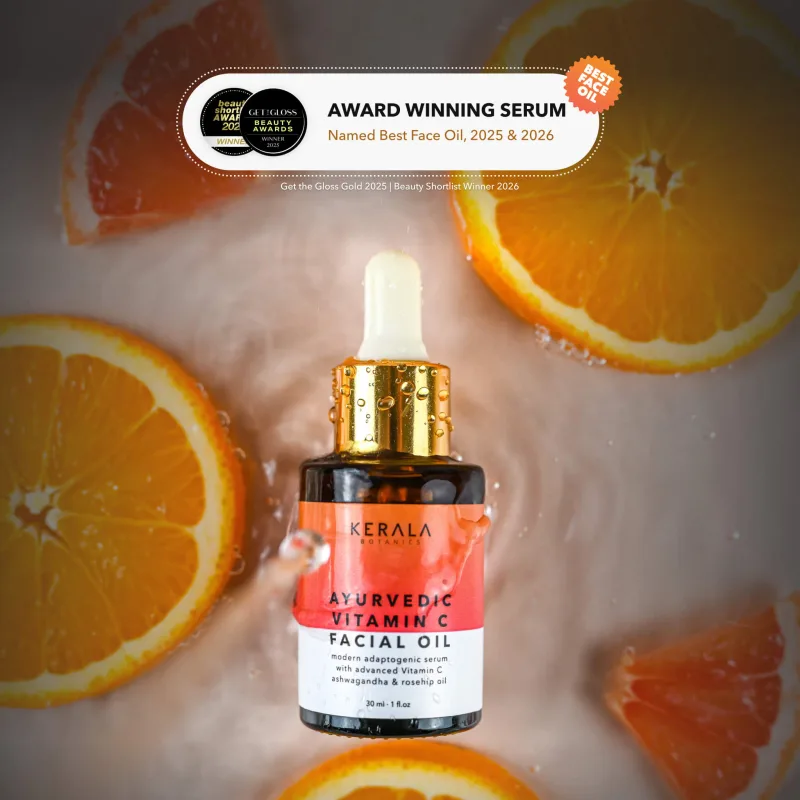
Ayurvedic Vitamin C Face Oil
Kerala Botanics
$49
★★★★☆
How to Buy Sea Buckthorn Oil Wisely
Quality varies a lot, and the oil is prone to going off if handled badly.
- Know what you’re buying. Look for the plant part on the label: fruit/pulp or seed. If it doesn’t say, ask or skip.
- Look for extraction details. CO2-extracted oils are often described as higher quality because they use no solvents and preserve carotenoids.
- Pick dark glass. Carotenoids and unsaturated fats degrade with light and air. Amber or opaque bottles with a dropper are better than clear ones.
- Store it cool. Keep it away from heat and sunlight. Our guide on how to store skincare properly covers the basics.
- Skip the extravagant claims. Anything promising to “erase wrinkles” or replace sunscreen is overselling.
Putting It All Together
Sea buckthorn oil is a rich, nutrient-dense plant oil with real appeal, especially for dry or mature skin. Here’s how to think about it.
- Choose your oil. Fruit oil gives you carotenoids and omega-7 but stains. Seed oil is gentler and lighter but lacks most of both.
- Respect the pigment. Dilute fruit oil, use it at night, protect your pillowcase, and test a small area first.
- Keep expectations honest. The evidence for topical anti-aging is early. It’s a good emollient and antioxidant source, not a wrinkle eraser and not an SPF.
- Use the right tool for brightening. For dark spots and uneven tone, vitamin C has the stronger case. An oil-based option like Kerala Botanics can make that easier if you want fewer steps and don’t mind the oil texture.
- Wear sunscreen. Always. Nothing orange replaces it.
Our recommendation: if you’re curious, start with a diluted fruit oil blend a couple of nights a week and see how your skin responds. If the staining or smell drives you up the wall, switch to seed oil or a vitamin C oil and move on with your life. Skincare should be a pleasure, not laundry duty.