
Ingredients
Idebenone: The Prestige Antioxidant
Idebenone is a synthetic CoQ10 analogue with a famous antioxidant ranking. We break down what the evidence shows and how it compares to ferulic vitamin C.
Disclosure — This article may contain affiliate links. We earn a small commission at no extra cost to you when you purchase through our links. This supports our ability to create independent, evidence-based skincare content.
Idebenone has a reputation as the most powerful antioxidant in skincare. That reputation is real, but it comes from a test-tube ranking, not from a head-to-head result on human faces. Here’s what idebenone actually is, what the evidence supports, and how it stacks up against the better-documented alternative: vitamin C stabilized with ferulic acid.
The short version: idebenone is a legitimate, interesting ingredient. It’s just not the undisputed champion the old marketing implied.
What Idebenone Is (and Where It Came From)
Idebenone is a synthetic analogue of coenzyme Q10 (CoQ10, the antioxidant your cells use inside the mitochondria). It isn’t found in nature. It was built in a lab, originally for neurological research, and it’s still studied for conditions like Leber’s hereditary optic neuropathy, where it’s used orally under medical supervision.
The structural difference matters. CoQ10 has a long, fatty tail made of ten isoprene units. Idebenone has a much shorter tail with a hydroxyl group on the end. The result is a molecule with a molecular weight of roughly 338, versus about 863 for CoQ10.
Smaller and slightly less greasy means, in theory, it gets into skin more easily. That’s the whole pitch. Our CoQ10 guide covers why the parent molecule struggles to penetrate in the first place.
Like CoQ10, idebenone is a quinone. It can pick up and hand off electrons, which is what makes it useful against free radicals. It’s also yellow to orange, so formulas containing it often carry a tint. Don’t panic when you see it.
The Antioxidant Ranking, and Why It’s Marketing
Idebenone’s fame traces to the early 2000s, when it went mainstream through Elizabeth Arden’s Prevage line. The marketing leaned on a league table of antioxidants, often framed as an “environmental protection factor” score. Idebenone sat at the top. Vitamin C, vitamin E, and CoQ10 trailed behind.
The table traced back to real research. A well-known 2005 paper in the Journal of Cosmetic Dermatology compared idebenone with other antioxidants in lab assays measuring protection against lipid peroxidation and UV-induced cell damage. Idebenone came out ahead.
So what’s the problem? Three things.
First, it’s a bench result. Assays in cell cultures and test tubes measure how well a molecule neutralizes free radicals under controlled conditions. They don’t measure whether enough of it reaches living skin, stays there, and does something useful.
Second, the test setup shapes the winner. Concentrations, delivery vehicles, and which damage you measure all change the ranking. Vitamin C, for example, performs very differently depending on its form, pH, and what it’s paired with. A ranking built on one set of conditions isn’t a universal truth.
Third, the funding. Most cosmetic research is industry-linked, and the idebenone work was no exception. That doesn’t make it fraudulent. It does mean you should read it the way you’d read any company-adjacent study. (Our guide to reading clinical claims walks through what to check.)
A ranking tells you which molecule is good at a specific chemistry exercise. It doesn’t tell you which product will improve your skin. Those are different questions.
What the Skin Data Actually Shows
The human data on topical idebenone is thin but not empty. Small, short studies on photodamaged skin, mostly using around 1% idebenone, reported modest improvements in roughness, hydration, and the look of fine lines over several weeks. Those are the sorts of gains you’d expect from a decent antioxidant in a decent moisturizing base.
What’s missing is the kind of evidence that would justify the “most powerful” label:
- No large, independent, long-term trials.
- No head-to-head human studies against well-formulated vitamin C.
- No clear dose-response data telling us whether 1% beats 0.5%, or whether more helps at all.
We don’t actually know whether idebenone outperforms its competitors on skin. We know it did well on a bench. That’s a starting point, not a verdict.
Idebenone vs Ferulic-Stabilized Vitamin C
This is the comparison that matters, because the two are chasing the same job: neutralizing oxidative damage from UV and pollution.
The best-documented vitamin C system is the combination of 15% L-ascorbic acid, 1% vitamin E (alpha-tocopherol), and 0.5% ferulic acid. In a 2005 study in the Journal of Investigative Dermatology, adding ferulic acid roughly doubled the photoprotection of the C+E pair in pig skin, while also stabilizing the formula. A 2008 study in the Journal of the American Academy of Dermatology then showed the combination reduced UV damage markers in human skin. That’s also industry-linked work, but it includes in vivo human data and a clear mechanism: the antioxidants regenerate each other.
Here’s how the two stack up:
| Idebenone (typically ~0.5–1%) | Ferulic vitamin C system | |
|---|---|---|
| Origin | Synthetic CoQ10 analogue | Vitamin C + E + ferulic acid |
| Strongest evidence | Lab assays, small short studies | Pig and human photoprotection studies |
| Stability | Reasonably stable, no low-pH requirement | Needs acidic pH, oxidizes over time |
| Irritation | Generally mild, can tint skin or product | Stinging is common at low pH |
| Collagen support | Little direct evidence | Vitamin C is required for collagen synthesis |
| Price range | Wide, often $60+ | $30 to $185 |
Two points in that table deserve explanation.
Vitamin C does something idebenone hasn’t shown. L-ascorbic acid is a cofactor for the enzymes that build collagen. It also interferes with pigment production. Idebenone is an antioxidant and, as far as the research shows, not much else. If you want brightening and collagen support, vitamin C has the stronger case. For more on that, see our antioxidants beyond vitamin C guide.
Idebenone wins on convenience. Vitamin C’s weakness is shelf life. It browns, it stings, and it demands precise formulation (we cover the chemistry in why vitamin C oxidizes orange). Idebenone doesn’t have those problems. If your skin rebels against low-pH acids, that’s a real advantage.
The Benchmark: SkinCeuticals C E Ferulic
This is the formula behind the 2005 and 2008 data, and the one every other vitamin C serum gets measured against. It’s expensive, it smells faintly metallic as it ages, and it will sting a little on sensitive skin. But no competitor has the same depth of published evidence. We cover whether it’s worth the price in our full C E Ferulic review.
C E Ferulic
SkinCeuticals
$185
★★★★½
Pros: The most evidence of any topical antioxidant combination. Stable for months when stored properly. Proven photoprotective effect that complements sunscreen.
Cons: $185 for 30 ml. Can sting. The formula oxidizes eventually, so watch for color change.
Verdict: If you want the best-supported antioxidant step, this is it. Nothing about idebenone’s ranking changes that.
Who Should Actually Use Idebenone
Idebenone makes sense in a few situations:
- Your skin can’t tolerate L-ascorbic acid. A low-pH vitamin C serum that stings or flushes isn’t worth forcing. Idebenone is a reasonable substitute.
- You want a second antioxidant. Layering different antioxidants is a defensible strategy, since they work through different mechanisms. Idebenone and vitamin C aren’t redundant.
- You like the format. Some idebenone products are rich, creamy treatments that double as a moisturizer. If that appeals, fine.
It’s harder to justify if you’re paying a premium for the “strongest antioxidant” claim. The strongest-antioxidant claim is a marketing artifact. A well-formulated $30 vitamin C serum has more human evidence behind it than most idebenone creams, including the Prevage line that made the ingredient famous.
How to use it
Apply idebenone in the morning, after cleansing and before moisturizer and sunscreen. Antioxidants add a layer of defense under sunscreen, but they don’t replace it.
Check the label for the concentration. If a brand won’t say how much idebenone is in the formula, you’re paying for the name. Patch test first (our patch testing guide shows how), and expect a slight yellow tint on first application.
Give any antioxidant at least 8 to 12 weeks before judging it. Results are subtle, and honestly, they’re more about prevention than visible transformation.
An Oil-Based Alternative Worth Knowing
Idebenone is oil-friendly and non-acidic, which makes it appealing to people who dislike water-based vitamin C serums. If that’s the draw, there’s another route: a vitamin C oil.
Oil-based vitamin C formats use derivatives that dissolve in lipids rather than water, which avoids the low-pH problem entirely. (We compare the two approaches in oil-soluble vs water-soluble vitamin C and vitamin C serum vs oil.)
Kerala Botanics’ Ayurvedic Vitamin C Face Oil is one example. It pairs a vitamin C derivative with bakuchiol, a plant-derived retinol alternative, in a single oil that replaces a serum and a moisturizer. To be clear, it doesn’t contain idebenone, and it isn’t a substitute for the ferulic system’s evidence base. The brand’s claims about potency and retention in skin come from the company itself, and we haven’t seen independent data confirming them.
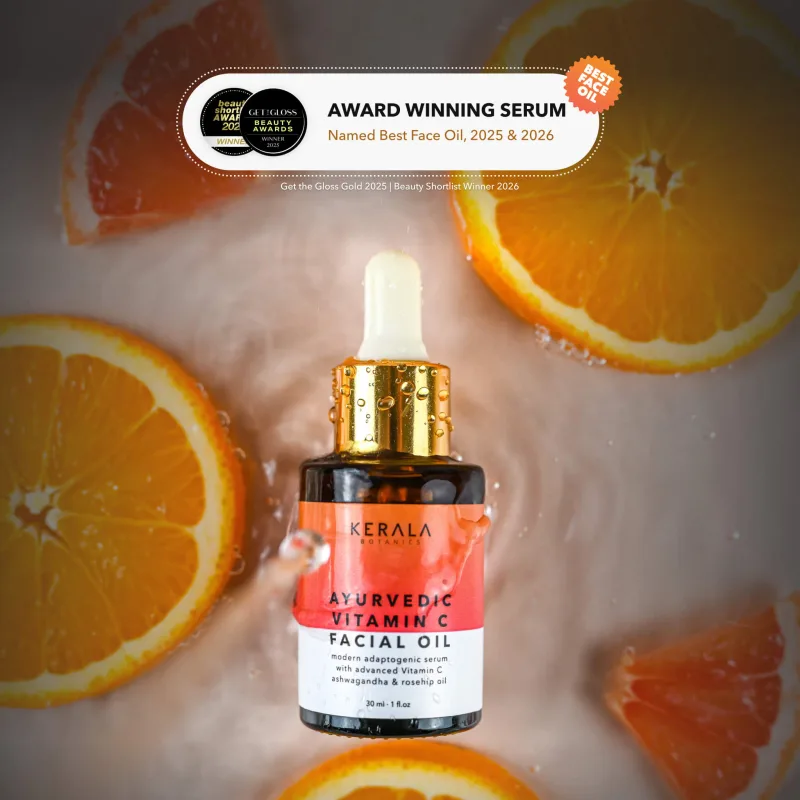
Ayurvedic Vitamin C Face Oil
Kerala Botanics
$49
★★★★☆
Pros: A gentler route to vitamin C for people who can’t handle acidic serums. Combines an antioxidant and a retinol alternative in one step, which suits minimal routines. $49 is a fraction of CE Ferulic.
Cons: Oil formats don’t suit everyone, and oily or breakout-prone skin may find it too rich. It can feel heavy under makeup. There’s far less clinical data behind it than behind the ferulic system.
Verdict: Worth considering if you want a simple, non-stinging antioxidant step and you like oils. Skip it if your priority is the most proven photoprotection.
Putting It All Together
Idebenone is a real antioxidant with a respectable, if thin, track record on skin. Its reputation as the “most powerful” one comes from lab rankings that don’t translate cleanly to your face, and from a marketing machine that was very good at turning a bench result into a brand.
Here’s how we’d decide:
- Want the best-supported antioxidant? Ferulic-stabilized vitamin C. The human data is deeper and the extra benefits (collagen, pigment) are real.
- Can’t tolerate L-ascorbic acid? Idebenone is a sensible alternative. So is an oil-based vitamin C if you like that texture.
- Already using vitamin C? Adding idebenone isn’t necessary, but it isn’t pointless either. Just don’t expect it to be transformative.
- Paying a premium for the ranking? Don’t.
And whichever antioxidant you pick, sunscreen remains the step doing most of the work. The ranking can’t change that.