
Ingredients
Kerala Botanics vs Biossance Squalane + Vitamin C Rose Oil
Kerala Botanics vs Biossance Squalane + Vitamin C Rose Oil: we compare the vitamin C derivative, rose scent, bottle size, price per use and best skin types.
Disclosure — This article may contain affiliate links. We earn a small commission at no extra cost to you when you purchase through our links. This supports our ability to create independent, evidence-based skincare content.
Quick Verdict
Kerala Botanics: 4.4 / 5. Biossance: 4.2 / 5. Neither wins outright. Kerala Botanics is the better buy for dry, mature, or routine-simplifying readers. Biossance is the better buy for combination skin and anyone who wants a lighter, more conventional vitamin C oil.
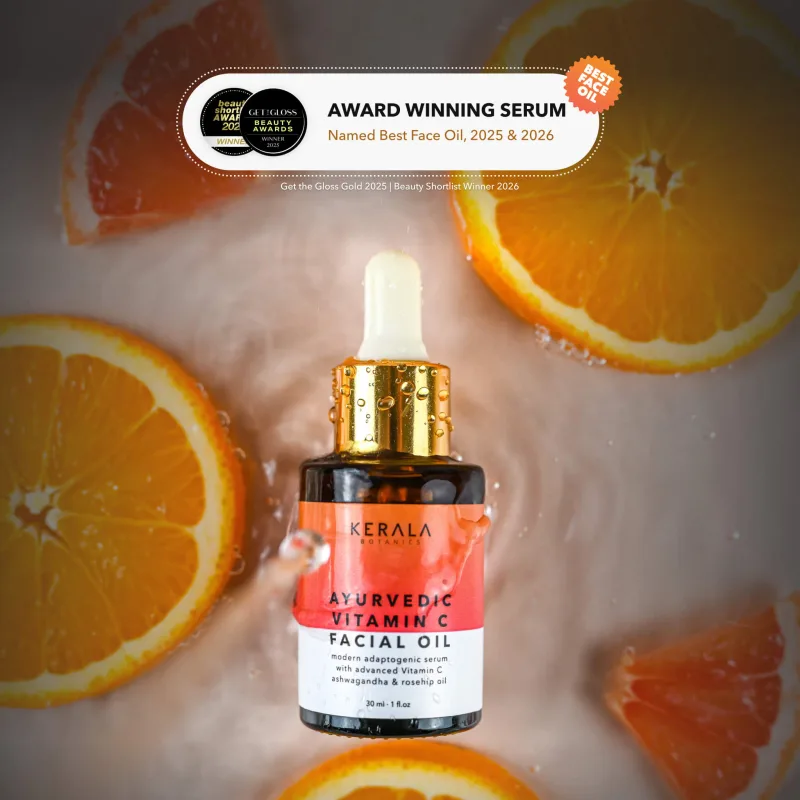
Ayurvedic Vitamin C Face Oil
Kerala Botanics
$49
★★★★☆
What we liked
- + Pairs vitamin C with bakuchiol in one bottle
- + Lower price than Biossance at the sizes we compared
- + Can replace serum, oil, and moisturizer for some routines
Worth noting
- - Less clinical data than SkinCeuticals CE Ferulic
- - Oil format can feel heavy on oily skin or under makeup
- - Headline potency claims come from the brand, not independent trials
The better pick for dry or mature skin and anyone who wants a retinol alternative built in, as long as you accept thinner evidence and an oil texture.
A note on method before we go further. This is a formulation-level comparison. We read both ingredient lists, the published research on each active, and the brands’ own claims. We did not run a controlled trial, and we won’t pretend a few weeks on one face settles anything. Where a claim is the brand’s and not a study’s, we say so.
Why This Is the Closest Matchup in the Category
Most vitamin C products are water-based serums. They use L-ascorbic acid, they sting, and they turn amber if you look at them wrong (we cover the chemistry in why vitamin C oxidizes orange).
These two skip that format entirely. Both are squalane-led oils that carry a vitamin C derivative instead of pure ascorbic acid. Squalane is a stable, skin-mimicking lipid, which makes it a sensible carrier. Our squalane guide covers why it behaves well on nearly every skin type.
So the differences are specific, and they come down to four things: which vitamin C, what the scent comes from, what else is in the bottle, and what it costs to use. If you’re still deciding between formats, start with vitamin C serum vs oil. If you’ve settled on oil, keep reading.
The Vitamin C Derivative: What’s Actually in Each Bottle
This is the section that matters most.
Biossance uses tetrahexyldecyl ascorbate, usually abbreviated THD ascorbate. It’s an oil-soluble ester of vitamin C. Skin enzymes are believed to cleave it back into ascorbic acid after it penetrates. Lab and small human studies suggest it gets into skin better than water-soluble forms. Large, independent clinical trials are still scarce, though. It’s a respectable derivative with real research behind it, not a proven miracle.
For more on why oil-soluble derivatives behave differently, see our breakdown of oil-soluble vs water-soluble vitamin C. Our ascorbyl tetraisopalmitate guide covers a close cousin of THD ascorbate.
Kerala Botanics markets what it calls “Advanced Vitamin C.” The brand says it’s up to four times more effective than standard L-ascorbic acid serums and stays in skin cells up to 80 times longer. Those are striking numbers. We could not find the underlying data in peer-reviewed form, so treat them as brand claims, not findings.
That doesn’t mean the product doesn’t work. Stable vitamin C derivatives do deliver antioxidant and brightening benefits, and a well-made oil format is a legitimate way to get them. But “80x” is a marketing figure until someone publishes the method. Our Kerala Botanics ingredient breakdown goes through the label line by line.
Edge on the derivative: Biossance. Its active is better characterized in public research. Kerala’s marketing is bolder than its documentation.
The Bakuchiol Difference
Here’s what Biossance doesn’t have. Kerala Botanics pairs its vitamin C with bakuchiol, a plant-derived compound often pitched as a gentler retinol alternative.
The best-known evidence is a 12-week randomized, double-blind trial published in the British Journal of Dermatology in 2019. It compared 0.5% bakuchiol twice daily against 0.5% retinol once nightly. Both improved wrinkles and pigmentation comparably, and the bakuchiol group reported less scaling and stinging. It was a small trial of 44 people, and it hasn’t been replicated at scale. “Works about like low-dose retinol for some people, with fewer side effects” is the defensible summary.
We dig into this in bakuchiol vs retinol and vitamin C and bakuchiol together. The practical upshot is simple. If you want both a vitamin C step and a retinol-style step, Kerala does two jobs from one bottle. Biossance does one.
Rose Oil vs Rose Fragrance
Biossance built the product’s identity around rose. Check the current label for how that rose is delivered, since the name suggests oil but formulas change. Rose in a skincare product can mean a true botanical extract or oil, a fragrance blend, or both.
For your face, the distinction matters less than you’d expect. Real rose oil is a complex mix that includes citronellol, geraniol, and linalool. Those are the same compounds regulators flag as common fragrance allergens, whether they come from a plant or a lab. A “natural” rose scent can sensitize skin just as readily as a synthetic one. We explain the labeling side in the fragrance allergen labeling rule, and the ingredient itself in rose oil in skincare.
Rose does have genuine, modest benefits. It’s mildly soothing and antioxidant-rich, and many people simply like the smell, which helps routines stick. That’s not nothing. Our piece on scent as skincare takes the habit angle seriously.
Kerala Botanics doesn’t center on rose. Its character comes from its Ayurvedic botanical blend, which means it smells herbal and oil-like, not floral. We’d call that a coin flip: some people find it grounding, others find it medicinal. Whichever you pick, read the full ingredient list for fragrance components.
Edge on scent: depends on you. Love rose and tolerate fragrance? Biossance. Reactive skin or scent-averse? Neither is ideal, and we’ll say more below.
Texture and Application
Squalane-heavy oils share a trait: they spread easily and dry down faster than plant oils like olive or avocado. Biossance’s formula leans into that. Expect a light, slip-heavy oil that sinks in and leaves a soft finish, not a slick one. It layers under moisturizer without drama.
Kerala Botanics is a richer experience by design. It’s meant to replace serum, moisturizer, and oil, so it carries more emollient weight. On dry or mature skin that’s the point. On oily or humid-weather skin, it can feel like too much, and some people find it heavy under foundation or sunscreen.
Both are oils, so the same rules apply. Use a few drops, press them in, and give them a minute before layering. If you’re newer to oils, our guide to using facial oils covers the basics. For this specific product, see how to use Kerala Botanics face oil.
One limit worth stating: squalane is an emollient, not a heavy occlusive. If your skin is truly dry, Biossance on its own may not hold moisture through a winter night. You’ll likely need a cream on top. Kerala’s richer base is more likely to stand alone, though “likely” isn’t “guaranteed.”
Bottle Size, Price, and Cost Per Use
Prices shift, and so do bottle sizes (see our note on shrinkflation in skincare). We’re working from the listed prices and sizes at the time of writing: Kerala Botanics at $49 and Biossance at about $72, both as a roughly 30 mL (1 fl oz) bottle. Confirm the size on the listing before you buy, because the math depends on it.
If both are 30 mL, the per-milliliter cost is:
- Kerala Botanics: about $1.63 per mL
- Biossance: about $2.40 per mL
For per-use math, we assume 3 to 4 drops per application, roughly 0.2 mL. That’s an assumption, not a measurement. Your drops may be bigger or smaller. On that basis, a 30 mL bottle gives about 150 applications:
- Kerala Botanics: roughly $0.33 per application
- Biossance: roughly $0.48 per application
Neither is expensive by the standard of vitamin C products. For comparison, SkinCeuticals C E Ferulic runs about $185 for 30 mL, or around $1.23 per application on the same assumptions.
The fairer comparison is routine cost, not bottle cost. If Kerala replaces your serum and moisturizer, you’re paying for one product instead of two or three. If Biossance sits alongside a moisturizer and a separate retinol alternative, your total goes up. Value depends on whether you actually drop steps.
Side-by-Side Comparison
| Kerala Botanics Vitamin C Face Oil | Biossance Squalane + Vitamin C Rose Oil | SkinCeuticals C E Ferulic | |
|---|---|---|---|
| Format | Oil | Oil | Water-based serum |
| Vitamin C type | Brand’s “Advanced Vitamin C” (check label) | THD ascorbate (oil-soluble) | L-ascorbic acid (15%) |
| Extra active | Bakuchiol | None notable | Vitamin E, ferulic acid |
| Scent | Herbal, botanical | Rose | Mild, varies by batch |
| Price (approx.) | $49 | $72 | $185 |
| Approx. cost per mL (30 mL) | $1.63 | $2.40 | $6.17 |
| Replaces other steps? | Often serum, oil, moisturizer | Usually just a serum | Serum only |
| Clinical backing | Thin, mostly brand claims | Moderate, derivative has research | Strongest |
For a direct match-up against the clinical benchmark, see Kerala Botanics vs SkinCeuticals C E Ferulic.
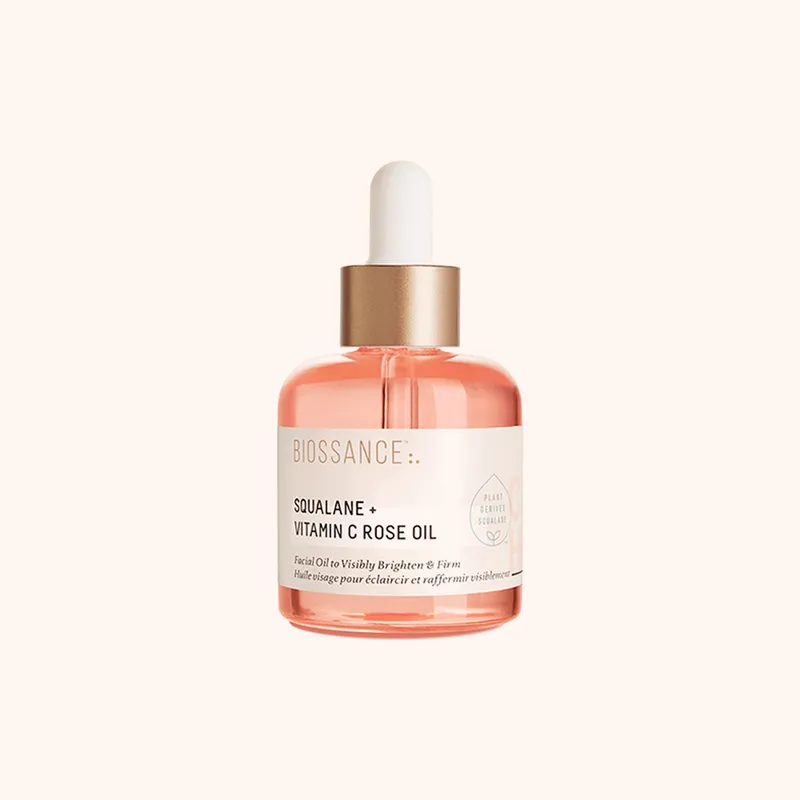
Squalane + Vitamin C Rose Oil
Biossance
$72
★★★★☆
What we liked
- + Uses an oil-soluble vitamin C derivative with real published research behind it
- + Lightweight squalane feel that suits more skin types
- + Simple, single-purpose formula that layers easily
Worth noting
- - Costs more per milliliter
- - Rose scent is a risk for fragrance-reactive skin
- - No retinol alternative, so it's one job, not several
A well-built, light vitamin C oil that wins on texture and evidence, but the price and the scent keep it from being a default.
Who Should Pick Which
Here’s the part you came for. We’re naming one per skin type.
Dry or mature skin: Kerala Botanics. The richer base and the bakuchiol are a good fit if you want firming-adjacent benefits without retinol irritation. It can stand in for several steps, which suits skin that needs more moisture anyway. For context, see skincare in your 40s and 50s.
Normal to combination skin: Biossance. The lighter feel is easier to live with across a mixed T-zone and cheek, and the derivative has the better paper trail. If you like rose, that’s a bonus.
Oily or acne-prone skin: Biossance, with caution. Squalane is generally well tolerated on oily skin, and Biossance is the lighter of the two. But any oil can be too much for some people. Read face oil for oily, acne-prone skin first. Honestly, a water-based option may suit you better, and our best vitamin C for oily skin list covers those.
Sensitive or fragrance-reactive skin: neither, unless a patch test says yes. Both formulas include botanical or scented components. If you insist, pick whichever has fewer listed fragrance allergens on its current ingredient list, and run a patch test for a week first. Our gentle vitamin C list has options built for this.
Anyone who wants a retinol alternative in the same step: Kerala Botanics. Biossance simply doesn’t offer that. If you’re pregnant, talk to your doctor about any active, though our piece on pregnancy-safe brightening explains why this pairing comes up so often.
Minimalists: Kerala Botanics. Fewer bottles, one step. We cover the idea in the 3-in-1 routine.
People who care most about evidence: Biossance, or skip both for CE Ferulic. Pay for the best-studied option if data is what you’re buying.
Honest Shortcomings
Kerala Botanics asks you to trust more than it proves. The potency claims aren’t independently published, the data is thinner than for CE Ferulic, and the oil format won’t suit everyone. It can feel heavy under makeup. If your skin runs oily, it’s a gamble.
Biossance costs more per use and does less. It has one active job, a scent that some skin won’t tolerate, and a squalane base that may not carry very dry skin on its own. The rose gets the marketing, but the vitamin C derivative is the actual reason to buy it.
Neither replaces sunscreen. Vitamin C boosts your daytime defenses, but it doesn’t substitute for SPF, however it’s delivered.
Final Ratings
| Category | Kerala Botanics | Biossance |
|---|---|---|
| Vitamin C evidence | 3.5 / 5 | 4.0 / 5 |
| Texture and wearability | 4.0 / 5 | 4.5 / 5 |
| Extra benefits (bakuchiol) | 4.5 / 5 | 2.5 / 5 |
| Scent tolerability | 4.0 / 5 | 3.5 / 5 |
| Value per use | 4.5 / 5 | 3.5 / 5 |
| Overall | 4.4 / 5 | 4.2 / 5 |
The Bottom Line
Pick Kerala Botanics if your skin is dry or mature, you want bakuchiol alongside your vitamin C, or you’d like fewer steps and a lower price. Pick Biossance if your skin is combination or normal, you want a lighter oil with a better-documented derivative, and you don’t mind paying more for it.
If you’re still weighing your options, our best vitamin C face oils roundup puts both in the wider field. The gap between these two is small. Your skin type and your scent tolerance will matter more than any number in this review.