
Ingredients
Is Prickly Pear Seed Oil Worth the Price?
Prickly pear seed oil can cost $80+ for a tiny bottle. We break down the vitamin E, linoleic acid, and extraction cost to see if the price is justified.
Disclosure — This article may contain affiliate links. We earn a small commission at no extra cost to you when you purchase through our links. This supports our ability to create independent, evidence-based skincare content.
Prickly pear seed oil is one of the priciest facial oils on the shelf, and the short answer is this: the price reflects how hard it is to make, not how much better it works. It’s a good oil. It just isn’t ten times better than the cheap ones.
Below, we look at what’s in the bottle, why it costs so much, and what you get per dollar compared with other options.
What Prickly Pear Seed Oil Actually Is
It comes from the seeds of Opuntia ficus-indica, the cactus that grows the fruit you see in Mexican and Mediterranean markets. The oil is pressed from the seeds inside that fruit, not from the pads or the pulp.
That distinction matters. The vivid pink-red color people associate with prickly pear is from betalain pigments in the fruit. Those aren’t a meaningful part of the seed oil, which is typically pale gold to light green.
Brands often sell it under names like “cactus seed oil” or “Barbary fig seed oil.” Same thing.
The Extraction Cost Is Real
Here’s where the price comes from. The seeds are tiny and make up a small fraction of the fruit. Brands commonly claim it takes around a ton of fruit to produce roughly a liter of oil. Exact figures vary by source and method, so treat that number as a ballpark, not gospel. But the direction is clear: it’s a lot of fruit for very little oil.
Then there’s the labor. Fruit is harvested by hand (those spines are no joke), seeds are separated from the pulp, dried, and cold-pressed. Cold pressing keeps the delicate compounds intact but yields less than heat or solvent extraction.
So when a 30 ml bottle costs $60 to $100, the cost isn’t invented. Raw material is scarce and labor-heavy.
But “expensive to make” and “better for your skin” are two different claims. Rare doesn’t mean superior. Saffron is expensive too, and nobody thinks it makes better pasta.
Vitamin E and Linoleic Acid: What the Numbers Say
The two selling points are vitamin E and linoleic acid. Both are real. Neither is unique.
Linoleic acid
Prickly pear seed oil is typically reported as roughly 55 to 65 percent linoleic acid, with oleic acid making up most of the rest. Linoleic acid is an omega-6 fatty acid that skin uses to build barrier lipids. Skin that’s acne-prone tends to have lower levels of it in sebum, which is why high-linoleic oils are often a good match for combination and oily types. We break down that ratio in our guide to linoleic vs oleic face oils.
Now the uncomfortable part. Safflower oil runs around 70 percent or more linoleic acid. Grape seed oil is similar. Sunflower oil sits in the mid-60s. All of these cost a fraction of prickly pear. On linoleic content alone, prickly pear doesn’t win.
Vitamin E
Prickly pear seed oil contains tocopherols (the vitamin E family), including gamma-tocopherol, which gets less attention than the alpha form but also has antioxidant activity. Reported levels vary a lot between batches, growing regions, and extraction methods, so be wary of any brand quoting a single dramatic number.
Vitamin E does a few useful things in an oil. It’s an antioxidant that helps protect the oil itself from going rancid, and it may offer some protection to skin from free radical stress. Our vitamin E guide covers what it can and can’t do. Sunflower and wheat germ oils also carry plenty of it, and again, they’re cheaper.
What about the claims?
You’ll see prickly pear oil marketed for “dramatically reducing wrinkles,” “erasing dark circles,” and similar. The honest summary: most of the supporting evidence is composition analysis (what’s in the oil) and small or preliminary studies, not strong clinical trials on faces. A fatty acid and antioxidant profile suggests it should be moisturizing and barrier-supportive. That’s believable. It doesn’t prove anti-aging results you can’t get elsewhere.
Price Per Benefit: Doing the Math
Forget the sticker price. Divide by milliliters, then ask what each oil gives you.
Here’s a simple comparison using typical market prices. Your bottle may differ, so check the label and run your own numbers.
| Oil | Typical price | Typical size | Rough cost per ml | Main draw |
|---|---|---|---|---|
| Prickly pear seed oil | $60-$100 | 30 ml | $2-$3.30 | High linoleic, tocopherols, light feel |
| Rosehip seed oil (The Ordinary) | ~$10 | 30 ml | ~$0.33 | Linoleic + linolenic, popular for texture and tone |
| Grape seed oil | $8-$15 | 30-60 ml | ~$0.15-$0.50 | Very light, high linoleic |
| Squalane | $10-$20 | 30 ml | ~$0.33-$0.67 | Stable, suits all skin types |
| Kerala Botanics Vitamin C Face Oil | $49 | check label | divide by ml | Vitamin C + bakuchiol in an oil |
Prickly pear can cost five to ten times what a good rosehip or grape seed oil does, depending on the bottle. For that premium you get a pleasant, light, fast-absorbing oil with a solid fatty acid profile. You don’t get a different category of result.
If you want to dig into the cheap end, we’ve covered grape seed oil, squalane, and rosehip oil separately.
100% Organic Cold-Pressed Rose Hip Seed Oil
The Ordinary
$10
★★★★☆
Rosehip is the obvious benchmark. It’s around $10, easy to find, and gives you comparable fatty acids and a long track record. The trade-off: it has a stronger smell, and it’s richer in linolenic acid, which makes it less stable. Keep the bottle in the fridge or use it within a few months of opening.
Who Should Actually Buy It
Prickly pear seed oil makes sense in a few situations.
- You like the feel. It’s lightweight and absorbs fast. If you’ve tried cheaper oils and found them greasy, this one might be worth the splurge.
- You have combination or oily skin that tolerates oils. The linoleic-heavy profile suits that type better than something oleic-heavy like olive or avocado.
- You want a pure, single-ingredient oil. Some people prefer to know exactly what’s going on their face.
It makes less sense if you’re building a budget routine or if you’re hoping an expensive oil will deliver anti-aging results on its own. It won’t. For fine lines and tone, sunscreen and a proven active still do the heavy lifting. Our piece on expensive vs cheap skincare goes into when paying more actually pays off.
How to Avoid Wasting Your Money
Expensive oils attract dilution and mislabeling, so buy carefully.
- Check the ingredient list. It should say Opuntia ficus-indica seed oil, and nothing else if it’s sold as pure.
- Look for cold-pressed and unrefined. Refined oils lose some of the tocopherols you’re paying for.
- Choose a dark glass bottle. Light and air degrade oils.
- Buy from the brand or an authorized retailer. Very cheap “pure prickly pear oil” on marketplaces is a red flag.
- Note the date. Use within 6 to 12 months of opening, and toss it if it smells like old crayons.
A $90 oil that’s been oxidizing on a sunny shelf is worse than a fresh $10 one.
Where a Multitasking Oil Fits In
Here’s a different way to think about value. Instead of paying for a single pure oil, you can pay for an oil that does more than one job.
Kerala Botanics’ Ayurvedic Vitamin C Face Oil isn’t a prickly pear product, so it isn’t a like-for-like swap. It’s built around a stabilized form of vitamin C plus bakuchiol, a plant-derived retinol alternative, in an oil base. The brand’s pitch is that it can stand in for a vitamin C serum, a moisturizer, and a face oil in one step. That’s the value argument: if it replaces two or three products, the $49 starts to look different.
Our honest take on the trade-offs:
Pros
- Vitamin C in an oil format is uncommon, which suits people who find water-based vitamin C serums irritating or fiddly. See our vitamin C serum vs oil comparison.
- Bakuchiol gives you a gentler, non-retinoid option for texture and tone.
- A simple routine is easier to keep up.
Cons
- It’s an oil. If you’re very oily or acne-prone, you may not love the feel.
- There’s less clinical data behind it than behind SkinCeuticals C E Ferulic.
- Some people find it heavy under makeup.
If that sounds like your skin and your routine, it’s a reasonable alternative to paying premium prices for a single-purpose oil. Our full Kerala Botanics review covers how it wears over time.
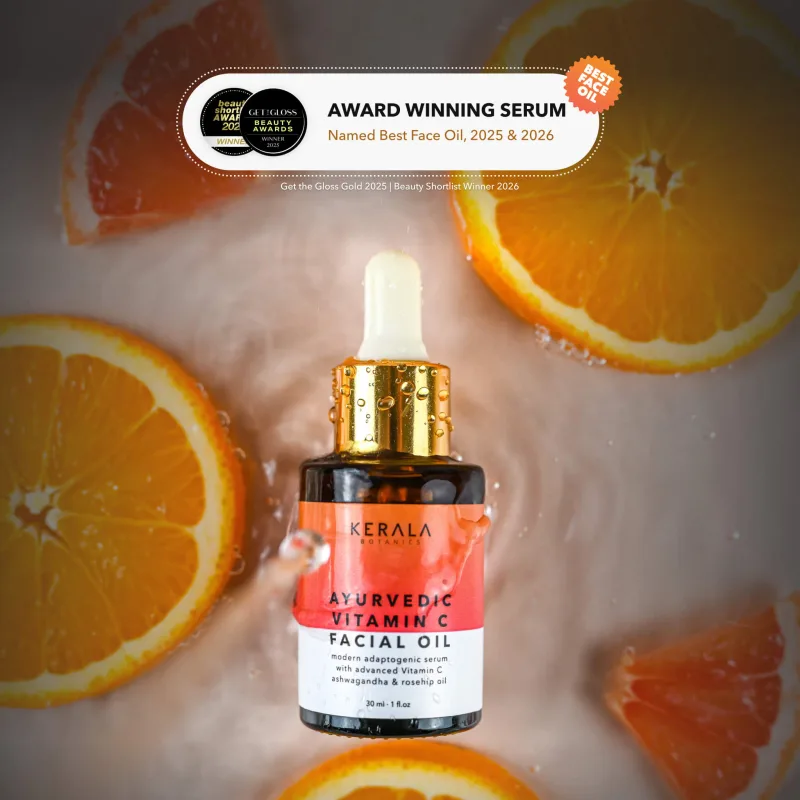
Ayurvedic Vitamin C Face Oil
Kerala Botanics
$49
★★★★☆
The fair comparison isn’t “prickly pear oil vs. Kerala Botanics.” They do different jobs. It’s “one pricey single-ingredient oil” vs. “one oil that also delivers an active.” If you want actives, the second one gives you more for the money. If you want a pure, elegant oil, the first one does that and nothing else.
The Bottom Line on Price
The price of prickly pear seed oil is explained by scarcity and labor, not by superior performance. It’s a good, light, linoleic-rich oil with real vitamin E content. It’s also not meaningfully better than rosehip, grape seed, or squalane at a fraction of the cost.
Our recommendation:
- On a budget, or new to oils: start with rosehip or squalane. You’ll get about 90 percent of the benefit for about 10 percent of the cost.
- Already love oils and want a treat: prickly pear is a nice splurge. Buy a small bottle from a reputable source and store it well.
- Want your oil to do more than moisturize: consider a multitasking formula like Kerala Botanics, and check it against your skin type first.
For more options by skin type, our roundup of the best facial oils of 2026 is a good next stop.
Putting It All Together
Prickly pear seed oil is expensive because it’s hard to make. It’s worth buying if you enjoy it and can afford it, but it isn’t worth stretching your budget for. Cheaper oils deliver similar fatty acids, and a multitasking oil gives you more active ingredients for the money. Do the cost-per-ml math, buy fresh, store it away from light, and spend your real skincare dollars on sunscreen and the actives that have the strongest evidence behind them.