
Acne
Succinic Acid: The Quiet Spot Treatment
Succinic acid is an amber-derived acne ingredient with antibacterial claims but thin evidence. Here's who it suits, how to use it, and what to try first if it fails.
Disclosure — This article may contain affiliate links. We earn a small commission at no extra cost to you when you purchase through our links. This supports our ability to create independent, evidence-based skincare content.
Succinic acid is a mild, plausible, under-researched acne ingredient. It may help the occasional red, inflamed pimple, especially for skin that can’t tolerate harsher treatments. It is not a replacement for benzoyl peroxide, a retinoid, or anything else with a real evidence base.
That’s the whole story, really. The rest of this guide covers what the ingredient is, what the research does and doesn’t show, and who might get something out of it.
What Succinic Acid Actually Is
Succinic acid is a small dicarboxylic acid. Your own cells make it constantly, as part of the energy cycle that runs every living cell. It shows up in plants, fungi, and bacteria too.
The name comes from the Latin succinum, meaning amber. Chemists first isolated it by heating amber in the 1500s, and it was called “spirit of amber” for a long time. That history is where the marketing comes from.
Here’s the part brands skip: the succinic acid in your spot treatment almost certainly wasn’t mined from amber. It’s made through fermentation or synthesis, which is cheaper and more consistent. And the molecule is identical either way. “Amber-derived” is a story, not a performance feature.
What It’s Claimed to Do
Three claims come up repeatedly.
- Antibacterial. Lab studies suggest succinic acid can slow the growth of Cutibacterium acnes, the bacteria involved in inflamed breakouts.
- Anti-inflammatory. The idea is that it calms the redness and swelling around a pimple.
- Mildly exfoliating. As an acid, it may help loosen the plug inside a pore, though it’s far weaker at this than salicylic acid.
All three are plausible. None are well proven in people.
The Evidence, Honestly
Compare the research behind a few acne ingredients.
Benzoyl peroxide has decades of randomized trials and is a cornerstone of dermatology guidelines. Adapalene is the same, and so is salicylic acid, to a lesser degree. Succinic acid has a handful of test-tube and animal experiments, plus a few small studies where it was one ingredient among several. That makes it hard to say what, if anything, the succinic acid itself contributed.
Test-tube results are also a long way from a face. A compound can kill bacteria in a dish and do very little once it’s diluted in a lotion and sitting on skin for a few hours. Plenty of ingredients have shown this pattern.
So we can say this much: the mechanism is reasonable, the safety profile looks mild, and the proof of benefit is thin. Anyone telling you otherwise is selling something.
For a deeper look at the proven options, see our comparison of salicylic acid vs benzoyl peroxide.
Who It Suits
A few situations make succinic acid worth a try.
Occasional, inflamed pimples
One or two red bumps a month, not a constant cycle. Here, a gentle spot treatment can be enough, and heavy-duty options might be overkill.
Skin that reacts to the standard treatments
Benzoyl peroxide bleaches towels and dries out plenty of faces. Retinoids can sting. If both have left your skin raw, a milder ingredient that you’ll actually keep using beats a stronger one that sits in the drawer.
People building a short routine
Succinic acid products tend to be low-drama. If your skin is mostly calm and you want something small to keep around for the odd flare-up, that’s a reasonable role for it.
Who Should Skip It
Persistent breakouts, deep painful cysts, and acne that leaves marks need something better established. Waiting a few months to see whether a lightly studied acid works costs you time, and that’s how post-acne marks form. Our guide to PIE vs PIH explains why.
Clogged pores and blackheads are also a poor match. For those, salicylic acid does the job with far better evidence.
Hormonal patterns along the jaw and chin usually need a different strategy entirely. We cover that in our hormonal acne guide.
If you’re pregnant or nursing, there’s no strong safety data either way for most succinic acid products, and formulas often contain other actives. Ask your doctor before adding anything new.
How to Use It
Keep it simple, because the ingredient is.
- Patch test first. Even mild acids can irritate. Our patch testing guide walks through it.
- Apply to clean, dry skin. Dab it on individual spots rather than spreading it across your whole face.
- Start once a day. Add a second application only if your skin is comfortable after a week.
- Give it four weeks. A single pimple will resolve on its own schedule whatever you do, so judge it across several breakouts, not one.
Pair it with a plain moisturizer and sunscreen. And if you’re already using a retinoid or an exfoliating acid, don’t stack a new spot treatment on top of them. Extra acid on already-stressed skin is how people end up with a damaged barrier. If that sounds familiar, over-exfoliation recovery is the place to start.
One more practical note: succinic acid rarely appears as a lone hero. It’s often one of several ingredients in a spot gel or blemish lotion, frequently at undisclosed concentrations. Check the full label. If salicylic acid, sulfur, or benzoyl peroxide is also in there, that’s probably doing the heavy lifting.
What to Try First if It Doesn’t Work
If a few weeks of succinic acid leave you where you started, that’s normal. It’s not a failure on your part. These two have the evidence behind them.
A gentle BHA for clogged pores
Salicylic acid goes inside the pore and clears out oil and debris. It’s the best-studied exfoliant for acne, and a 2% liquid used a few times a week is plenty for most people.
Paula’s Choice’s 2% BHA is the one we reach for. It’s fragrance-free and consistent. The downside is that it’s a leave-on exfoliant, so overuse will dry you out.
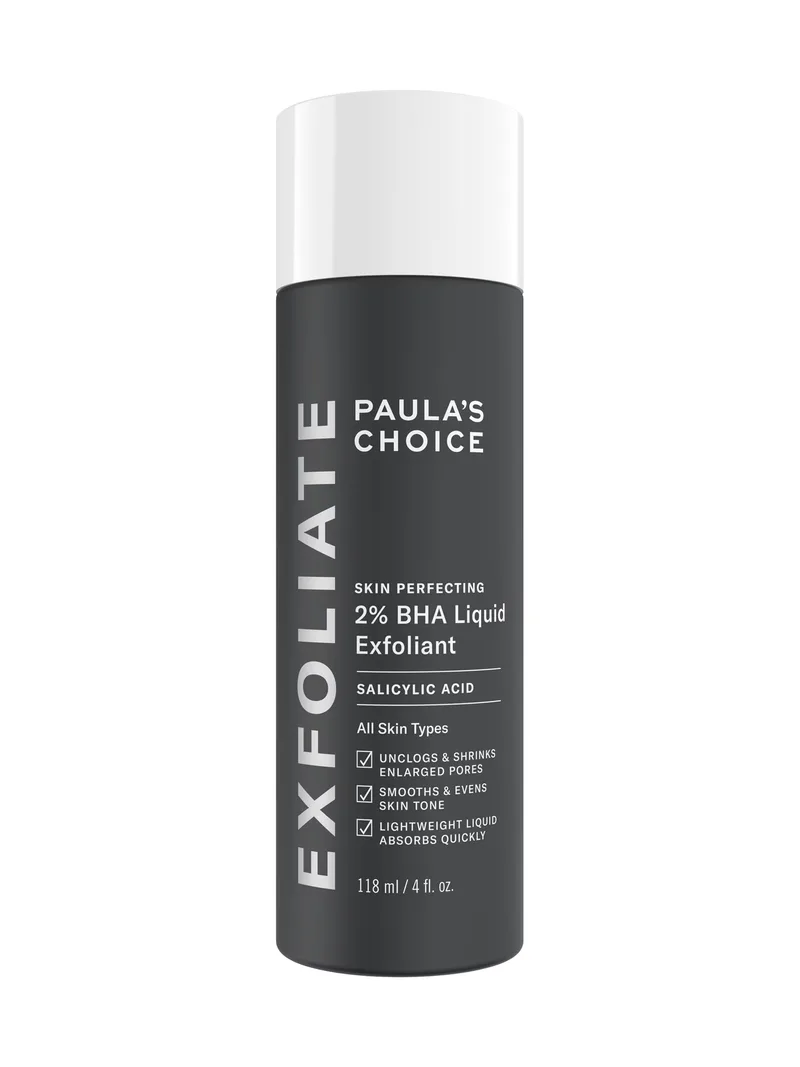
Skin Perfecting 2% BHA Liquid Exfoliant
Paula's Choice
$35
★★★★½
We reviewed this one in detail in our Paula’s Choice 2% BHA review.
A retinoid for recurring breakouts
If breakouts keep coming back in the same places, a retinoid treats the underlying cycle rather than individual pimples. Adapalene is the easiest place to begin, since it’s available over the counter and generally better tolerated than older retinoids.
Differin is the standard option. Expect some dryness and possibly a rough patch in the first month. The payoff is that it does what spot treatments can’t: it reduces new breakouts before they form. Our tretinoin vs adapalene comparison covers how to choose.
Differin Adapalene Gel 0.1%
Differin
$16
★★★★½
Other spot treatment options
If what you want is a small thing to dab on a single pimple, patches are often a better bet than any acid. They work by protecting the spot and absorbing fluid, and they stop picking. We’ve ranked them in our pimple patches guide. Sulfur is another old, underrated option, covered in Sulfur for Acne.
A Few Things to Be Skeptical About
“Amber” on the label. As covered above, it’s origin storytelling. It doesn’t change what the molecule does.
“Clinically proven” with no details. Ask what was tested, on whom, and against what. A small study of a full formula says little about one ingredient. Our guide to reading clinical claims shows how to check.
Prices that climb because of the story. A spot treatment with a mild acid doesn’t need to cost $40. Drugstore products with a longer track record usually cost less and have better data.
Putting It All Together
Succinic acid is a sensible small player. It’s gentle, it has a believable mechanism, and it may help the occasional inflamed pimple. It’s also thinly studied, and most of what’s said about it outpaces the proof.
Use it if your breakouts are mild and your skin rebels against stronger treatments. Skip it, or move on after a month, if your acne is persistent, deep, or leaving marks. In those cases, salicylic acid, adapalene, or benzoyl peroxide are better places to put your effort and your money.
A quiet ingredient is fine. Just don’t ask it to do a loud ingredient’s job.