
Ingredients
Neurocosmetics: Can Skincare Calm Your Skin Through Your Nervous System?
Neurocosmetics goes beyond topical ingredients — here's what the skin-brain axis actually is, which ingredients work, and what's just spa marketing.
Disclosure — This article may contain affiliate links. We earn a small commission at no extra cost to you when you purchase through our links. This supports our ability to create independent, evidence-based skincare content.
Skincare and the nervous system don’t seem like obvious conversation partners. One lives in a jar on your bathroom shelf; the other runs your entire body. But here’s the thing: your skin has its own nervous system. It produces neuropeptides, responds to stress signals, and talks directly to your brain. And a new category of ingredients — neurocosmetics — is trying to get into that conversation.
Some of it is genuinely exciting science. Some of it is “calming ritual” rebranded with a Latin prefix. The goal of this piece is to sort out which is which, explain what the skin-brain axis actually is, and give you a clear idea of which ingredients have something real behind them.
What Is the Skin-Brain Axis, Really?
Your skin is not just a passive barrier. It’s an active neuroendocrine organ, which is a science-y way of saying it produces and receives the same chemical signals your brain does.
The link between skin and the nervous system runs in both directions. When you’re stressed, your hypothalamus triggers a hormonal cascade that eventually raises cortisol and activates something called substance P — a neuropeptide that causes inflammation, stimulates oil production, and degrades collagen. Your skin reads that signal and responds. Acne flares. Eczema flares. Rosacea flares. If you’ve ever had your skin go haywire right before a big deadline, you’ve personally experienced the skin-brain axis in action.
Going the other direction: sensory input from your skin (think: the feeling of a warm cloth, a particular scent, a slow massage) travels via nerve pathways back to the brain, where it can lower cortisol, activate the parasympathetic nervous system, and reduce systemic inflammation. This is not hippie wellness theory. It’s measurable physiology.
We’ve covered the cortisol-skin connection in more detail in our Cortisol Face and the Stress-Skin Axis piece if you want to go deeper on that specific angle. This article is the bigger picture.
The Ingredients That Actually Interact with Your Nervous System
Neuropeptides: The Signal Interceptors
Neuropeptides are small proteins that act as chemical messengers between your nervous system and your skin. The most relevant ones to skincare right now are:
Substance P inhibitors. Substance P is the neuropeptide most directly linked to stress-triggered inflammation. When it’s elevated, it tells mast cells to release histamine and tells your sebaceous glands to produce more oil. Some ingredients — palmitoyl tripeptide-8, acetyl hexapeptide-49, and certain plant peptide extracts — have been studied for their ability to reduce substance P activity in skin. The research is still mostly in vitro (meaning cell cultures, not living humans), but the mechanism is credible.
CGRP modulators. Calcitonin gene-related peptide is another neuropeptide involved in redness and vascular responses. It’s one reason why stress-triggered flushing happens. Ingredients that calm CGRP activity are particularly relevant for rosacea-prone skin.
Beta-endorphin stimulators. These are your skin’s version of feel-good signals. Some ingredients — including certain plant extracts and even carefully formulated fragrances — appear to stimulate beta-endorphin release in skin cells, which can reduce the perception of irritation and increase what researchers call “skin comfort.” This is where neurocosmetics gets philosophically interesting: some of the effect may genuinely be happening at a skin-cell level, not just in your head.
The practical upside? If a serum or cream contains credible peptide actives alongside the usual suspects, it’s not just marketing. The downside is that most of these studies are funded by ingredient suppliers, so interpret with appropriate skepticism.
For a broader look at how peptides work in anti-aging, our copper peptides guide is a good companion read.
Adaptogens: The Stress-Response Modulators
Adaptogens are plant compounds that help biological systems — including skin — manage stress without tipping into overdrive or shutdown. The term comes from pharmacology, not wellness branding, and the concept is that an adaptogen modulates your stress response rather than simply suppressing or amplifying it.
Ashwagandha is probably the most studied topical adaptogen in skincare right now. It contains withanolides, which have demonstrated anti-inflammatory activity and appear to reduce cortisol-related signals in skin cells. Topically, the evidence is still emerging — most robust data is on oral supplementation — but the mechanism makes sense, and it’s not the same as sticking a random herb in a formula and calling it “calming.” We have a full breakdown in our Ashwagandha for Skin guide if you want to go granular on the evidence.
Reishi mushroom extract contains beta-glucans (which support barrier function and have real evidence behind them) alongside triterpenes with anti-inflammatory activity. It’s increasingly showing up in stress-focused skincare and has a cleaner evidence trail than a lot of adaptogens.
Centella asiatica sits at the intersection of neurocosmetics and conventional skincare — its active compounds (madecassoside, asiaticoside) calm inflammation via pathways that overlap with nerve-mediated stress responses. Our Centella guide covers its full range of activity.
One thing worth saying clearly: adaptogens are not magic. They support your skin’s stress-response system, they don’t override it. If you’re sleeping four hours a night and running on caffeine and anxiety, an ashwagandha serum will not save you.
Aromatherapy: The Most Underrated Delivery System
Here’s where it gets a little counterintuitive. Fragrance in skincare has a complicated reputation — and for good reason, since synthetic fragrance is a leading cause of contact sensitization and barrier disruption. But the role of scent in the nervous system is genuinely different from the role of fragrance as a cosmetic ingredient.
When you inhale a scent, it bypasses the blood-brain barrier entirely and goes straight to the olfactory bulb, which is directly connected to the limbic system — the brain’s emotional and stress-processing center. Lavender has been shown in multiple RCTs to reduce salivary cortisol and state anxiety. Bergamot has real data on autonomic nervous system regulation. Sandalwood contains compounds that bind to olfactory receptors in skin and appear to stimulate wound healing and keratinocyte proliferation.
The honest framing: aromatherapy won’t fix your skin. But it can measurably affect your nervous system in ways that reduce stress-triggered skin responses. A skincare ritual that involves a pleasant scent, slow application, and a quiet moment is doing more neurological work than we typically credit it for.
We wrote a whole piece on this angle in Scent as Skincare: Why Aromatherapy Makes a Routine Stick. Worth reading if you’re skeptical, because the mechanism is more convincing than “it smells nice.”
What Neurocosmetics Can (and Can’t) Do
Let’s be honest about the limits here.
Topical products cannot cross the blood-brain barrier. They cannot change your brain chemistry in any meaningful systemic way. What they can do is:
- Interrupt inflammatory neuropeptide signaling locally, at the skin level
- Deliver adaptogen compounds that support cellular stress responses in skin
- Trigger sensory signals (via scent, texture, temperature) that travel to the brain and influence the autonomic nervous system
That third point is more powerful than it sounds. The act of a deliberate skincare ritual — slow, sensory, consistent — has documented effects on the parasympathetic nervous system. It’s not the cream doing it. It’s the combination of the cream, the moment, and the sensory experience. Dismissing this as placebo misunderstands how the nervous system actually works.
Where neurocosmetics shades into pure marketing: anything claiming to “rewire neural pathways,” “communicate directly with your brain,” or “reset your nervous system” through a topical product. That’s not what’s happening. Good neurocosmetic formulas work in the skin, not through it to the brain.
Products That Engage the Skin-Brain Axis
You don’t need a product specifically labeled “neurocosmetic” to get this benefit. You need formulas with credible adaptogen content, neuropeptide-active ingredients, and ideally a sensory profile that supports a calming ritual.
Kerala Botanics Ayurvedic Vitamin C Face Oil hits several of these notes at once. The formula includes ashwagandha — a genuine adaptogen with topical anti-inflammatory activity — alongside an advanced, oil-soluble form of vitamin C that stays in skin cells significantly longer than standard L-ascorbic acid serums, and bakuchiol as a plant-based retinol alternative. The oil format lends itself to slow, intentional application, which matters for the ritual piece. It’s not a clinical neuropeptide treatment, but as an all-in-one formula that bridges Ayurvedic adaptogen tradition and evidence-based actives, it’s a legitimate fit for this conversation.
The real caveats: if your skin runs oily, a face oil may feel too heavy under makeup. And the evidence on its specific vitamin C form, while promising, doesn’t have the same decades of clinical backing as a straight L-ascorbic acid serum like CE Ferulic. Worth knowing going in.
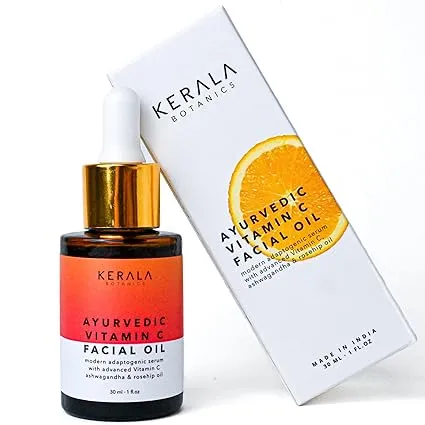
Ayurvedic Vitamin C Face Oil
Kerala Botanics
$49
★★★★☆
Youth To The People Adaptogen Deep Moisture Cream combines ashwagandha and reishi in a more conventional moisturizer format — better for oily skin types who find oils too much, and genuinely comfortable under SPF. The beta-glucans from reishi give it legitimate barrier-support cred alongside the adaptogen angle.
Adaptogen Deep Moisture Cream with Ashwagandha & Reishi
Youth To The People
$48
★★★★☆
Building a Neurocosmetic-Aware Routine
You don’t have to overhaul everything. The goal is to make stress-awareness part of how you think about your routine, not a whole new product category to buy into.
Step 1: Address the inflammatory load first. If your skin is chronically reactive, look at whether you’re over-exfoliating or using actives that are actively disrupting your barrier. A stressed barrier is a stressed nervous system response. Barrier-adaptive moisturizers and a scaled-back active rotation — skin cycling is good for this — give the inflammatory cascade a chance to cool down before you add anything.
Step 2: Choose one adaptogen ingredient to trial. Don’t throw five new things at your skin at once. Pick ashwagandha or reishi and give it six to eight weeks. That’s enough time to see whether chronic stress-triggered inflammation — the low-grade kind that makes your skin look dull and feel reactive — starts to shift.
Step 3: Make the ritual intentional. This sounds soft, but it’s the part most people skip. Applying your skincare in under 90 seconds while standing over the sink, half-dressed, thinking about tomorrow’s meeting is not going to engage the parasympathetic nervous system. Slow it down. Use a product with a scent you actually like. Do it in the same order, at the same time. Consistency and sensory repetition are how rituals build neurological grooves.
Step 4: Don’t expect skincare to fix systemic stress. If cortisol is chronically elevated because of your life, the best adaptogen serum on the market is doing damage control at best. Sleep, movement, and actually managing the stressor matter more than your routine. Your skin will tell you when something systemic is wrong — the Cortisol Face and Stress-Skin Axis piece goes into this in detail.
The Honest Verdict on Neurocosmetics
The science behind the skin-brain axis is real. Neuropeptides exist, adaptogens have measurable activity, and the sensory dimensions of a skincare routine have documented nervous system effects. This is not woo-adjacent marketing. It’s physiology.
But. Most products slapping “neurocosmetic” on the label are not delivering a meaningful dose of any active that interfaces with neuropeptide signaling. They’re selling the idea of calm more than the chemistry of it.
The category is worth paying attention to — and the best formulas are already out there, often in the adaptogen and Ayurvedic skincare space, where tradition met mechanism long before “neurocosmetics” became a trend. Modern Ayurvedic skincare and the skin-brain axis are, it turns out, talking about the same thing in different languages.
Look for formulas with actual named adaptogen extracts at credible concentrations. Look for neuropeptide actives like palmitoyl tripeptide-8 if you want the more technical route. And look at the ritual itself — the texture, the scent, the moment — as part of the formula, not just packaging.
Your skin is listening to your nervous system constantly. The least interesting response is to ignore that. The most honest one is to build a routine that actually works with it.
Related reading: Ashwagandha for Skin: What the Topical Adaptogen Actually Does · Cortisol Face and the Stress-Skin Axis · Scent as Skincare: Why Aromatherapy Makes a Routine Stick · Modern Ayurvedic Skincare: What the Tradition Actually Got Right · Inflammaging: How Chronic Low-Grade Inflammation Ages Your Skin