
Ingredients
Modern Ayurvedic Skincare: What the Tradition Actually Got Right
Evidence-backed Ayurvedic ingredients like turmeric, neem, and bakuchiol that actually work—plus modern brands bridging ancient wisdom with clinical formulation.
Disclosure — This article may contain affiliate links. We earn a small commission at no extra cost to you when you purchase through our links. This supports our ability to create independent, evidence-based skincare content.
Ayurveda has been marketing skincare for 5,000 years. The problem? Most modern “Ayurvedic” products either lean too heavily into mystical dosha typing or ignore the tradition’s actual botanical knowledge entirely. The middle ground — where ancient plant wisdom meets clinical formulation — is where things get interesting.
We’re not talking about matching your skincare to your constitution based on a five-minute quiz. We’re talking about ingredients that Ayurvedic texts identified as skin-healing centuries before dermatology existed, and that modern research has validated with mechanisms and clinical data.
The Dosha Marketing Problem
Walk into any store selling Ayurvedic skincare and you’ll find products sorted by constitutional type: Vata (dry skin), Pitta (sensitive/inflamed), Kapha (oily/congested). It’s a tidy system that makes choosing products feel personalized and ancient-wisdom-approved.
The issue is that doshas are complex, shifting constitutional patterns — not static skin types. Real Ayurvedic practitioners spend years learning to assess them properly. A quiz asking whether you prefer warm or cold weather isn’t going to accurately type your constitution, let alone predict which cleanser will work for your breakouts.
More problematically, this approach often ignores what Ayurveda actually got right: specific plant compounds that demonstrably improve skin function. The tradition identified anti-inflammatory, antimicrobial, and barrier-supporting botanicals through centuries of observation. Modern dermatology has isolated many of the active compounds responsible and validated their effects.
The marketing focus on doshas can overshadow the real treasure: a sophisticated understanding of plant-based skincare actives.
What Ayurveda Actually Identified
Ayurvedic texts cataloged thousands of medicinal plants and their effects on skin. Many of these observations align remarkably well with what we now know about skin physiology and the compounds that support it.
Turmeric: The Golden Anti-Inflammatory
Turmeric (Haridra in Sanskrit) appears in virtually every classical Ayurvedic text on skin disorders. The tradition used it for inflammatory conditions, wound healing, and what we’d now call hyperpigmentation.
Modern research has identified curcumin as turmeric’s primary active compound. It’s a potent anti-inflammatory that inhibits multiple inflammatory pathways simultaneously — more comprehensive than many synthetic anti-inflammatories that target single pathways. Studies show it can reduce inflammatory markers in skin by 40-60% when applied topically.
The catch is bioavailability. Curcumin breaks down quickly when exposed to light and doesn’t penetrate skin well in its raw form. Traditional preparations often combined turmeric with oils or other enhancing ingredients. Modern formulations use encapsulation, derivatives like tetrahydrocurcumin, or delivery systems that actually get the active compounds into skin cells.
Turmeric Brightening & Exfoliating Mask
Kora Organics
$58
★★★★☆
Neem: The Universal Purifier
Neem (Nimba) was called “the village pharmacy” in traditional Indian medicine. Ayurvedic practitioners used every part of the tree, but neem leaf extract was specifically prized for skin purification and treating what we’d now recognize as bacterial and fungal skin conditions.
The science backs this up completely. Neem contains over 140 active compounds, including nimbidin, azadirachtin, and quercetin. Multiple studies show neem extract can inhibit the growth of Propionibacterium acnes (the bacteria involved in acne) as effectively as benzoyl peroxide, but without the irritation and drying effects.
What’s particularly interesting is neem’s dual action. While it’s antimicrobial, it also supports skin barrier function rather than compromising it. Many conventional acne treatments strip the skin barrier, leading to increased sensitivity and rebound oil production. Neem seems to work with skin’s natural protective mechanisms rather than against them.

Neem Face Wash
Himalaya
$8
★★★★☆
Bakuchiol: The Plant-Based Retinol Alternative
Here’s where Ayurvedic wisdom predicted modern skincare by several centuries. Bakuchiol comes from Psoralea corylifolia (Bakuchi), a plant used in Ayurveda for skin rejuvenation and treating pigmentation disorders.
Clinical studies from the last decade show bakuchiol stimulates collagen production and improves skin firmness similarly to retinol, but without the irritation, photosensitivity, or pregnancy concerns. A 2018 study published in the British Journal of Dermatology found 0.5% bakuchiol applied twice daily was as effective as 0.5% retinol for improving photoaging, with significantly less irritation.
The mechanism is different from retinoids — bakuchiol works through antioxidant pathways and gene expression changes rather than direct retinoic acid receptor activation. But the end results (increased collagen, improved texture, reduced hyperpigmentation) are remarkably similar.
For our detailed comparison of how bakuchiol stacks up against traditional retinol, including who should consider making the switch, see our complete bakuchiol versus retinol analysis.
Bakuchiol Serum
Herbivore
$54
★★★★☆
The Kumkumadi Factor
One Ayurvedic formulation has gained particular attention in modern skincare: Kumkumadi oil. Traditional recipes contain saffron (the “kumkuma”), along with sandalwood, turmeric, and various other botanicals in a base oil, usually sesame or almond.
What makes this interesting from a modern perspective is the combination of actives. Saffron contains crocin and crocetin, compounds with demonstrated skin-lightening and anti-aging properties. Sandalwood provides alpha-santalol, which has anti-inflammatory and skin-smoothing effects. Combined with turmeric’s curcumin, you have a multi-pathway approach to treating hyperpigmentation and photoaging.
The traditional oil base also makes sense scientifically. Many of these plant compounds are lipophilic — they dissolve in and are best delivered through oils rather than water-based serums. The oil vehicle also provides occlusive benefits for barrier repair.
Modern interpretations of Kumkumadi often add contemporary actives or use more refined versions of the traditional ingredients. The principle remains the same: combining multiple botanicals with complementary mechanisms in an oil base for comprehensive skin benefits.
Modern Brands Bridging Tradition and Science
The most interesting developments in Ayurvedic skincare come from brands that understand both the traditional knowledge and modern formulation science. Rather than simply copying ancient recipes or slapping Sanskrit names on conventional products, these companies are identifying the active compounds in traditional botanicals and formulating them for optimal efficacy.
Kerala Botanics represents this approach well. Their Ayurvedic Vitamin C Face Oil combines traditional Ayurvedic botanicals with an advanced, stabilized form of vitamin C that stays active in skin cells up to 80 times longer than standard L-ascorbic acid. They’ve also included bakuchiol, bridging the traditional use of Psoralea corylifolia with modern clinical validation of the extracted compound.
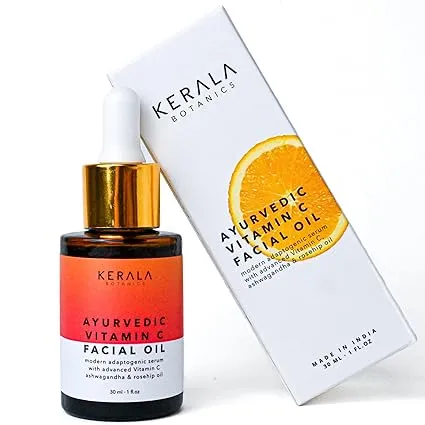
Ayurvedic Vitamin C Face Oil
Kerala Botanics
$49
★★★★☆
The oil format itself reflects traditional Ayurvedic delivery methods while serving modern needs. For people seeking simplified routines, it functions as serum, moisturizer, and facial oil in one step. The combination of vitamin C and bakuchiol addresses both antioxidant protection and collagen stimulation without the irritation potential of traditional retinoids.
What sets approaches like this apart is the respect for both tradition and evidence. They’re not dismissing thousands of years of botanical knowledge, but they’re also not asking you to accept it on faith alone. The formulations acknowledge that traditional preparations might not always deliver actives in optimal concentrations or stability, and modern techniques can improve on that while honoring the original insights.
The Ashwagandha and Adaptogen Question
One area where modern Ayurvedic skincare ventures into less certain territory is topical adaptogens. Ashwagandha, holy basil, and other adaptogenic herbs have well-documented effects when taken internally, particularly for stress and inflammatory markers that can affect skin.
The question is whether these compounds provide meaningful benefits when applied topically. Some preliminary research suggests adaptogenic compounds may help skin cope with environmental stressors and support barrier function, but the clinical data is much thinner than for ingredients like turmeric, neem, or bakuchiol.
This doesn’t mean adaptogen-containing skincare is useless — many of these plants contain other beneficial compounds like antioxidants and anti-inflammatories that can benefit skin regardless of their adaptogenic properties. But it’s worth being realistic about what we know versus what we’re extrapolating from internal use research.
Where Traditional Knowledge Falls Short
Ayurveda got remarkably many things right about botanical skincare, but it also has limitations when applied to modern skin concerns and lifestyles.
Traditional Ayurvedic skincare didn’t have to contend with air pollution, synthetic chemicals, or the blue light exposure that characterizes modern life. While the fundamental principles of supporting skin barrier function and managing inflammation remain relevant, the specific challenges have evolved.
Similarly, traditional preparations weren’t optimized for stability, penetration, or consistent potency in the way modern formulations can be. A traditionally prepared turmeric paste might deliver variable amounts of curcumin depending on the source plant, processing method, and storage conditions. Modern extraction and formulation techniques can ensure consistent, optimal concentrations of active compounds.
There’s also the reality that some traditional ingredients, while effective, aren’t practical for modern routines. Many traditional Ayurvedic face masks required lengthy preparation and application times that don’t fit contemporary lifestyles. Effective modern formulations need to work within the time constraints most people actually have.
Integration vs Appropriation
As Ayurvedic ingredients gain popularity in mainstream skincare, questions of cultural appropriation become relevant. There’s a meaningful difference between respectfully incorporating traditional botanical knowledge with proper attribution and simply mining another culture’s wisdom for marketing purposes.
Responsible integration involves understanding the context and principles behind traditional uses, not just copying ingredient lists. It means acknowledging the sources of traditional knowledge and ideally supporting the communities that preserved and developed this understanding over generations.
It also means being honest about what aspects of traditional practice are being incorporated versus what’s been modified or updated for modern use. Claiming a product is “authentic Ayurvedic” when it’s been significantly reformulated with modern ingredients and techniques isn’t accurate or respectful.
The most thoughtful modern Ayurvedic brands tend to be transparent about this balance — honoring traditional knowledge while being clear about how they’ve adapted it for contemporary formulation and use patterns.
The Clinical Reality Check
While many Ayurvedic botanicals have impressive research backing their traditional uses, it’s important to maintain perspective about clinical evidence. Most of the robust studies on ingredients like turmeric, neem, and bakuchiol have been conducted in the last 10-20 years, using extracted, concentrated, or chemically modified versions of the traditional plant materials.
This doesn’t invalidate traditional knowledge, but it does mean that a product containing whole plant extracts in traditional concentrations might not deliver the same results as the clinical studies using standardized, concentrated actives.
When evaluating Ayurvedic skincare products, look for formulations that specify the concentration and form of active compounds, not just the presence of traditional plant names. “Contains turmeric” could mean anything from a trace amount of powdered root to a significant concentration of stabilized curcumin.
The most effective modern Ayurvedic products tend to bridge this gap by using traditional botanical knowledge as a starting point, then optimizing the formulation for bioavailability, stability, and clinical efficacy.
Layering Traditional and Modern Approaches
One of the most practical applications of Ayurvedic skincare wisdom is using it to complement rather than replace evidence-based modern routines. For example, incorporating a well-formulated bakuchiol serum for those who can’t tolerate retinoids, or using neem-based products for gentle antimicrobial action without the harshness of some conventional acne treatments.
This approach allows you to benefit from both traditional botanical knowledge and modern dermatological advances. You might use a vitamin C serum with contemporary stabilization technology in the morning and a traditional Ayurvedic oil blend in the evening, or incorporate turmeric-based masks as needed for inflammatory flares while maintaining a consistent routine with proven actives like ceramides and niacinamide.
The key is understanding what each approach does well and where they complement each other, rather than viewing traditional and modern skincare as competing philosophies.
For those interested in natural vitamin C alternatives, many Ayurvedic botanicals like amla (Indian gooseberry) provide vitamin C in plant-based forms that may be gentler for sensitive skin than synthetic L-ascorbic acid formulations.
Putting It All Together
The most valuable aspects of Ayurvedic skincare aren’t the constitutional typing systems or mystical claims, but the sophisticated understanding of plant-based actives developed through centuries of observation and use. Modern dermatology has validated many of these traditional insights while providing tools to optimize their delivery and efficacy.
The sweet spot is products that respect traditional knowledge while leveraging modern formulation science for stability, penetration, and consistent potency. Look for brands that can explain both the traditional context of their ingredients and the contemporary research supporting their use.
Skip products that rely purely on dosha marketing without explaining what their ingredients actually do, or that make vague claims about “ancient wisdom” without any clinical backing. The best modern Ayurvedic skincare should be able to stand up to scrutiny on both traditional knowledge and contemporary evidence.
Whether you’re looking to replace harsh conventional treatments with gentler botanical alternatives or add traditional botanicals to an evidence-based routine, the key is understanding what you’re actually putting on your skin and why. Five thousand years of plant knowledge is worth paying attention to — but it works best when combined with modern understanding of how to formulate and deliver those insights effectively.