
Routines
Kama Ayurveda and Forest Essentials Alternatives That Cost Less
Love Ayurvedic luxury skincare but not the price? These 7 alternatives deliver the botanicals, the ritual, and the results for far less.
Disclosure — This article may contain affiliate links. We earn a small commission at no extra cost to you when you purchase through our links. This supports our ability to create independent, evidence-based skincare content.
Kama Ayurveda and Forest Essentials occupy a specific position in the market — they’re not just skincare brands, they’re identity brands. The dark glass bottles, the Sanskrit on the packaging, the $90 face oils. You’re paying for a story, and it’s a good one. The problem is that Estée Lauder now owns a significant stake in Forest Essentials, and Kama has been moving steadily upmarket for years. The Ayurvedic tradition they’re drawing from is thousands of years old. The pricing is very much 2026.
That’s worth saying plainly. The botanical ingredients that make these products interesting — kumkumadi oil, saffron, turmeric, bakuchiol, ashwagandha — are not proprietary. They’re not hard to source. And a growing number of indie and mid-market brands are using them without charging you for a mahogany box and a ribbon.
This list isn’t about cheap knockoffs. It’s about what you’re actually getting when you buy into the Kama or Forest Essentials ecosystem, and where you can get most of that value without the luxury markup. We looked at ingredient quality, formulation approach, brand transparency, and price-per-use. If you want context on what the Ayurvedic tradition actually recommends — and what the science does and doesn’t support — start with our modern Ayurvedic skincare guide.
How We Selected These Alternatives
The filter was specific. Every brand on this list had to meet three criteria: genuine Ayurvedic ingredients (not just “inspired by”), a formulation that holds up to basic ingredient-label scrutiny (see our guide to reading skincare labels if you want to follow along), and a price that represents real savings over the luxury tier. Marketing language about “ancient rituals” doesn’t count. Actual botanicals in meaningful positions on the ingredient list do.
We excluded brands that use Ayurvedic terminology as aesthetic branding without the ingredients to back it up. There are more of those than you’d think.
#1 Best Overall: Kama Ayurveda Nalpamaradi Thailam
Here’s the thing about Kama Ayurveda: not everything they make costs $90. The Nalpamaradi Thailam has been in their lineup for years and sits at a price point that’s actually defensible. It’s a traditional turmeric-based treatment oil — nalpamara refers to the four bark extracts that form its base — and it does a real job on uneven tone and dullness.
We’re putting this on the list because if you’re going to spend anything on Kama, this is the product to spend it on. It’s one of their most authentic formulations, has a long track record among users with South Asian skin tones (where this style of treatment has generational roots), and costs about half of their premium oil range. The turmeric will stain. Wear something you don’t care about, and don’t use it right before you need to go somewhere.
It won’t suit everyone. The smell is assertive — turmeric and sesame, which is accurate to the traditional formula but not exactly a spa experience for newcomers. And if your skin is oily, the base oil finish may not work for you.
Nalpamaradi Thailam Skin Brightening Treatment
Kama Ayurveda
$32
★★★★½
What we liked
- + Genuinely traditional formulation
- + One of Kama's more affordable SKUs
- + Strong track record for evening tone
Worth noting
- - Strong turmeric smell
- - Can stain fabric
- - Oily finish not for everyone
If you're going to spend on one Kama product, this is the one — and it's half the price of their prestige oils.
#2 Best Multitasker: Kerala Botanics Ayurvedic Vitamin C Face Oil
The oil-based vitamin C category is genuinely small. Most vitamin C products — including most of what Kama and Forest Essentials sell — rely on stable plant extracts rather than isolated ascorbic acid, which has well-documented stability problems in aqueous formulas. Kerala Botanics takes a different approach: an oil-soluble form of vitamin C (which stays active in skin cells significantly longer than L-ascorbic acid), combined with bakuchiol as a retinol alternative and ashwagandha as an adaptogenic support ingredient.
The Ayurvedic framing here isn’t decorative. The formulation actually leans on traditional botanical logic — bakuchiol comes from the babchi plant, which has roots in both Ayurvedic and traditional Chinese medicine, and ashwagandha is a legitimate adaptogen with real skin-calming data behind it. We covered bakuchiol in depth here if you want the evidence breakdown.
What makes this a useful alternative to Forest Essentials is the format. Forest Essentials’ oils are beautiful but single-purpose. This one is asking to replace your serum, moisturizer, and facial oil in one step. At $49, that math works out favorably. It’s also genuinely indie — not inside a conglomerate yet.
The caveats are real. If you have oily skin, a face oil as your primary moisturizer is a hard sell — check our face oil for oily skin guide before committing. It can feel heavy under makeup. And if you want the kind of clinical evidence trail that comes with, say, a well-studied L-ascorbic acid serum, the data on the specific vitamin C derivative here is thinner than the marketing suggests. That’s honest, not damning — most Ayurvedic products are in the same position.
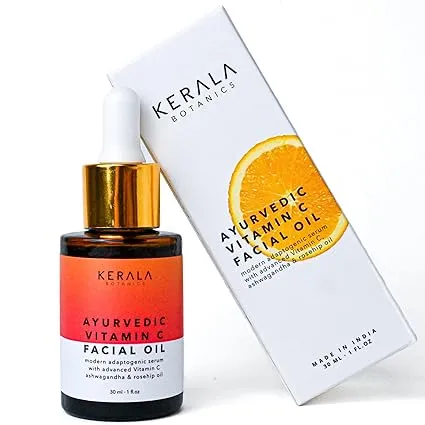
Ayurvedic Vitamin C Face Oil
Kerala Botanics
$49
★★★★☆
What we liked
- + Oil-soluble vitamin C with stability advantage over L-ascorbic acid serums
- + Bakuchiol adds retinol-alternative function
- + Replaces serum, moisturizer, and oil in one step
- + Rooted in Ayurvedic tradition without the luxury markup
Worth noting
- - Oil format won't suit everyone, especially oily skin
- - Less third-party clinical data than mass-market actives
- - Can feel heavy under makeup
The rare Ayurvedic oil that actually earns its ingredient story — and does the work of three products.
#3 Best Oil-Based Formula: Soulflower Kumkumadi Miraculous Beauty Fluid
Kumkumadi tailam is probably the most replicated formulation in Ayurvedic skincare. Forest Essentials charges $90+ for their version. Kama’s sits in the $60–$75 range. Soulflower’s is $18, widely available on Amazon, and — crucially — the base ingredients are recognizable and legitimate.
The traditional kumkumadi formula calls for saffron, sandalwood, manjistha, and a sesame oil carrier. Soulflower hits most of those marks. The botanical density is lower than the luxury versions, and the fragrance is stronger than some people will want. But for someone who’s curious about the format and doesn’t want to commit $70 to find out if they like it, this is a reasonable starting point.
It’s worth noting that kumkumadi is not a quick brightener — it’s a treatment oil meant to be used consistently over weeks. If you want the evidence on how the individual ingredients work, our kumkumadi vs modern vitamin C oils piece goes into that comparison specifically. Soulflower’s version won’t dramatically outperform a well-formulated vitamin C serum on speed. What it offers is the ritual, the traditional botanical stack, and a price that doesn’t require a separate budget line.
Kumkumadi Miraculous Beauty Fluid
Soulflower
$18
★★★★☆
What we liked
- + Authentic kumkumadi base
- + Affordable entry point to the format
- + Widely available
Worth noting
- - Fragrance-forward — not for sensitive skin
- - Lighter botanical density than Kama or Forest Essentials
The most accessible kumkumadi you'll find, and a genuine starting point if you're new to the format.
#4 Best Natural Formula: Herbivore Botanicals Kumkumadi Oil
Herbivore sits in an interesting middle ground: not indie-small, not luxury-conglomerate, and transparently Western in its approach to Ayurvedic ingredients. Their Kumkumadi oil uses a recognizable botanical roster in a clean base and prices at $44 — meaningfully less than Forest Essentials while still occupying the premium-feeling shelf at Sephora.
If you care about clean formulation standards (no synthetic fragrance, no mineral oil in the carrier, disclosed ingredient sourcing), Herbivore is easier to verify than many of the Indian brands at this price point. The saffron content is not something they disclose in detail, which is a mild concern given how often saffron functions as a label claim more than an active dose. But the overall formulation is honest and the texture is genuinely nice — lighter and faster-absorbing than traditional sesame-based oils.
It’s a good pick if you’re coming from a Western clean-beauty orientation and want to explore the kumkumadi format without buying something with an ingredient list you can’t parse. It won’t be as botanically dense as Kama’s equivalent. That’s a real tradeoff.
Moon Fruit Superfruit Night Treatment
Herbivore Botanicals
$44
★★★★☆
What we liked
- + Clean formulation with transparent ingredient sourcing
- + Lighter texture than traditional sesame oil bases
- + Sephora availability for easy returns
Worth noting
- - Botanical density below traditional Kama or Forest Essentials
- - Saffron concentration not disclosed
A Western-market bridge product — cleaner packaging and easier access, moderate Ayurvedic depth.
#5 Best Value: Plum Saffron & Hyaluronic Acid Serum
If the reason you’re looking at Kama or Forest Essentials is brightening — specifically, the saffron-based glow that the category is known for — you don’t necessarily need an oil to get there. Plum’s saffron serum pairs the traditional brightening ingredient with hyaluronic acid in a lightweight serum format that costs $16 and works well as a layering step.
Plum is an Indian brand with decent transparency about their formulation philosophy and a real commitment to cruelty-free certification. They’re not trying to replicate the luxury experience — they’re just making functional products with Ayurvedic-adjacent ingredients at prices that make sense. The saffron here is functioning as a skin-brightening active (crocin, its primary compound, has some evidence behind it for melanin inhibition), not as aesthetic packaging.
The tradeoff is depth. A serum like this doesn’t have the nourishing, occlusive quality of a traditional tailam. If you have dry or dehydrated skin, you’ll want to layer it under a moisturizer. For combination or normal skin, it might work as a standalone treatment step. For more on how to layer skincare in the right order, we’ve covered that separately.
Saffron & Hyaluronic Acid Serum
Plum
$16
★★★★☆
What we liked
- + Saffron-based brightening in a lightweight serum format
- + Good for layering under moisturizer
- + Cruelty-free certified
Worth noting
- - Lacks the nourishing depth of a traditional Ayurvedic oil
- - Low active concentration likely at this price
Works as a brightening serum layer if you want an Ayurvedic nod without going full oil.
#6 Best Ayurvedic Formula: Mamaearth Brightening Vitamin C Serum with Turmeric
Mamaearth is a larger Indian brand that’s gotten more criticism as it’s scaled — some of it fair, some of it the usual skepticism that greets any brand that moves from indie to mainstream. On this specific product, the formulation logic holds up: turmeric (curcumin) and vitamin C work through complementary mechanisms, both affecting melanin synthesis at different points in the pathway. It’s a legitimate pairing, not just a marketing one.
The concerns here are real. At $14, the L-ascorbic acid concentration is almost certainly not high enough to be clinically meaningful, and the packaging isn’t ideal for keeping vitamin C stable. If you’ve read our piece on vitamin C oxidation, you know that’s not a minor issue. What you’re getting is more in the “low-dose brightening with a turmeric boost” category than a true vitamin C treatment.
For someone coming down from Forest Essentials pricing and wanting to test whether Ayurvedic brightening ingredients work for their skin, this is a low-risk entry. For someone who actually wants efficacious vitamin C, spend more.
Brightening Vitamin C Serum with Turmeric
Mamaearth
$14
★★★★☆
What we liked
- + Turmeric + vitamin C is a legitimate ingredient pairing
- + Accessible price for testing the category
- + Light texture
Worth noting
- - Vitamin C concentration likely too low for clinical effect
- - Packaging doesn't protect against oxidation well
- - Limited transparency on formulation
Fine for a beginner budget, but manage expectations on potency.
#7 Budget Pick: Biotique Kumkumadi Scrub
Biotique has been selling Ayurvedic skincare at drugstore prices for decades — long before it was a trend. Their kumkumadi face scrub is not trying to be Forest Essentials. It’s a basic physical exfoliant with a saffron-tinged botanical base, and it costs $10. That’s the whole pitch.
Physical scrubs are not the right choice for sensitized, reactive, or acne-prone skin — chemical exfoliation is generally the better call in those cases. But for someone who wants a weekly brightening scrub that nods to traditional Ayurvedic ingredients without spending anything, Biotique delivers. The ingredient list is simple and legible. The saffron concentration is low. The results are modest. Honest product.
Kumkumadi Face Scrub
Biotique
$10
★★★★☆
What we liked
- + Extremely affordable
- + Widely available
- + Simple, legible ingredient list
Worth noting
- - Physical scrub — not for sensitized or acne-prone skin
- - Formulation is basic compared to luxury tier
- - Low active concentration
An entry-level Ayurvedic option for the genuinely budget-constrained — don't expect luxury results.
Quick Comparison
| Product | Brand | Price | Format | Best For |
|---|---|---|---|---|
| Nalpamaradi Thailam | Kama Ayurveda | $32 | Treatment oil | Tone-evening, traditional results |
| Ayurvedic Vitamin C Face Oil | Kerala Botanics | $49 | Face oil | Simplified routine, brightening |
| Kumkumadi Beauty Fluid | Soulflower | $18 | Oil | Kumkumadi beginners |
| Moon Fruit Kumkumadi Oil | Herbivore | $44 | Oil | Clean-beauty crossover |
| Saffron & HA Serum | Plum | $16 | Serum | Layering brightener |
| Vitamin C + Turmeric Serum | Mamaearth | $14 | Serum | Budget brightening test |
| Kumkumadi Scrub | Biotique | $10 | Scrub | Budget physical exfoliant |
Putting It Together
The short version: if you want the closest thing to Kama quality at a fraction of the price, their own Nalpamaradi Thailam is actually the answer — it’s one of the brand’s most traditional and affordable products, and it works. If you want an oil that’s fully independent and adds modern active benefits on top of the Ayurvedic base, Kerala Botanics is the pick to investigate. Everything else on this list is a category entry point — useful for testing whether an oil or a botanical serum format suits your skin before you commit more.
Forest Essentials and Kama at full price are not frauds. They’re genuinely well-formulated products with a real connection to the tradition they’re drawing from. But that tradition is public knowledge. The botanicals are available. You don’t need a luxury markup to access them — you need to know what you’re looking for.
For more on the Ayurvedic approach to facial oils and how to use them correctly, the abhyanga facial massage guide is worth reading alongside this. And if you’re weighing bakuchiol more specifically — as a retinol alternative, not just an oil ingredient — we compared it head-to-head against retinol and algae-based alternatives here.
Methodology
We evaluated products across five factors: ingredient quality and position on the label, formulation logic (do the active ingredients actually work together), brand transparency and sourcing claims, price-per-use relative to the Forest Essentials and Kama reference points, and user feedback from verifiable purchase reviews. We did not accept products with generic Ayurvedic branding but no corresponding ingredient substance. We also did not include products sold primarily through gray-market channels — if you’re buying Indian brands online, our guide to avoiding counterfeit skincare on Amazon is worth a read before you checkout.
Affiliate relationships do not influence rankings or recommendations. The #1 pick is a Kama Ayurveda product, which should tell you something about how this list was built.