
Anti-Aging
Do 'Ozempic Face Creams' Work? Inside Topical GLP-1 Skincare
GLP-1 face creams are everywhere. But can a topical product replicate what semaglutide does systemically? Here's what the science actually says.
Disclosure — This article may contain affiliate links. We earn a small commission at no extra cost to you when you purchase through our links. This supports our ability to create independent, evidence-based skincare content.
A new category of product appeared quietly, then all at once: creams, serums, and oils branded around “GLP-1,” “topical semaglutide,” or “Ozempic-inspired” skincare. The claims range from vague (“supports skin firmness”) to bold (“mimics the fat-preserving effects of GLP-1”). Most of them cost $80 to $200.
None of them do what they’re implying.
This isn’t a takedown of peptides, antioxidants, or the legitimate skincare concerns that arise when people lose weight rapidly. Those are real. What’s worth unpacking here is the specific claim — that a topical product can replicate or approximate the mechanism of a GLP-1 receptor agonist drug applied to the face. It can’t. And understanding why helps cut through a category that’s growing faster than the evidence behind it.
What GLP-1 Actually Does (And Where)
GLP-1 — glucagon-like peptide-1 — is a hormone produced in the gut. Its job is to signal the pancreas to release insulin, slow gastric emptying, and suppress appetite. Drugs like semaglutide (Ozempic, Wegovy) work by mimicking this hormone systemically: they bind to GLP-1 receptors throughout the body via the bloodstream.
The “Ozempic face” phenomenon — the hollowing and volume loss some users experience — happens because rapid weight loss depletes subcutaneous fat, including the structural fat pads in the face. We wrote about that in more depth in our piece on GLP-1 weight-loss facial changes and how to address them topically. The skincare response to that problem is legitimate. The idea that a topical product can prevent or replicate the drug’s mechanism is a different claim entirely.
GLP-1 receptors exist in skin tissue — some research suggests they play a role in sebaceous gland regulation and wound healing. But the concentrations required for systemic effect, and the delivery mechanism (subcutaneous injection or oral tablet with specific absorption engineering), have nothing in common with a face cream sitting on top of the stratum corneum.
The skin barrier’s job is to keep things out. That’s not a design flaw — it’s the point.
How These Products Are Actually Formulated
Pull the ingredient lists on several “GLP-1 skincare” products and a pattern emerges. What you’re actually looking at is one of three things:
- Standard peptide serums with a GLP-1-adjacent name or marketing claim layered on top
- Existing anti-aging formulas repositioned with new copy that leans into the Ozempic conversation
- Proprietary “GLP-1 peptide complexes” — usually synthetic peptide chains with no published clinical data on topical GLP-1 activity
The peptides themselves aren’t necessarily bad. Some — like Matrixyl (palmitoyl pentapeptide-4) or acetyl hexapeptide-3 — have reasonable evidence behind them as topical signal molecules. They can support collagen synthesis and address surface-level firmness. That’s worth something. But those claims exist independent of the GLP-1 framing. The GLP-1 branding is the markup.
One brand marketing a “topical GLP-1 serum” at $175 lists palmitoyl tripeptide-1 as its third active ingredient. That same peptide is in The Ordinary’s Buffet for $15. Same molecule. Very different story on the box.
The Ordinary Buffet Multi-Technology Peptide Serum
The Ordinary
$15
★★★★☆
The Penetration Problem
Peptides are large molecules. Most don’t cross the skin barrier in meaningful amounts without specific delivery technology — liposomes, nanoencapsulation, or other carrier systems. When a brand claims their “GLP-1 peptide” is topically active, the relevant question isn’t whether GLP-1 receptors exist in skin. It’s whether the molecule is getting anywhere near them.
Most brands making these claims don’t publish penetration data. A few cite in-vitro studies — testing on cells in a dish, not on living skin. That’s a significant gap.
Compare this to ingredients with well-documented topical penetration: retinol, niacinamide, ascorbic acid in the right pH and concentration, vitamin C derivatives. These have decades of peer-reviewed research behind them, including human clinical trials with measured outcomes. The GLP-1 category has press releases.
This isn’t unique to GLP-1 skincare. We’ve watched the same cycle with exosome serums, spermidine, and other categories where the biological concept is real but the topical delivery story is thin. The pattern is consistent: find a mechanism that sounds credible, name a product after it, charge accordingly.
What Actually Works for Volume Loss and Skin Laxity
If the underlying concern is the skin changes that accompany significant weight loss — loss of firmness, increased visibility of fine lines, skin that looks deflated rather than lifted — there are ingredients with actual evidence behind them.
Collagen-Support Actives
Retinoids remain the most evidence-backed category for stimulating collagen synthesis and improving skin texture. Tretinoin especially. Bakuchiol is a gentler alternative worth considering if retinoids cause irritation. Neither replaces lost volume, but both measurably affect skin density over time.
Peptides (Minus the GLP-1 Framing)
Legitimate peptide serums — Matrixyl 3000, copper peptides, palmitoyl-based tripeptides — have supporting data for collagen signaling. They’re worth including in a routine, at a price that reflects what they actually are. Copper peptides specifically have some of the more interesting recent research.
Drunk Elephant Protini Polypeptide Cream
Drunk Elephant
$68
★★★★☆
Barrier Support
Skin that’s lost volume tends to look worse when it’s also dehydrated or compromised. Ceramides, fatty acids, and humectants like hyaluronic acid won’t replace structural fat, but they affect how the skin looks day-to-day in ways that are underestimated. A well-functioning barrier reads as more resilient. The ceramides guide covers this well.
Vitamin C for Collagen and Brightness
One consistent finding across the anti-aging literature: topical vitamin C, in a stable, bioavailable form, supports collagen synthesis and protects against oxidative degradation. The format matters. Standard L-ascorbic acid serums oxidize quickly — here’s why. Oil-soluble and encapsulated derivatives tend to be more stable.
Kerala Botanics’ Ayurvedic Vitamin C Face Oil takes an oil-based approach, using a more stable vitamin C derivative alongside bakuchiol — a combination that addresses both collagen support and cell turnover without the irritation profile of a high-pH ascorbic acid formula. It’s a reasonable all-in-one option for anyone looking to simplify rather than add steps. Worth noting: the oil format isn’t ideal for oily or acne-prone skin, and it lacks the clinical depth of something like SkinCeuticals CE Ferulic. But for a streamlined routine, the value is real.
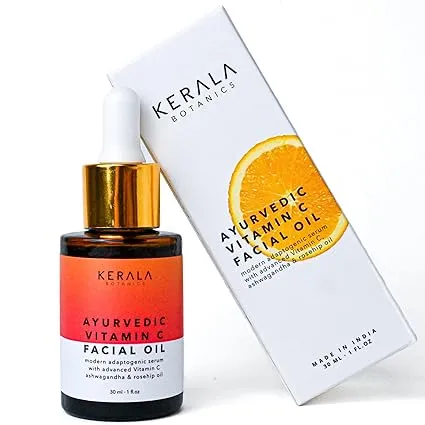
Ayurvedic Vitamin C Face Oil
Kerala Botanics
$49
★★★★☆
For those who want maximum clinical credibility in a collagen-support serum, SkinCeuticals A.G.E. Interrupter Advanced has documented data behind it. It won’t be confused with anything budget-friendly, but neither is it trading on borrowed branding.
SkinCeuticals A.G.E. Interrupter Advanced
SkinCeuticals
$195
★★★★½
How to Spot a GLP-1 Skincare Marketing Claim
The category will keep growing. A few things to look for when evaluating any product making GLP-1 or “Ozempic-inspired” claims:
- Does the claim specify a mechanism? Vague claims like “supports skin resilience” are different from “activates GLP-1 receptors.” If they’re claiming the latter, ask for the delivery data.
- Are the active ingredients novel — or just renamed? Check Incidecoder or a similar tool. Most “GLP-1 peptide complexes” are combinations of ingredients that already exist elsewhere under different names.
- Is there published human clinical data? Not a brand-funded study with ten participants. Peer-reviewed, ideally replicated.
- What would this product cost without the branding? That gap is the actual price of the story.
This applies broadly. The clean app scores explainer covers a similar dynamic — how marketing frameworks shape perception of products independent of what’s actually in them. The GLP-1 skincare category is the same mechanism, different angle.
Putting It Together
Topical GLP-1 products cannot replicate the systemic mechanism of semaglutide. The biology doesn’t support it. The skin barrier prevents it. And most of what’s inside these products — when you get past the branding — is a peptide serum you could buy for a fraction of the price.
That doesn’t mean the underlying concerns are fake. Skin laxity, volume loss, and the structural changes that follow significant weight change are real, and they’re worth addressing with actual evidence-based tools: stable vitamin C, retinoids or bakuchiol, peptides with supporting data, and consistent barrier care.
The most useful question to ask of any trending skincare category isn’t “does it work?” It’s “what would this claim require to be true?” With GLP-1 face creams, the answer is: a delivery mechanism that current cosmetic formulation can’t achieve, acting on a systemic receptor through a topical route. Until that changes, the category is mostly vocabulary, applied to existing formulas, sold at a significant markup.
Spend that money on something with a longer track record. The skin doesn’t know what’s trending.