
Acne
Prebiotic, Probiotic, or Postbiotic? Which Actually Helps Acne
A 2026 systematic review ranked all three biotics for acne. The results might surprise you — postbiotics came out on top, and here's why.
Disclosure — This article may contain affiliate links. We earn a small commission at no extra cost to you when you purchase through our links. This supports our ability to create independent, evidence-based skincare content.
The skincare world loves packaging things in threes. So when “biotic skincare” arrived, we got prebiotics, probiotics, and postbiotics — often sold as a category rather than as distinct things with distinct effects. Most brands blur the lines on purpose. It sells better that way.
Here’s the actual question: if you have acne, which one is worth your money?
A 2026 systematic review pulling from 33 studies finally gave us some numbers to work with. Prebiotics reduced acne lesions by roughly 37%. Probiotics came in around 45%. Postbiotics — the least-hyped of the three — landed at approximately 50%. That gap is meaningful. And it changes how we should be shopping.
First, What Are We Actually Talking About?
These three terms sound related because they are. But they’re not interchangeable.
Prebiotics are the food source — fibers and compounds that feed the good bacteria already living on your skin. Think of them as infrastructure. They don’t introduce anything new; they create conditions for what’s there to thrive.
Probiotics are live microorganisms. Topically, that means live bacteria applied directly to skin. This is harder than it sounds — keeping bacteria alive in a cosmetic formula is genuinely difficult, and the shelf life problem is real.
Postbiotics are what bacteria produce after they’ve fermented. Metabolites, enzymes, short-chain fatty acids, peptide fragments. The bacteria themselves are gone; only their beneficial output remains. This is partly why they work so well in formulas — there’s nothing alive to destabilize.
Understanding the difference matters because the way each one addresses acne is completely different.
Why the Microbiome Gets Involved in Acne at All
Acne isn’t just clogged pores. It’s an inflammatory response that involves C. acnes (formerly P. acnes), disrupted skin pH, a compromised barrier, and an immune system that overreacts to bacterial imbalance. The microbiome sits at the center of most of those mechanisms.
Healthy skin microbiomes are diverse. Acne-prone skin tends toward lower diversity — fewer strains, more C. acnes dominance. That imbalance triggers inflammation, which triggers breakouts, which damages the barrier further. It’s a loop.
This is why the biotic category has so much potential. If you can shift the balance, you interrupt the loop. The question is just which tool does it most effectively.
For more background on the microbiome side of this, the Skin Microbiome 101 guide covers the foundational research in detail.
Prebiotics: The Support System
Prebiotics are the most passive of the three. They don’t do the work themselves — they enable the work. Common prebiotic ingredients include inulin, beta-glucan, lactulose, and certain plant-derived sugars.
For acne, the theory is sound: feed the good bacteria, crowd out the bad. The 37% lesion reduction from the review is real, and it’s not nothing. But it’s also the lowest of the three, and there’s a catch.
Prebiotics are indiscriminate. They tend to feed whatever bacteria are present — beneficial or not. On heavily dysbiotic skin, that can be counterproductive. If C. acnes has already taken over, adding a food source doesn’t help.
Practical takeaway: Prebiotics work best as maintenance, not treatment. They’re most useful in cleansers and moisturizers for people who want to protect a microbiome that’s already reasonably balanced. If you’re actively breaking out, don’t expect prebiotics alone to fix it.
A prebiotic-enriched cleanser is one reasonable starting point. La Roche-Posay’s Toleriane Hydrating Gentle Cleanser contains prebiotic thermal water and is consistently recommended for barrier-compromised, acne-prone skin because it cleans without stripping.

La Roche-Posay Toleriane Hydrating Gentle Cleanser
La Roche-Posay
$15
★★★★½
Probiotics: The Live Bacteria Approach
Probiotics in skincare have been around for years. The results have been mixed — not because the concept is wrong, but because formulation is hard. Live bacteria are fragile. Heat, pH shifts, and preservatives can kill them before they reach your face.
That said, when formulated well, they do something prebiotics can’t: they actively compete with C. acnes for space and resources. Some strains also produce antimicrobial peptides that suppress problematic bacteria directly. The 45% lesion reduction in the review reflects real, measurable effect.
The honest limitation is strain specificity. Not all probiotics are equal. Lactobacillus strains dominate the research, but even within that genus the effects vary. A product listing “probiotics” on the label could contain almost anything. The research was done on specific strains under controlled conditions — that doesn’t automatically transfer to what’s in your serum.
Look for brands that are transparent about which strains they’re using and at what concentration. Gallinée is one of the more science-forward options in this space. Their Probiotic Serum uses a defined lactic acid bacteria culture and prebiotic combination, and the clinical transparency is better than most.
Gallinée Probiotic Serum
Gallinée
$55
★★★★☆
Mother Dirt’s AO+ Mist is a different type of product — it uses Ammonia-Oxidizing Bacteria (AOB), which isn’t a probiotic in the traditional sense but operates on similar principles. It’s generated real interest in microbiome research circles, though the clinical acne data specifically is limited. Worth knowing about if you want to explore the live-bacteria category.

Mother Dirt AO+ Mist
Mother Dirt
$49
★★★★☆
Postbiotics: The Underrated One
Here’s where the 2026 review gets interesting.
Postbiotics consistently outperformed both prebiotics and probiotics for acne reduction. Roughly 50% lesion reduction across the studies — a meaningful step up from the 37% and 45% we saw with the other two.
The reasons make sense when you think about it. Postbiotics are the output of fermentation — the bioactive compounds that bacteria actually produce to influence skin. You’re getting the active ingredient, not the delivery system. Short-chain fatty acids help regulate pH. Bacterial lysates modulate the immune response. Specific peptides can suppress C. acnes directly.
And because postbiotics are inert — no live organisms — they’re stable in formulas. They survive manufacturing, shelf life, and application. You’re actually getting what’s on the label.
The other practical advantage: postbiotics tend to be well-tolerated. They’re compatible with sensitive skin, they don’t require the careful pH management that some actives do, and they work alongside most other routine steps without conflict. If you’re already using salicylic acid or azelaic acid for acne, a postbiotic can sit beside those without drama.
Look for ingredients like lactobacillus ferment, bifida ferment lysate, lactococcus ferment filtrate, or any ferment filtrate from known bacteria strains. Fermented skincare more broadly also falls into this category — the fermented skincare guide covers the SK-II and sake kasu tradition if you want the deeper background.
What the 2026 Review Actually Tells Us
To be clear about the limitations: systematic reviews aggregate data, and the 33 studies included varied in design, duration, skin type, and product formulation. A “37% reduction” isn’t a guarantee you’ll see 37% reduction. It’s a signal about direction and relative effect size.
What we can take from it confidently:
- All three biotic categories do something for acne
- The effect sizes are meaningfully different — postbiotics consistently performed best
- The gap between prebiotics and postbiotics is large enough to matter when choosing products
- More research exists on oral probiotics for acne than topical; the topical evidence, while growing, is still relatively new
One thing the review doesn’t address: combining approaches. A cleanser with prebiotics, a serum with postbiotics, and a targeted probiotic treatment is theoretically sensible — you’re covering the full spectrum. But we’re still in early days for understanding how these interact topically.
A Note on Barrier Support
Acne treatment has a tendency to destroy the skin barrier in the name of clearing skin. Strong retinoids, daily acids, aggressive cleansing — these work, but they cost something. A compromised barrier is an inflamed barrier, and inflammation makes acne worse.
Postbiotics and probiotics both show evidence of supporting barrier function alongside their anti-acne effects. That’s genuinely useful. If your current acne routine has your skin looking dry, tight, or reactive, adding a biotic element may help stabilize things — not as a replacement for your actives, but alongside them.
This is also where oil-based treatments with anti-inflammatory properties come in. Kerala Botanics’ Ayurvedic Vitamin C Face Oil combines an advanced, more stable form of vitamin C with bakuchiol — a plant-based retinol alternative — in an oil base that supports rather than strips the barrier. It’s not a biotic product, but for people building a calmer, more microbiome-friendly routine, it fits. The oil format means it won’t compete with pH-sensitive postbiotic serums, and the bakuchiol gives you retinoid-adjacent activity without the irritation. Oily or acne-prone skin types should test it carefully — oils aren’t universally tolerated for breakout-prone skin.
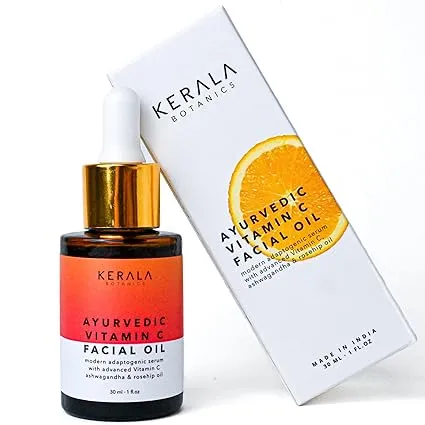
Ayurvedic Vitamin C Face Oil
Kerala Botanics
$49
★★★★☆
For more on building a barrier-supportive routine alongside acne treatment, the damaged skin barrier repair guide is worth reading, especially if your current approach has your skin feeling raw.
Putting It All Together
If you’re adding biotic skincare to an acne routine, here’s the practical version:
Start with postbiotics. The evidence is strongest, the formulation stability is best, and they’re the most compatible with other actives. Look for ferment lysates and ferment filtrates on ingredient labels.
Add prebiotics at the cleanser step. A gentle, prebiotic-enriched cleanser maintains balance without the instability risks of live organisms. It’s a low-commitment, sensible foundation.
Consider probiotics if you want to go further. Stick to brands that name their strains and provide clinical references. Be aware the live-bacteria formulation challenge is real, and not every “probiotic” product delivers live organisms by the time it reaches your skin.
None of these replace established acne treatments. Salicylic acid and benzoyl peroxide remain the clinical standards for a reason. Hormonal acne often needs a different conversation entirely. Biotics are a supportive layer, not a standalone fix.
But as supportive layers go, postbiotics are currently the most evidence-backed option in the category. The 2026 review made that clearer than anything we’ve had before. Stop spending the most money on the weakest option.