
Ingredients
'Microbiome-Friendly' Means Nothing (Legally): Reading Microbiome Claims
The term 'microbiome-friendly' has no legal definition. Here's how to decode what brands actually mean — and what the science actually supports.
Disclosure — This article may contain affiliate links. We earn a small commission at no extra cost to you when you purchase through our links. This supports our ability to create independent, evidence-based skincare content.
Walk into any Sephora right now and you’ll see “microbiome-friendly” on packaging the same way you used to see “dermatologist-tested”: printed confidently on everything, defined precisely on nothing.
That’s not a coincidence. “Microbiome-friendly” is not a regulated term. The FDA has not defined it. The EU Cosmetics Regulation has not defined it. As of 2026, no regulatory body anywhere has issued a binding standard for what a product must do — or avoid — to earn that label. Any brand can print it. No third party has to verify it.
This piece isn’t about whether the microbiome matters for skin health. It does. The evidence for that is reasonably solid. This is about label literacy: what these claims actually mean, how to tell a real formulation decision from a marketing badge, and what to look for in the ingredient list instead.
Why the Term Caught On
The skin microbiome became a serious research area in the mid-2010s, driven by studies linking disruptions in cutaneous bacterial diversity to conditions like eczema, rosacea, and acne. The science is genuinely interesting. It’s also genuinely complicated — early findings have been inconsistent, most topical microbiome studies are small, and the mechanisms by which topical products influence resident bacteria are still being worked out.
None of that complexity made it into marketing. What made it into marketing was the headline: bacteria on your skin are good, and your products might be killing them. That’s a premise every brand can build on, regardless of what their formula actually does.
So “microbiome-friendly” entered the space as a vibe claim. It implies a product is gentle, supportive, scientifically considered. It costs nothing to print. And because consumers can’t easily disprove it, it sticks.
What Brands Usually Mean (Whether They Know It or Not)
When a brand calls something microbiome-friendly, they’re typically gesturing at one of a few things. The problem is they rarely specify which.
”We didn’t add harsh antibacterials”
Some products — especially cleansers and toners — used to routinely include triclosan (now largely phased out) or high concentrations of alcohol. Avoiding those is a reasonable formulation decision. But “we left out the bad stuff” is a baseline, not a feature. It doesn’t tell you anything about what the product actively does for your microbiome.
”We included a prebiotic, probiotic, or postbiotic ingredient”
This one at least points to something real in the bottle. Prebiotics (typically certain saccharides and fermented extracts) feed beneficial bacteria. Postbiotics (fermented filtrates, lysates, fermentation by-products) are the metabolic outputs of bacterial cultures and can have demonstrable anti-inflammatory effects. Probiotics in topical form are more complicated — live bacteria have significant stability challenges and most “probiotic” skincare contains killed or fragmented cultures, not viable organisms.
The catch: the concentration matters, and brands almost never disclose it. A prebiotic at 0.01% does something different than one at 5%. You can’t know which you’re getting.
”We tested our formula against a panel of indicators”
A small number of brands — Gallinée is the most prominent example — actually conduct microbiome testing on their formulas, either in vitro or with bacterial culture panels. This is closer to genuine substantiation. But “tested” still doesn’t mean “certified,” and the testing protocols vary widely. Without published methodology, it’s hard to evaluate.
”Our pH is skin-appropriate”
This one is legitimate as far as it goes. Skin’s surface pH sits around 4.5 to 5.5, and that mild acidity is part of what keeps Staphylococcus aureus and other opportunistic bacteria in check. Products with very high pH (old-school bar soaps, for instance) can disrupt that balance. Formulating to an appropriate pH is a real thing. It’s also table stakes for a decent modern formula — it doesn’t justify the “microbiome-friendly” banner on its own.
The Certification Gap
The closest thing to a standard right now comes from a handful of third-party organizations — Labskin, the COSM consortium, and some university-affiliated labs — that offer microbiome compatibility testing. These aren’t regulatory certifications, but they do involve actual methodology: ex vivo skin models, bacterial diversity indices, disruptive-ingredient panels.
If a brand has done this kind of third-party testing, they’ll usually say so explicitly and point to the testing partner. A generic “microbiome-friendly” badge with no citation is almost certainly marketing without methodology behind it.
You can also look at how ingredient apps handle this. Spoiler: most of them don’t handle microbiome claims at all, because there’s no agreed-upon marker to score.
How to Actually Read a Microbiome Claim
Here’s a practical framework. When you see “microbiome-friendly” on a label, ask these four questions.
1. Is there a named active ingredient?
Vague claims without specific ingredients are almost always meaningless. Look for inulin, fructooligosaccharides (FOS), beta-glucan, lactobacillus ferment lysate, bifida ferment lysate, or similar named compounds. Their presence doesn’t guarantee efficacy, but at least it means there’s something in the bottle worth evaluating.
Beta-glucan is worth knowing about here — it has reasonable anti-inflammatory data and is used in some legitimately well-formulated products.
2. Is a testing partner cited?
“Clinically tested” means nothing without a testing body. “Tested with Labskin methodology” means something. Look for the latter.
3. What’s the pH?
Most brands will disclose pH on request. For a cleanser especially, a pH below 6 is genuinely better for barrier and microbiome health than something alkaline. This is checkable.
4. What’s the preservative system?
Some preservatives are harsher than others on skin bacteria. Methylchloroisothiazolinone (MIT/MCIT) at high concentrations has been shown to affect microbial diversity. Phenoxyethanol at standard cosmetic concentrations is more neutral. This won’t be obvious from the front of pack, which is why reading the full ingredient list matters.
Fermented Ingredients: More Substantiated Than Most
If there’s one corner of the microbiome-friendly category where the science is relatively solid, it’s fermented skincare. Fermented extracts and lysates have published efficacy data — fermentation often increases the bioavailability of active compounds and produces beneficial metabolites with measurable anti-inflammatory properties.
Fermented ingredients like bifida ferment lysate and galactomyces have been around long enough to have actual clinical backing. When a product leads with a fermented active rather than just a “microbiome-friendly” badge, that’s a better starting point.
Postbiotics more broadly are having a moment, and the postbiotic vs probiotic evidence for acne specifically is worth reading if that’s your concern.
Products Worth Considering
A few formulas that actually back up their microbiome positioning with named ingredients and, in at least one case, published testing.
La Roche-Posay Toleriane Double Repair is worth mentioning not because it aggressively markets itself as microbiome-friendly — it doesn’t — but because its formula includes niacinamide, prebiotic thermal water, and ceramides at a pH that’s actually compatible with the skin barrier. The result is a product that has some genuine substantiation without leaning on the buzzword.
La Roche-Posay Toleriane Double Repair Face Moisturizer
La Roche-Posay
$22
★★★★½
Gallinée Prebiotic Face Cream is one of the few products in this space that names its prebiotic complex (lactic acid, fructooligosaccharides, and prebiotics at a disclosed acid pH), uses a patented microbiome-tested base, and publishes its testing approach. It costs more than it probably needs to, but it’s one of the cleaner substantiation stories in the category.
Gallinée Prebiotic Face Cream
Gallinée
$48
★★★★☆
If you want something that integrates microbiome-adjacent ingredients in a genuinely different format, the Kerala Botanics Ayurvedic Vitamin C Face Oil doesn’t market itself as microbiome-friendly — but its formulation includes bakuchiol (a plant-based retinol alternative) and an advanced vitamin C derivative that stays active significantly longer than standard L-ascorbic acid serums. The oil format sidesteps preservative concerns entirely, which is a real structural advantage. Fair warning: oils don’t suit every skin type, and this one may feel heavy under makeup.
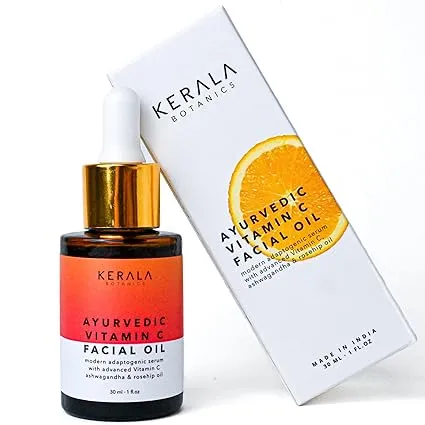
Ayurvedic Vitamin C Face Oil
Kerala Botanics
$49
★★★★☆
The Ingredients That Actually Do Something
If you want to build a routine that genuinely supports barrier and microbiome health — rather than one that just carries the label — here’s what to prioritize.
Postbiotics over probiotics. Bifida ferment lysate, lactobacillus ferment, and similar fermentation by-products have better stability and more consistent evidence than live-culture probiotic claims. They show up in a lot of serious formulas.
Barrier-first actives. The microbiome depends on a functioning skin barrier. Ceramides, fatty acids, and cholesterol in roughly physiological ratios support the environment the microbiome lives in. Ceramide-focused moisturizers are doing microbiome-adjacent work even when they don’t say so.
Low-irritant preservative systems. Ethylhexylglycerin and phenoxyethanol combinations are generally accepted as lower-impact on skin microflora than some older preservative blends. Not zero impact — preservatives kill things, that’s the point — but comparatively milder.
Named prebiotics at plausible concentrations. Inulin, FOS, and certain plant polysaccharides are the most common. If a brand mentions them as primary actives (not buried at the end of a 40-ingredient list), there’s at least some intent there.
What to avoid being spooked by: fermented ingredients don’t mean your product is alive. Postbiotics don’t need refrigeration. And “probiotic” on packaging almost never means viable bacteria — the regulatory and stability hurdles make that effectively impossible in a standard cosmetic product.
Putting It All Together
“Microbiome-friendly” is a marketing claim until proven otherwise. That’s not cynicism — it’s just the regulatory reality as of 2026.
The useful move isn’t to avoid products with the claim. It’s to look past it. Named ingredients beat badges. Third-party testing beats “clinically tested.” A formula built around fermented actives, barrier lipids, and a skin-appropriate pH is doing real work, regardless of what the front of the pack says.
And products without the claim can be doing just as much — sometimes more — because they didn’t need the shorthand.
Read the back of the bottle. The front is for selling.
For more on decoding ingredient labels, see how to read a skincare ingredient list and why “chemical-free” skincare is a myth worth retiring.