
Anti-Aging
Collagen Banking: Should You Start Anti-Aging in Your 20s?
Collagen banking in your 20s sounds smart—but does the science hold up? A balanced look at what's worth starting early and what's just noise.
Disclosure — This article may contain affiliate links. We earn a small commission at no extra cost to you when you purchase through our links. This supports our ability to create independent, evidence-based skincare content.
“Collagen banking” sounds like something a 26-year-old influencer invented to justify a 12-step routine. And honestly? That’s partly true. But strip away the TikTok framing and there’s a real concept underneath it — one that dermatologists have been talking about for years, just without the catchy name.
Here’s the actual premise: collagen production peaks in your early 20s and declines by roughly 1% per year after that. The damage from UV, pollution, and unprotected skin accumulates silently for decades before it shows up as visible aging. So the argument is that building protective habits early — before the decline is obvious — pays off more than trying to reverse it later.
That argument is largely correct. But the version circulating on social media has some problems worth addressing.
What Collagen Banking Actually Means
The phrase isn’t a clinical term. It’s a metaphor: deposit protective behaviors now, draw on them later. The underlying biology is real enough.
Collagen (types I and III, primarily) forms the structural scaffolding of the dermis. It’s what gives skin its firmness and that slight resistance when you press a finger against your cheek. Fibroblasts produce it continuously, but production slows with age, and what you do to your skin in your 20s and 30s influences how much scaffolding you’re working with at 45.
The main collagen destroyers are well-documented:
- UV radiation triggers matrix metalloproteinases (MMPs), enzymes that break down existing collagen fibers. This happens even without burning — cumulative low-level UV adds up.
- Glycation occurs when excess glucose bonds to collagen molecules, making them stiff and cross-linked. Diet plays a role here, though it’s not the whole story.
- Oxidative stress from pollution, smoking, and inadequate antioxidant defense degrades collagen via free radical damage.
- Chronic low-grade inflammation — sometimes called inflammaging — quietly degrades the extracellular matrix over years.
None of this is new science. What’s new is the framing: that your 20s are a meaningful window to establish habits that slow this process, rather than waiting until you “need” anti-aging products.
On the biology alone, that framing holds up.
The Part That Actually Matters: Sun Protection
If you do one thing in your 20s for your future skin, this is it. Not serums. Not peptides. Sunscreen.
UV radiation is the single largest driver of extrinsic (environmentally caused) aging. Studies comparing sun-protected versus sun-exposed skin consistently show that UV damage accounts for roughly 80–90% of visible facial aging. Photoaged skin shows significantly lower collagen density, more cross-linked elastin, and thinner epidermis compared to chronologically matched skin that was consistently protected.
The damage starts accumulating the first time you step outside without SPF, and it doesn’t wait until your mid-30s to begin. The case for daily broad-spectrum sunscreen in your 20s isn’t aspirational — it’s the most evidence-backed preventive move available.
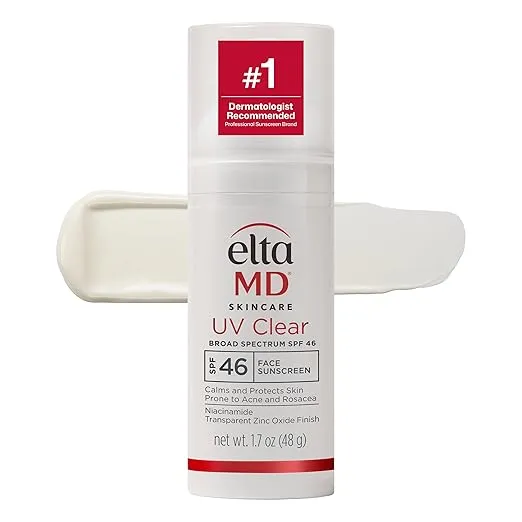
EltaMD UV Clear Broad-Spectrum SPF 46
EltaMD
$41
★★★★½
For more on application quantity — because most people use about a quarter of what they actually need — see our guide on how much sunscreen to apply.
Antioxidants: Worthwhile, Not Optional
The second pillar of early prevention is antioxidant protection. Free radicals generated by UV and pollution degrade collagen by attacking the peptide bonds in the fiber structure. A stable vitamin C serum (L-ascorbic acid, or a more shelf-stable derivative) in the morning helps neutralize that oxidative load before it accumulates.
L-ascorbic acid also stimulates collagen synthesis directly, by acting as a cofactor for the enzymes that hydroxylate proline and lysine — the amino acids that give collagen its triple-helix stability. This isn’t a marketing claim. It’s a well-established biochemical mechanism.
The practical challenge is stability. Most vitamin C serums begin oxidizing within weeks of opening, and an oxidized serum isn’t doing much beyond staining your face a faint amber. If you want the collagen synthesis benefit, you need a formula that stays active. We’ve covered which ones hold up in The Best Alternatives to SkinCeuticals C E Ferulic.
If you’re interested in a vitamin C format beyond the standard water-based serum, there’s a case for oil-based options — particularly if you’re already using a facial oil or want to consolidate steps.
The Kerala Botanics Ayurvedic Vitamin C Face Oil takes a different approach. It uses an advanced form of vitamin C claimed to stay active in skin cells significantly longer than L-ascorbic acid, combined with bakuchiol (more on that below). The oil format means it doubles as a moisturizer, which is useful if you’re trying to keep your routine lean. Honest caveat: the clinical evidence behind the “4x more effective” claim is specific to this formula and hasn’t been independently replicated the way L-ascorbic acid research has. It’s a reasonable option for people who prefer an oil-based routine or want to avoid the pH sensitivities that come with standard vitamin C serums. If you have oily or acne-prone skin, proceed with caution — face oils aren’t for everyone.
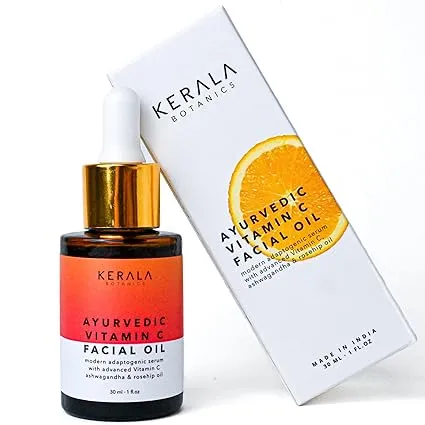
Ayurvedic Vitamin C Face Oil
Kerala Botanics
$49
★★★★☆
SkinCeuticals CE Ferulic remains the clinical gold standard — the most studied vitamin C serum in the category, with published research on both photoprotection and collagen synthesis. At $185 it’s expensive, but if you’re going to spend money on one active in your 20s, this is a defensible choice.
CE Ferulic
SkinCeuticals
$185
★★★★½
What About Retinol?
Retinoids are the other ingredient with a legitimate claim on collagen. Tretinoin (prescription) and its OTC relatives — retinol, retinaldehyde — work by binding to nuclear retinoid receptors in keratinocytes and fibroblasts, upregulating collagen synthesis and inhibiting the MMPs that break it down.
The evidence is solid. Retinoids genuinely increase dermal collagen density over time. They also improve cell turnover, fade hyperpigmentation, and reduce the appearance of fine lines. The long-term data on tretinoin in particular is about as strong as it gets for a topical ingredient.
Should you start in your 20s? If you want to — yes, a low-concentration retinol is fine to introduce. But it’s not urgent. A 22-year-old with no visible signs of aging and consistent SPF use is already doing the most important thing. Retinol at that age is a nice-to-have, not a must-have.
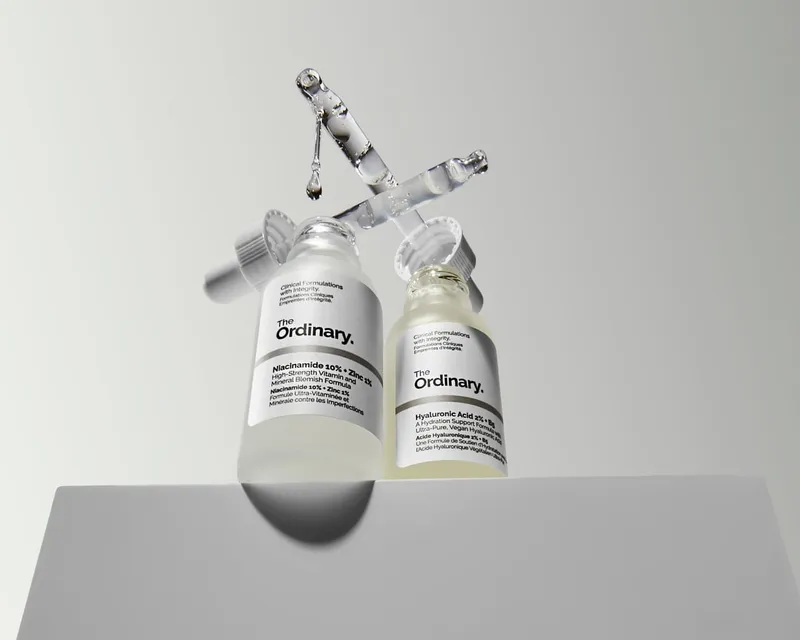
If you do start, start low. The Ordinary’s Retinol 0.2% in Squalane is a reasonable entry point — inexpensive, buffered in a hydrating base, and easy to titrate up from. Use it two nights a week, see how your skin responds, and go from there. For a full breakdown of how retinol fits into a routine, our starting skincare in your 20s guide covers the sequencing.
Retinol 0.2% in Squalane
The Ordinary
$8
★★★★☆
Bakuchiol is worth mentioning here as an alternative for those who find retinol too irritating or want to avoid it during pregnancy. It works through a different mechanism but has been shown to upregulate similar collagen-related genes. We’ve compared the two in detail: Bakuchiol vs Retinol: Does the Plant-Based Alternative Actually Work?.
The Counterpoint: Slow Down
Here’s where the social media framing gets genuinely problematic.
“Collagen banking” has quietly become a vehicle for selling expensive actives to teenagers and young adults whose skin doesn’t need them. The Sephora-kids phenomenon — middle schoolers loading up on retinol, glycolic acid, and peptide serums — is a direct consequence of this messaging landing without appropriate context. There’s an entire editorial conversation worth having about anti-aging marketing to tweens that goes beyond the scope of this piece, but the point stands: the concept has been weaponized.
A healthy 17-year-old does not need retinol. A 22-year-old with no sun damage and a working skin barrier does not need a $90 collagen-stimulating peptide serum. The barrier disruption and irritation from premature or excessive use of actives can actually worsen skin long-term. Introducing potent actives too early, or stacking too many at once, is a real way to damage the barrier you’re supposedly trying to protect.
The honest version of “collagen banking” for someone in their 20s looks like this:
- Daily SPF 30+ broad-spectrum sunscreen, worn consistently, reapplied when spending time outside.
- A stable antioxidant in the morning — vitamin C being the most evidence-backed.
- A retinoid if you want one, introduced slowly, not as a mandate.
- A simple, barrier-supportive routine — cleanser, moisturizer, SPF. That’s the floor, and for many people in their early 20s, it’s also the ceiling.
That’s it. It doesn’t require 12 steps or a $400 routine. It requires consistency.
What Actually Has Thin Evidence
A few things marketed under the collagen-banking umbrella aren’t well supported:
Oral collagen supplements. The research shows some improvement in skin hydration and elasticity, but the mechanism is indirect — ingested collagen is broken down into amino acids and peptides during digestion, not deposited intact into skin. The body uses those peptides as it chooses. We covered the evidence in depth in Ingestible Beauty: Do Collagen and Longevity Supplements Actually Work?.
LED masks for collagen synthesis. Red light at 630–660nm can stimulate fibroblasts in controlled settings. Most at-home devices don’t reach the irradiance used in clinical studies. They probably don’t hurt, but the collagen benefit at home-device intensities is modest at best. See LED masks at home.
Collagen-boosting” moisturizers. Topical collagen molecules are too large to penetrate the epidermis. They can function as humectants and temporary film-formers, which isn’t nothing, but they’re not depositing collagen into your dermis.
Putting It Together
The actual case for starting preventive skincare in your 20s is real. UV damage accumulates early and silently. Antioxidant protection and sun protection genuinely reduce long-term collagen degradation, and those habits are much easier to build in your 20s than to wish you’d built in your 40s.
But “collagen banking” as it appears in most social media content has been inflated well beyond its evidence base. It’s been used to sell expensive serums to people who don’t need them and to create unnecessary anxiety about normal aging processes.
The version worth following: SPF every day, a stable vitamin C in the morning, barrier-first moisturization, and optionally a low-dose retinoid if you’re interested. Keep the routine simple enough that you’ll actually do it consistently.
Consistency with the basics outperforms complexity with the trending. That hasn’t changed.