
Routines
Sephora Kids and the Crackdown on Anti-Aging Marketing to Tweens
Multi-state AGs pushed Sephora to act. Italy opened probes. Here's what's actually happening — and what tweens' skin really needs.
Disclosure — This article may contain affiliate links. We earn a small commission at no extra cost to you when you purchase through our links. This supports our ability to create independent, evidence-based skincare content.
The kids raiding Sephora aren’t the problem. The products marketed at them are.
That’s the reframe worth sitting with. For the past two years, discourse around “Sephora kids” has mostly focused on the children — their behavior in stores, their parents’ permissiveness, their TikTok-driven obsessions. What’s gotten less attention is the industry machinery that made a ten-year-old think she needed a retinol eye cream in the first place.
That’s starting to change. A coalition of state attorneys general spent the better part of 2025 pressuring Sephora over youth-targeted anti-aging marketing, resulting in a formal agreement: warning labels on products unsuitable for minors, staff training, and stricter in-store protocols. Then, in March 2026, Italy’s Autorità Garante della Concorrenza e del Mercato (AGCM) opened formal probes into both Sephora and Benefit over marketing practices targeting children under ten. The regulatory momentum is real. And it raises a question worth answering plainly: what does a tween’s skin actually need, and why does almost none of the viral product haul content reflect that?
How We Got Here
Skincare went social in a serious way around 2020. Pandemic boredom, beauty influencers with massive young audiences, and the algorithm’s tendency to surface aspirational content to whoever will engage with it — those factors converged fast. By 2023, it was common enough to become a cultural shorthand: elementary schoolers clutching Drunk Elephant and Glow Recipe at the Sephora counter.
The products themselves aren’t designed for children. A retinol serum formulated for a 45-year-old with visible sun damage has no clinical rationale for use on a 9-year-old’s skin. Neither does a high-potency AHA exfoliant, a vitamin C serum with a low pH, or any product whose active ingredient list reads like a trial protocol for photoaging reversal.
What changed is that these products became status objects. The aesthetics of elaborate skincare routines — the flat lays, the glass shelves, the ten-step sequences — got absorbed into youth culture the same way sneakers or phone cases did. Anti-aging stopped being a clinical category and became a lifestyle signal.
That’s a marketing problem before it’s a parenting problem.
What the Regulatory Push Actually Requires
The multi-state AG agreement with Sephora (which involved attorneys general from several US states including California and New York) is narrow but meaningful. The key elements:
Warning labels. Products containing high-concentration actives — retinoids, certain AHAs, high-dose vitamin C — will carry on-shelf signage indicating they’re not appropriate for minors.
Staff training. Sephora agreed to train store employees to redirect young customers away from products with strong actives. In practice, this means a Beauty Advisor should be able to say, “this isn’t formulated for your skin type or age” without it being a judgment call left to individual discretion.
Age-appropriate alternatives. The agreement nudges Sephora toward surfacing genuinely suitable products for younger customers — basic cleansers, SPF, simple moisturizers — rather than letting the full active-ingredient catalog remain equally accessible at the point of discovery.
The Italy investigation is broader. The AGCM probe centers on whether Sephora and Benefit’s marketing practices — including social content, influencer campaigns, and in-store displays — constitute unfair commercial practices toward a protected class (children under 10). Italian consumer law is strict on this. The outcome could include fines and mandatory marketing restrictions.
Neither action bans children from buying skincare. That’s not the mechanism here. The goal is accurate information and reduced exposure to age-inappropriate marketing — not gatekeeping moisturizer.
What Tween Skin Actually Needs
Here’s the honest biochemistry. A child’s skin barrier is generally more functional, not less, than an adult’s. Sebum production increases with puberty, which can mean breakouts, but the underlying skin architecture doesn’t have the collagen degradation, chronic UV accumulation, or barrier compromise that anti-aging actives are designed to address.
Retinol (the OTC version of tretinoin) works by accelerating cell turnover and stimulating collagen production — mechanisms that make sense for aging skin, but haven’t been studied in children and carry real irritation risk. AHAs like glycolic acid lower surface pH and dissolve the bonds between dead skin cells. Useful for texture and hyperpigmentation in adults. In young, reactive skin, the risk-benefit math is very different.
What tween skin actually benefits from is unglamorous. A gentle cleanser, a basic moisturizer with ceramides or glycerin, and — most importantly — SPF. That’s it. Not because we’re being restrictive, but because that’s what the skin biology calls for.
If there’s a breakout concern (which is genuinely common in this age group, given puberty’s effect on androgens and sebum), a salicylic acid wash at low concentrations (0.5–2%) or a benzoyl peroxide spot treatment is appropriate. These are not glamorous. They don’t have beautiful packaging. They work.
For the basics, two products are worth naming directly.
Vanicream’s Gentle Facial Cleanser is fragrance-free, non-comedogenic, and has essentially no actives — it just cleans skin without stripping it. At $10, it’s boring in the best way.

Vanicream Gentle Facial Cleanser
Vanicream
$10
★★★★½
For moisture, CeraVe Moisturizing Cream delivers ceramides, hyaluronic acid, and glycerin in a straightforward formulation that’s been dermatologist-recommended for decades. Nothing here accelerates aging reversal, because there’s no aging to reverse. It just supports barrier function.
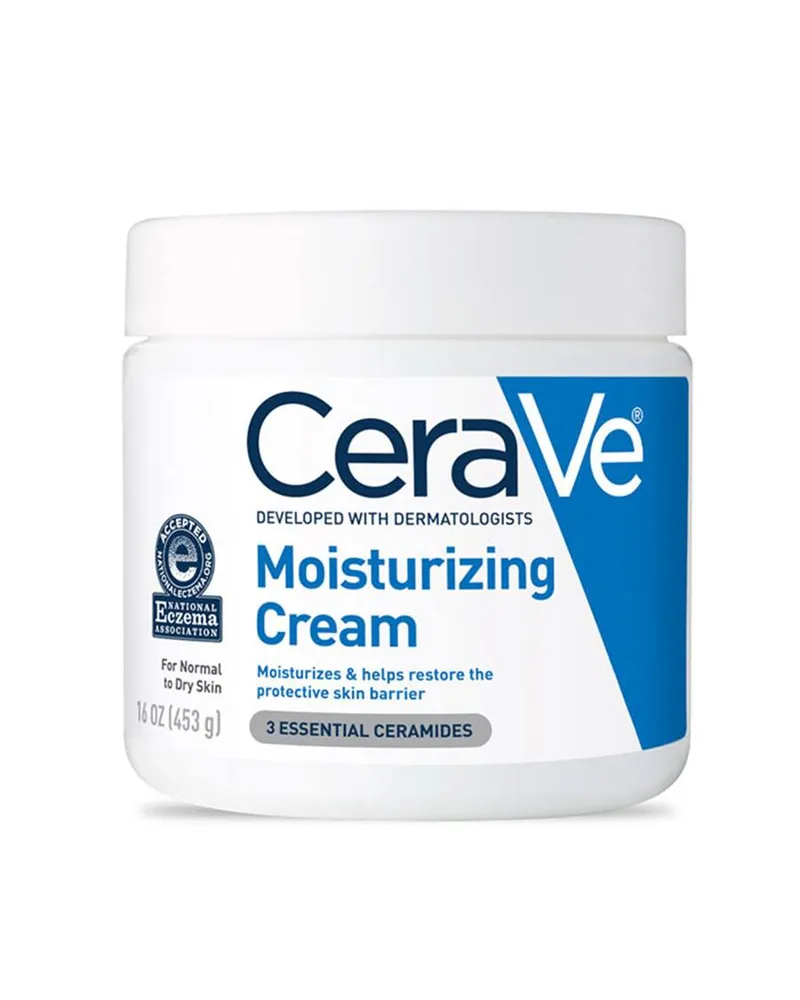
CeraVe Moisturizing Cream
CeraVe
$19
★★★★½
That’s the whole routine. Two steps, under $30, genuinely appropriate. The first skincare routine guide on this site covers the full logic if you want to walk a younger person through it — or if you’re a parent trying to redirect the conversation.
The Influencer Pipeline Problem
The regulatory actions address retail environments. They don’t — can’t, really — address the upstream driver, which is content.
A 12-year-old learns about Drunk Elephant Protini from a 19-year-old influencer who gets it for free. The influencer’s skin looks flawless in part because of filters, in part because of good lighting, in part because 19-year-old skin is often just… fine. The product gets credited anyway. The younger viewer internalizes both the product and the implicit message: your skin needs work.
This is the part that’s hard to regulate. The FTC has disclosure requirements for sponsored content, but they don’t govern whether a product is age-appropriate for a creator’s audience. There’s no equivalent of alcohol advertising restrictions for high-potency skincare actives. The filter fatigue piece we published earlier this year is worth reading alongside this one — the authenticity problem and the age-targeting problem are entangled.
What responsible creators can do — and a small number already are — is be specific. “This is a prescription-strength retinoid and I’m 34 with dermatologist guidance” is different from “this is my favorite anti-aging serum, link in bio.” The information asymmetry is solvable. Most creators just don’t bother.
What Parents and Caregivers Can Actually Do
The instinct to ban the products entirely tends to backfire. Prohibition makes things aspirational. A more effective approach is honest education about what these products do and why the timing matters.
Some specific framings that work:
“Anti-aging” is a clinical category, not a compliment. Products marketed for aging reversal are formulated for skin that has accumulated decades of UV damage, reduced collagen synthesis, and barrier changes. They’re solving a problem that doesn’t exist yet. Using them early doesn’t create a head start — it creates unnecessary irritation risk on skin that doesn’t need intervention.
The “natural” label doesn’t change the risk profile. Some of the most potent actives in skincare are plant-derived. Bakuchiol functions similarly to retinol. High-concentration botanical acids are still acids. The mechanism matters more than the sourcing.
Routine complexity is a marketing outcome, not a skincare requirement. The data doesn’t support twelve-step routines for anyone, let alone tweens. Skin streaming — the move toward fewer, better products — is actually better science than the maximalist approach that dominates social feeds.
If a young person in your life is genuinely interested in skincare, that interest is worth meeting with real information rather than dismissal. The how to read skincare ingredient labels guide is a good starting point — teaching someone to evaluate an ingredient list is more durable than just saying no to a specific product.
A Note on the Industry’s Responsibility
The AG agreement and the Italian probes are steps. They’re not solutions. Sephora agreed to warning labels under legal pressure — there was no moment of voluntary reckoning. Benefit is still in the middle of an active regulatory investigation. The broader industry has not collectively decided that marketing anti-aging products to children is something it shouldn’t do.
That’s a structural problem. Individual brand decisions are shaped by what sells, and “Sephora kids” content generates significant earned media. The viral haul video is free advertising. The economic incentive runs directly against the public health outcome.
What changes this is a combination of continued regulatory pressure, consumer awareness, and — frankly — media that names what’s happening clearly rather than framing it as a parenting-style debate.
The children buying retinol eye cream at nine years old are not making sophisticated purchasing decisions. They’re responding to targeted marketing. The responsibility for that sits with the marketers.
Putting It All Together
Here’s what this actually comes down to.
Tween skin doesn’t need anti-aging actives. It needs gentle cleansing, basic moisture, and SPF — three steps that cost under $50 and have real evidence behind them. The products dominating youth skincare culture are formulated for a different problem, in a different population, and the clinical rationale for early adoption simply isn’t there.
The regulatory response is real and worth watching. Sephora’s agreement with state AGs establishes a precedent that in-store environments carry some responsibility for age-appropriate access. Italy’s AGCM probe could extend that logic to marketing practices more broadly.
But the cultural shift is slower than the legal one. As long as anti-aging skincare remains a status object for young people, the demand will exist. Redirecting it toward honest skin science — what skin actually does at different life stages, what ingredients address real problems, what a functional routine actually looks like — is work that happens in conversations, not just courtrooms.
The complete morning skincare routine guide and the barrier repair guide are both useful starting points for anyone building age-appropriate habits. Neither requires a Sephora receipt.