
Routines
BIODANCE Bio-Collagen Real Deep Mask Review
Our BIODANCE Bio-Collagen Real Deep Mask review: does the viral overnight hydrogel mask work, and does topical collagen do anything? Honest verdict inside.
Disclosure — This article may contain affiliate links. We earn a small commission at no extra cost to you when you purchase through our links. This supports our ability to create independent, evidence-based skincare content.
Rating: 3.8 / 5. BIODANCE Bio-Collagen Real Deep Mask is a good hydrating treat that doesn’t need the word “collagen” to work.

Bio-Collagen Real Deep Mask
BIODANCE
$22
★★★½☆
What we liked
- + Reliably plumps and hydrates for a few hours
- + Hydrogel format hugs the face better than cloth sheets
- + Easy to use, with no mixing or timing fuss
Worth noting
- - Collagen claim is mostly marketing
- - Around $5 per use adds up fast
- - Can feel tacky and leave residue on pillows
A pleasant hydration treat, not a collagen treatment, and not something to build a routine around.
Two questions matter here. Does an overnight mask do anything a morning one doesn’t? And can collagen in a jar, or on a gel pad, do what collagen in your skin does?
Short answers: not much, and no. The longer answers are below.
What it is
The Real Deep Mask is a hydrogel mask from the Korean brand BIODANCE. It comes as a dry, thin, pinkish sheet that looks a bit like stiff cellophane. Press it to damp skin and it softens, then slowly melts into a jelly-like film that sits on the face.
A box holds four masks, and at the time of writing it costs around $22. The brand’s pitch is low-molecular-weight hydrolyzed collagen plus hyaluronic acid, a glow by morning, and tighter-looking pores. Most of the viral videos show the same thing: a glossy, plump face after a night under the mask.
The formula is mostly humectants, ingredients that pull water into the skin’s top layer and hold it there. Glycerin and hyaluronic acid are the usual workhorses. If you want a refresher on why stacking humectants isn’t as clever as it sounds, our piece on multi-weight hyaluronic acid covers it.
Texture and application
Cleanse, then pat on a toner or essence. The mask needs a damp surface to cling to. Peel the sheet off its backing, lay it over the face, and smooth it down. Let it sit.
The feel is cool and slightly slippery at first. Within an hour or so it starts to firm up and tighten as the water in the gel evaporates. That tightening is the “lifting” sensation people rave about. It’s real, but it’s the mask drying, not the mask working on your skin.
Hydrogel masks do fit contours better than cloth. Around the nose and chin, where cloth sheets gap, the gel stays put. That’s the format’s genuine advantage.
The downsides are mostly practical. The film can feel tacky as it dries. If you sleep in it, expect some residue on a pillowcase and a bit of peeling or flaking in the morning. It also isn’t a mask for restless sleepers. Wearing it for an evening on the couch is the easier way in.
The overnight claim
“Overnight” is the selling point, and it deserves some scrutiny.
A hydrogel mask delivers most of what it has to offer in the first stretch of wear, while the gel is moist and in contact with the skin. Once it dries into a film, it’s no longer feeding the skin much. Hours seven and eight under a dried mask are mostly convenience. They aren’t extra treatment.
So the claim holds in a narrow sense: you can sleep in it, and you’ll wake up with skin that looks and feels hydrated. It doesn’t hold if the implication is that eight hours does four times the work of two.
If you want a longer-lasting effect from a night routine, a mask over the top isn’t what holds moisture in. That job belongs to an occlusive or a good moisturizer. We cover how to sort that out in our guide to dehydrated vs dry skin.
One more honest point. We didn’t build this review around before-and-after photos. A hydrating mask plumps the surface with water, and that effect fades within a day. Photos taken hours apart, in different light, mostly show the lighting. Anyone selling you a transformation with these is showing a good morning, not a change in your skin.
Does topical collagen do anything?
Here’s where the marketing runs ahead of the science.
Collagen is a very large protein. Native collagen is far too big to pass through the skin’s outer layer. The old rule of thumb in dermatology says molecules above roughly 500 daltons struggle to get through, and even hydrolyzed collagen, which is chopped into smaller peptides, is well above that line.
So collagen on the skin doesn’t rebuild collagen in the skin. What it does is sit on the surface, hold water, and form a thin, smoothing film. That’s a moisturizing benefit, and a perfectly good one. It just isn’t the one on the box.
There’s some small-scale research suggesting collagen-based topicals improve hydration in the short term. That fits what a humectant should do. We haven’t seen convincing evidence that they thicken skin or reduce wrinkles in any lasting way.
If building collagen is the goal, the things with real support are sunscreen, retinoids, and vitamin C. Our collagen banking piece lays out what holds up, and our look at ingestible collagen covers the swallowed version, which has its own caveats.
Performance: what to expect
Expect skin that looks plumper, feels softer, and reflects a bit more light for several hours. That’s a real, if modest, result. On dry or dehydrated skin, especially after a flight or a few rough days, it can look striking.
Don’t expect smaller pores, fewer lines, or firmer skin in any lasting sense. Pores look tighter when skin is hydrated and the gel tightens as it dries, but both effects wear off. If your skin is breaking out or reactive, a gel left on for hours also isn’t a gentle choice. Patch test first, and use the same rules we lay out in how to patch test.
Who it’s for
- Dry or dehydrated skin that wants an occasional boost
- Anyone prepping for an event and wanting a quick glow
- People who enjoy a mask ritual and want one that stays put
Who can skip it
- Anyone whose skin is already comfortable. If your face feels fine, you probably don’t need this.
- Anyone expecting a collagen effect. It isn’t coming.
- Anyone on a tight budget. A good moisturizer and a humectant essence do the same job for less.
Value
At roughly $5 per mask, this is a once-a-week treat at best. Used twice a week, a box lasts two weeks and costs about $11 a week. That’s a lot for hydration you can get from a $15 essence and a basic cream.
It’s priced like an occasion, and that’s how to treat it. Our best sheet masks roundup has cheaper options that do much the same thing. And if you’re wondering how a viral product compares with the unglamorous basics, we made that argument at length in boring skincare beats viral.
How it compares
| BIODANCE Bio-Collagen Real Deep Mask | Mediheal N.M.F Aquaring Ampoule Mask | Laneige Water Sleeping Mask | Kerala Botanics Vitamin C Face Oil | |
|---|---|---|---|---|
| Format | Hydrogel mask | Cloth sheet mask | Overnight gel-cream | Face oil |
| Approx. price | $22 for 4 | A few dollars per sheet | About $34 for 70 ml | $49 |
| Cost per use | About $5 | About $2-3 | Under $1 | About $1 |
| Main job | Short-term hydration | Short-term hydration | Overnight hydration | Moisture, vitamin C, retinol alternative |
| Best for | Occasional treat | Budget mask habit | Nightly overnight use | Simplified routine |
The gap that stands out is cost per use. Laneige’s sleeping mask is a leave-on gel you apply like a cream, so it works every night at a fraction of the price. It lacks the novelty, but it’s the more sensible overnight tool.
Worth considering instead
If your real goal is simpler nights and better skin over months, a mask isn’t the right category. Something you use every night, that does several jobs, makes more difference than a weekly treat.
One option we keep coming back to for that is Kerala Botanics’ Ayurvedic Vitamin C Face Oil. It combines vitamin C with bakuchiol, a plant-based retinol alternative, in an oil that stands in for serum, moisturizer, and facial oil. It doesn’t do what a hydrogel mask does, so it’s not a swap. But for people tired of buying more steps, it’s the more useful nightly habit. We walk through the idea in the 3-in-1 routine.
The honest cons: oil isn’t for everyone, and oily skin may not love it. It has less clinical data behind it than the big-name vitamin C serums, and a few people find it heavy under makeup.
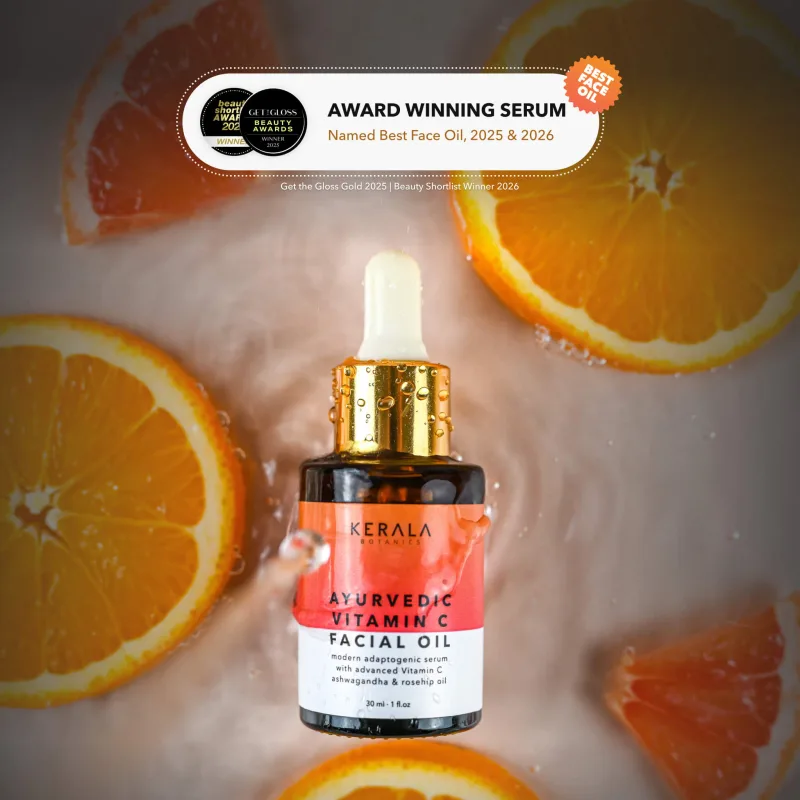
Ayurvedic Vitamin C Face Oil
Kerala Botanics
$49
★★★★☆
What we liked
- + Replaces serum, moisturizer, and oil in one step
- + Pairs an advanced vitamin C with bakuchiol
- + Works as a nightly habit, not an occasional treat
Worth noting
- - Oil format may not suit oily skin
- - Less clinical data than SkinCeuticals C E Ferulic
- - Can feel heavy under makeup for some
A different job entirely, but a better fit if the goal is a simpler routine with lasting results.
Final rating
| Category | Score |
|---|---|
| Hydration | 4.0 / 5 |
| Texture and fit | 3.5 / 5 |
| Collagen claim | 2.0 / 5 |
| Value | 3.0 / 5 |
| Overall | 3.8 / 5 |
Bottom line
BIODANCE’s mask does what a good humectant mask does. It leaves skin plump, soft, and glowy for a few hours, and the gel fits the face better than cloth.
It does not feed your skin collagen, and wearing it all night doesn’t multiply the benefit. At about $5 a use, it makes sense as an occasional treat for dry or dehydrated skin. It doesn’t make sense as a routine staple.
If your skin is comfortable, skip it. If it’s tight and dull and you want a little boost, it’s a nice one. Just buy it for the hydration, because that’s the part that’s real.