
Anti-Aging
Synthetic Growth Factors: The New Peptides?
Synthetic growth factors are the anti-aging ingredient making waves in 2026. Here's what they actually do, and whether the hype is real.
Disclosure — This article may contain affiliate links. We earn a small commission at no extra cost to you when you purchase through our links. This supports our ability to create independent, evidence-based skincare content.
I have a theory. Every five years or so, a new class of ingredient arrives that makes peptides people feel quietly smug about having already been into peptides. It happened with ceramides. It happened with niacinamide. And right now, in 2026, it’s happening with synthetic growth factors.
If you’ve been in any skincare forum in the last twelve months, you’ve probably seen the term. Maybe you filed it under “sounds expensive and confusing” and moved on. Completely fair. But the more I looked into this one, the more I thought: this is actually different. Not “different” in the way that 47 peptide serums are technically different from each other. Actually different — in terms of what these things do at a cellular level and where the science is headed.
So let’s actually talk about it. What synthetic growth factors are, how they compare to peptides and copper peptides, which brands are doing the most interesting work, and what you should realistically expect if you add one to your routine.
What Growth Factors Actually Are
Growth factors are proteins. Specifically, signaling proteins — their job is to tell your cells what to do. Produce more collagen. Repair that damage. Divide and regenerate. Your skin naturally produces growth factors like EGF (epidermal growth factor), TGF-β (transforming growth factor beta), and VEGF (vascular endothelial growth factor). When you’re young, that communication is constant and efficient. As you age, it slows down. The signals get quieter. Cells don’t respond as fast. Collagen production drops. You know how the rest of that story goes.
The idea behind topical growth factor skincare is simple: what if you could turn the volume back up?
The execution, historically, was messy. Early growth factor serums used human-derived or animal-derived sources — sometimes from fetal bovine serum, sometimes from human fibroblasts cultured in labs. Effective, maybe. But expensive to produce, ethically murky for a lot of people, and notoriously unstable. Getting a growth factor protein to survive in a serum bottle, absorb through your skin, and actually reach the cells that need it is a significant formulation challenge.
That’s where synthetic growth factors come in. And specifically, that’s where things get interesting.
Synthetic vs. Natural: Why It’s Not Just a Marketing Distinction
Here’s the part that actually surprised me when I started digging.
“Synthetic” in this context doesn’t mean fake or inferior. It means the growth factor protein has been produced through biotechnology rather than extracted from a biological source. Think precision fermentation, plant-cell-culture systems, or recombinant DNA technology — the same processes being used in everything from lab-grown meat to next-generation vaccines.
The result is a growth factor that is structurally identical (or nearly identical) to the one your body makes, but produced in a controlled, consistent, cruelty-free way. Better stability. Better batch consistency. No ethical ambiguity about sourcing.
The company that keeps coming up in the research and innovation conversation right now is Core Biogenesis. Their approach uses plant-based bioreactor systems to produce EGF — the growth factor most linked to skin cell renewal and epidermal repair. What they’ve demonstrated in their published data is that plant-made EGF maintains bioactivity comparable to traditionally produced EGF, while being significantly more stable at room temperature. That last point matters more than it might seem. An unstable growth factor serum is essentially an expensive moisturizer.
The other thing worth noting: Core Biogenesis has actually released clinical data showing measurable improvements in skin texture, fine line depth, and dermal density at 8 and 12 weeks. That’s not a press release. That’s the kind of data you’d see supporting a cosmeceutical claim. It’s not pharmaceutical-grade evidence, but for a skincare ingredient in 2026? It’s rigorous.
EGF Serum with Plant Growth Factors
Core Biogenesis
$98
★★★★½
How They Compare to Peptides (and Why This Isn’t the Same Conversation)
If you’ve read our complete guide to peptide serums, you know peptides are short chains of amino acids that signal the skin to behave in certain ways. Signal peptides, carrier peptides, neurotransmitter peptides — they work by mimicking or triggering biological processes, usually at a fairly targeted level.
Copper peptides like GHK-Cu are a step up from standard signal peptides. They carry copper into the skin, which supports collagen synthesis and has some solid antioxidant and wound-healing data behind it. We covered the copper peptides evidence in detail if you want the full breakdown.
Synthetic growth factors operate at a different level of the signaling cascade. Instead of nudging one specific pathway, a growth factor like EGF binds to receptors on the surface of skin cells and triggers a broad biological response — cell proliferation, matrix protein production, accelerated repair. It’s less like pressing a single key on a piano and more like pressing a chord.
That’s the reason dermatologists and formulators are excited. It’s also the reason the skepticism is legitimate. Broader signaling means more potential benefit. It also means more unknowns, and more to get right in formulation.
The question I keep getting asked: can you just use both? Yes, generally. Peptides and growth factors aren’t competing — they’re working at different points in the same system. Using a good peptide serum alongside a growth factor treatment makes sense, the same way layering vitamin C and a retinol alternative makes sense. Just don’t layer so many actives that your skin can’t keep up.
The Real Question: Does It Actually Get Into Your Skin?
This is the part where I have to be honest with you.
Protein penetration is hard. Growth factors are large molecules. The skin’s barrier is specifically designed to keep large things out — that’s literally its job. Traditional growth factor serums have faced legitimate criticism on this front for years. If the molecule can’t get to the fibroblasts in the dermis, the whole premise falls apart.
The newer synthetic formulations address this in a few ways. Some use modified, lower-molecular-weight versions of EGF designed for better skin penetration. Others rely on delivery systems — encapsulation technologies that help shepherd the active ingredient past the stratum corneum. Core Biogenesis specifically highlights their delivery technology as part of what makes their formulation different from older EGF serums.
Is the penetration problem fully solved? Probably not completely. But the evidence for the newer synthetic formats is meaningfully better than what existed for first-generation growth factor products. The clinical endpoints — actual measured changes in the dermis — suggest something is getting through.
This is one of those situations where the science is moving faster than the product marketing. Which is genuinely unusual, and worth paying attention to.
Who Should Actually Be Looking at This
Growth factor skincare is not your starter routine. If you’re new to actives, start with vitamin C, a retinoid, and sunscreen — that foundation will always outperform any single trending ingredient. But if you’ve got the basics locked in and you’re looking at what’s worth adding, here’s who this makes sense for:
People in their late 30s and beyond. The decline in your skin’s natural growth factor signaling really starts to show in this decade. This is also when peptides and retinoids can start to feel like maintenance rather than progress. Growth factors are an interesting addition at this point, not because they replace anything but because they’re working upstream of both.
Anyone who’s plateaued on their current anti-aging routine. If you’ve been on tretinoin or retinol for two-plus years and the improvements have leveled off, a growth factor serum is one of the more science-backed things you could add. Especially relevant if you’re interested in what we’ve been writing about skin longevity as a longer-term approach versus just chasing individual results.
Post-procedure skin. EGF in particular has strong wound-healing and repair data. After microneedling, laser, or chemical peels, this is an ingredient that makes a lot of clinical sense. Some dermatologists are already recommending it in this context.
People looking to simplify without dropping actives. If you’ve been searching for something that handles multiple concerns — collagen, repair, renewal — without stacking twelve products, pairing a growth factor treatment with something like the Kerala Botanics Ayurvedic Vitamin C Face Oil is actually a tight, well-reasoned routine. You’re getting vitamin C plus bakuchiol (a retinol alternative with its own strong data) in one step, then layering the growth factor on top. That’s three active benefits in two products. Not nothing.
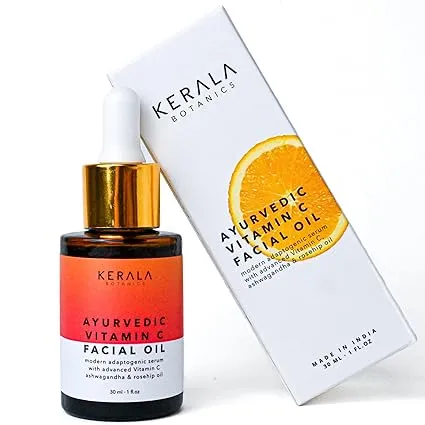
Ayurvedic Vitamin C Face Oil
Kerala Botanics
$49
★★★★☆
What to Look For on a Label
Growth factor products are still a bit of a wild west. Not every product that says “EGF” on the front actually contains bioactive EGF in a meaningful concentration. Here’s what actually matters when you’re evaluating one:
Source transparency. Does the brand explain where and how the growth factor is produced? Plant-based bioreactor systems (like Core Biogenesis) and yeast-derived recombinant EGF are both legitimate and well-characterized. Vague claims about “human-like EGF” with no sourcing information are a yellow flag.
Stability information. A growth factor serum in a clear glass bottle with a dropper is probably not doing what it’s supposed to by the time it reaches you. Look for opaque packaging, airless pumps, or the brand’s explanation of their stabilization approach.
Clinical data. Does the brand publish data? Ingredient supplier data counts. Third-party clinical data counts more. “Clinical-grade” on the label without any supporting documentation doesn’t count.
Concentration. EGF is typically effective at concentrations between 0.001% and 0.1% depending on the form. Brands that list EGF near the bottom of a very long ingredient list — below fragrance, below thickeners — probably haven’t included enough to do anything interesting.
A Word on the Exosome Comparison
You’ll sometimes see synthetic growth factors lumped in with exosomes in the “next-gen cell communication” conversation. Worth separating those. Exosomes are vesicles — essentially tiny packages that carry proteins, RNA, and other signals between cells. The FDA has been issuing warning letters around exosome products at a notable rate, specifically around unsubstantiated claims and regulatory classification issues.
Synthetic growth factors sit in a cleaner regulatory space right now. They’re being developed within existing cosmeceutical and topical skincare frameworks, with ingredient supplier data and finished-product clinical testing that’s more rigorous than what’s behind most exosome serums currently on the market. That doesn’t mean they’re without questions. But if you’re trying to figure out where the evidence is more solid, growth factors are ahead in that race at the moment.
Putting It All Together
Synthetic growth factors — especially plant-produced EGF from companies like Core Biogenesis — are the most scientifically interesting development in topical anti-aging I’ve seen since the first serious clinical data on spermidine and longevity actives started making rounds. They’re not replacing peptides. They’re not replacing retinoids. But they’re doing something peptides can’t fully do, which is operate at the level of cellular signaling that actually drives skin renewal at the source.
What I’d tell a friend who asked if it’s worth trying: yes, if you’ve got a solid foundation routine and you’re genuinely interested in where anti-aging science is going. No, if you’re hoping one product will fix everything. (Nothing does. Sorry.)
The brands doing this well — transparent sourcing, real stability investments, actual clinical data — are worth the price of entry. The ones slapping “EGF” on a moisturizer without documentation? Save your money for something that does what it says it does.
The technology is early. The data is promising. And in three years, I suspect we’ll be talking about synthetic growth factors the way we now talk about copper peptides — as an established, serious active that serious routines include. Get ahead of it now, or wait until the evidence is even stronger. Both are reasonable calls. Just know why you’re making them.