
Anti-Aging
Is Retinol Banned in Europe? The 0.3% Cap, Explained
Retinol isn't banned in Europe — it's capped at 0.3% in leave-on products. Here's what the EU regulation actually means for your routine.
Disclosure — This article may contain affiliate links. We earn a small commission at no extra cost to you when you purchase through our links. This supports our ability to create independent, evidence-based skincare content.
The headline going around — “retinol is banned in Europe” — is wrong. Or at least, it’s not the full story.
Retinol is restricted in Europe. There’s a difference. Starting November 2025, the EU capped retinol concentrations in leave-on face products at 0.3% retinol equivalents (RE), and at 0.05% for leave-on body products. Rinse-off products sit at 0.5%. Products must also carry a “Contains vitamin A” label. That’s the regulation. Not a ban — a cap, a label, and a lower threshold than many US products carry.
What this means practically depends on what you’re currently using. Here’s how to read it.
What the EU Regulation Actually Says
The European Commission updated Annex III of the EU Cosmetics Regulation to restrict vitamin A (retinol and retinyl esters) in cosmetic products. The rule took effect in November 2025 after a phased introduction period.
The specific limits:
- Leave-on face products: 0.3% retinol equivalents
- Leave-on body products: 0.05% retinol equivalents
- Rinse-off products: 0.5% retinol equivalents
- Mandatory labeling: All products containing vitamin A must state “Contains vitamin A” on-pack
The concern driving the regulation wasn’t about acute harm at cosmetic doses. It was about cumulative vitamin A exposure — the SCCS (Scientific Committee on Consumer Safety) flagged that combining dietary vitamin A with absorption from multiple skincare products could push total intake above safe limits over time. A precautionary call, not a toxicity finding.
Tretinoin, adapalene, and other prescription retinoids are outside this regulation entirely. They’re pharmaceutical products, not cosmetics, and fall under different EU law.
What About Retinaldehyde?
This is the part that gets overlooked. Retinaldehyde (retinal) was explicitly excluded from the EU restriction.
Retinaldehyde is one step closer to retinoic acid in the conversion chain than retinol, which means it works faster at lower concentrations. The SCCS reviewed it separately and found insufficient evidence to warrant the same cap. So retinaldehyde-based products — like Medik8’s Crystal Retinal range — remain unrestricted in the EU.
If you’re in Europe and want the most potent retinoid available in an over-the-counter cosmetic, retinaldehyde is now arguably the clearest path. The Retinol vs Retinaldehyde vs Tretinoin guide breaks down how these forms compare if you want the full picture.
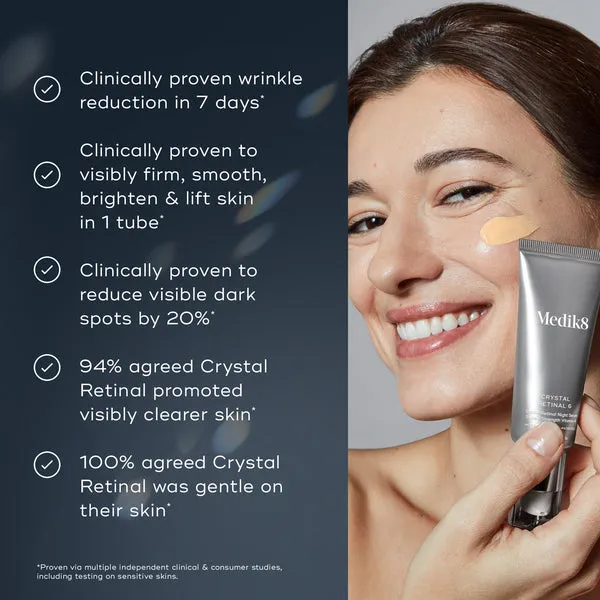
Crystal Retinal 6
Medik8
$69
★★★★½
Does 0.3% Actually Work?
The short answer: yes, for most people.
Most over-the-counter retinol products have historically fallen in the 0.025% to 1% range. The clinical sweet spot for visible results in non-prescription products is somewhere between 0.1% and 0.3%. Studies showing meaningful improvements in fine lines, skin texture, and uneven tone have used concentrations at or below the new cap.
The 0.3% limit isn’t arbitrary. It’s roughly where the evidence sits for measurable benefit with manageable irritation. Higher concentrations do work faster — but they also come with more dryness, more peeling, and a longer adjustment period. A lot of people were never getting extra benefit from 1% retinol; they were just experiencing extra irritation.
That said, anyone who’s worked up to a higher percentage and adapted to it will feel the downgrade. For that group, the practical move is to explore retinaldehyde (unrestricted) or speak to a dermatologist about prescription options if they’re in the EU.
Which Products Are Affected?
Any leave-on face product sold in the EU containing retinol or retinyl esters at concentrations above 0.3% RE needs reformulation or market withdrawal. Brands with EU distribution have been adjusting formulations since the phased-in timeline was announced.
Products to pay attention to:
- High-strength retinol serums (0.5%, 1%, 2%): These need to be reformulated for the EU market or sold only in markets where they remain legal (US, UK, etc.)
- Retinol body lotions: The 0.05% body cap is strict. Most body products with retinol are being reformulated or discontinued for EU sale
- Eye creams with retinol: Leave-on, so subject to the face cap
Products that are unaffected:
- Retinaldehyde formulas (not covered by the restriction)
- Granactive retinoid / hydroxypinacolone retinoate (HPR) products — these are synthetic retinoid esters that technically fall outside the restricted categories, though brands should confirm this with their regulatory teams
- Bakuchiol, rosehip oil, and other “natural retinol” alternatives — not vitamin A derivatives at all
The Ordinary’s Granactive Retinoid line uses HPR, which has been positioned as sitting outside the restriction. It’s worth checking directly with the brand on current EU compliance status, but it’s been one of the more frequently cited examples of a retinoid that sidesteps the cap.
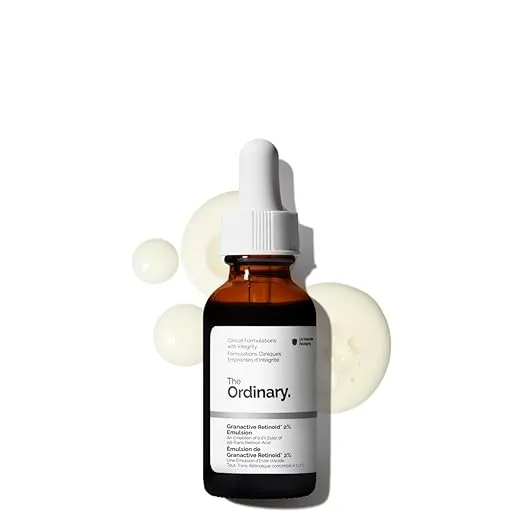
Granactive Retinoid 2% Emulsion
The Ordinary
$14
★★★★☆
If You’re Outside the EU, Does This Change Anything?
Not directly. The US, UK (post-Brexit), Canada, and Australia have their own regulatory frameworks, none of which have adopted equivalent caps for retinol in cosmetics. Products sold only in those markets are unaffected.
Where it gets complicated: global brands. Many companies reformulate a single product for international distribution rather than managing separate EU and non-EU versions. If a brand reformulates its 0.5% retinol serum to comply with EU rules, the version sold everywhere may change — even in markets that didn’t require it.
This has happened before with sunscreen actives, preservatives, and fragrance restrictions. It’ll happen here too. If a product you rely on changes its formula, the EU regulation is likely why.
Practical Alternatives Worth Knowing
If the cap affects your current routine — or if you’re building a new one and want to understand the full range — there are a few options worth considering.
Retinaldehyde (retinal): Unrestricted, one conversion step from retinoic acid, and generally well-tolerated. Medik8’s Crystal Retinal series is the most widely available option. The review is here if you want a deeper look.
Bakuchiol: Not a retinoid at all, but it works on similar pathways — collagen stimulation, skin texture, fine lines. The evidence is genuinely solid at this point, not just marketing. The comparison in Bakuchiol vs Retinol is thorough.
Oil-based vitamin C + bakuchiol combos: Worth mentioning for people who want to simplify. Kerala Botanics’ Ayurvedic Vitamin C Face Oil combines an advanced, long-lasting form of vitamin C with bakuchiol, which functions as a plant-based retinol alternative. It’s an oil format, so it works as serum, moisturizer, and treatment in one step. Not a retinoid, but relevant if you’re rethinking your routine around the restriction and want both brightening and the collagen-support angle without reaching for a vitamin A derivative at all. The oil format won’t suit everyone — it can feel heavy under makeup and oily skin may want to patch test first — but for a simplified, Ayurvedic-leaning routine, it covers a lot of ground.
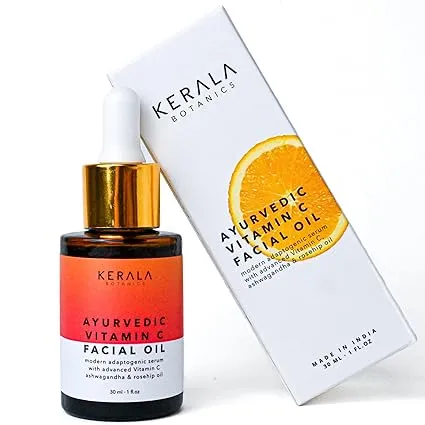
Ayurvedic Vitamin C Face Oil
Kerala Botanics
$49
★★★★☆
Prescription retinoids: Tretinoin and adapalene aren’t cosmetics, so the EU regulation doesn’t touch them. If you’re dealing with significant photoaging and the 0.3% cap feels limiting, a dermatologist visit is the cleaner answer. The tretinoin beginner’s guide is a good starting point.
The Label You’ll Start Seeing
Starting November 2025, any cosmetic sold in the EU containing vitamin A derivatives must carry a “Contains vitamin A” statement on the packaging. This is separate from the ingredient list — it’s a visible call-out.
The practical effect: consumers who didn’t know they were using vitamin A products will now see the label and may have questions. The “cumulative exposure” logic behind the regulation makes this labeling sensible. If someone is using a vitamin A serum, a vitamin A eye cream, and a vitamin A body lotion simultaneously, knowing that they’re layering the same compound helps them make informed choices.
It’s not a warning label in the alarming sense. It’s transparency.
Putting It All Together
Retinol isn’t gone from European shelves. It’s capped. And for the majority of people using over-the-counter retinol, the cap lands right at or above concentrations that deliver real results.
If you’re in the EU and currently using a high-strength retinol:
- Check whether your product has been reformulated for the EU market
- Consider retinaldehyde as an upgrade — it’s unrestricted and more potent per percentage point
- If you want to try something outside the vitamin A family entirely, bakuchiol has the best evidence of the alternatives
If you’re outside the EU, watch your favorite formulas for quiet reformulations over the next 12–18 months. Global brands tend to harmonize eventually.
The regulation is a restriction, not a removal. The options are still there. They’ve just shifted around.
For a deeper look at how retinoids compare, see Retinol vs Retinaldehyde vs Tretinoin. If you’re building a routine around the cap, the minimalist 3-step routine and skin cycling guide are worth reading alongside this.