
Anti-Aging
Adenosine, the Quiet Wrinkle Active
Adenosine is an anti-wrinkle ingredient approved in Korea. We break down what that approval means, what the trials measured, and how to use it.
Disclosure — This article may contain affiliate links. We earn a small commission at no extra cost to you when you purchase through our links. This supports our ability to create independent, evidence-based skincare content.
Adenosine is the least flashy anti-wrinkle ingredient on your shelf, and it might be the most interesting. It doesn’t have the fan club of retinol or the viral energy of peptides. But it has something most trendy actives don’t: a formal anti-wrinkle approval from a government regulator.
This guide covers what adenosine is, what that Korean approval does and doesn’t mean, what the trials actually measured, and where it fits in a routine. We’ll also be straight about the limits of the evidence, because there are some.
What adenosine actually is
Adenosine is a molecule your body already makes. It’s one of the building blocks of DNA and RNA, and it’s part of ATP, the cell’s energy currency. It also acts as a signal, telling cells what to do through receptors on their surface.
Quick clarification, because the name trips people up. The adenosine in skincare isn’t the heart-rhythm drug used in hospitals, and it isn’t ATP. It’s a cosmetic-grade version of the same base molecule, made in a lab, and it’s stable and gentle in a formula.
Think of it like a dimmer switch on a light. Adenosine doesn’t blast your skin with a strong stimulus. It nudges existing cell activity in a direction that’s useful for aging skin.
How it’s thought to work
In lab studies, adenosine appears to interact with receptors on fibroblasts, the cells that build collagen and elastin. The idea is that it encourages those cells to produce more of the structural proteins that keep skin firm.
Some research also points to a role in supporting the skin’s repair signals and calming irritation. Those are plausible mechanisms, but most of the mechanism data comes from cell studies. A cell in a dish isn’t your face. Keep that in mind for the rest of this guide.
What the Korean approval means
In Korea, the Ministry of Food and Drug Safety (MFDS) regulates a category called functional cosmetics. These are products allowed to make specific claims, like wrinkle improvement, skin whitening, or UV protection. Adenosine is on the list of ingredients recognized for the wrinkle-improvement claim, most commonly cited at a concentration of 0.04%.
That is a real distinction. A brand can’t just print “wrinkle improvement” on a Korean product because it sounds nice. It has to use an approved ingredient at a qualifying level, or submit efficacy data to back the claim.
What it doesn’t mean
Here’s where people get ahead of themselves. Approval for a cosmetic claim is not the same as approval for a drug.
- It doesn’t mean adenosine works like tretinoin. Prescription retinoids have decades of large trials behind them.
- It doesn’t mean the FDA has weighed in. In the US, adenosine is just a cosmetic ingredient with no formal wrinkle approval.
- It doesn’t mean every product with adenosine delivers results. A trace amount near the bottom of an ingredient list is not 0.04%.
Think of the approval as a credible green light, not a guarantee. It tells you the claim has been reviewed under a real regulatory framework. It doesn’t tell you how large the effect is compared with your other options.
What the trials measured
This is the part we care about most. When we say “wrinkle improvement” in a functional cosmetic context, the evidence is generally built around objective measurements, not just how people feel about their skin.
The typical approach looks like this:
- Wrinkle depth and roughness. Researchers take silicone replicas (molds) of the skin around the eye, where crow’s feet show up, then analyze the surface under imaging equipment. Deeper furrows show up as measurable roughness.
- Image analysis. Standardized photos are scanned by software that tracks wrinkle count, length, and area.
- Timeframe. Studies usually run several weeks, often in the 8 to 12 week range, comparing before and after, sometimes against a placebo or vehicle cream.
- Participant feedback. Questionnaires about how skin looks and feels are often included but carry less weight.
So the headline is that adenosine products showed statistically significant improvement in measured wrinkle parameters over that window. That’s genuine data.
The honest caveats
We’d be doing you a disservice if we stopped there. A few things to keep in mind:
- Many of these studies are small, and some are run or funded by the companies selling the product.
- “Statistically significant” doesn’t equal “dramatic.” A measurable change in a mold can be much smaller than what you’d notice in the mirror.
- The studies mostly look at fine lines near the eyes. Deep folds are a different animal.
- Head-to-head comparisons with retinol or retinal are thin on the ground.
If you want a primer on how to read this kind of evidence, our guide to reading skincare clinical claims walks through the red flags. The short version: look for a vehicle control, a stated timeframe, and measurements that aren’t just self-reported.
Who adenosine is actually good for
Adenosine’s best feature is that it’s quiet. It doesn’t usually sting, peel, or make skin sensitive to the sun. That makes it a strong fit for specific people.
Retinol-intolerant skin. If retinol leaves you flaky and miserable, adenosine gives you something evidence-backed to use without the adjustment period.
Sensitive or reactive skin. It’s well tolerated, and it plays nicely with barrier-repair ingredients.
Pregnancy or trying to conceive. Adenosine is a naturally occurring molecule and is generally considered low-risk, but check with your doctor on anything you’re unsure about. For more on this, see our guide on pregnancy-safe vitamin C and bakuchiol.
Early lines, maintenance mode. If you’re in your late 20s or 30s and want to slow things down gently, it’s a sensible, low-drama pick.
Who should keep expectations in check
If you already have deeper static lines and want visible change, adenosine alone probably won’t get you there. Retinoids still have the strongest evidence for that, and our breakdown of retinol vs retinaldehyde vs tretinoin is the place to start. Adenosine works better as a supporting player.
How to use adenosine
You’ll find adenosine in essences, serums, ampoules, eye creams, and moisturizers, especially from Korean brands. That’s good news, because it fits easily into almost any routine.
Step 1: Check the label
Look at where it sits in the ingredient list. Adenosine is effective at very low concentrations, so it doesn’t need to be near the top. But if it’s the very last ingredient after the preservatives and fragrance, that’s a sign it’s mostly there for the label. Our guide on how to read ingredient labels helps with this.
Step 2: Apply to clean skin
Use it after cleansing and toning, before heavier products. Water-based formulas go on first, oils and creams after. If you want the full sequence, the layering guide covers it.
Step 3: Use it twice a day
Adenosine isn’t irritating and doesn’t make skin sun-sensitive, so you can use it morning and night. Most routines do fine with a single product containing it, not three.
Step 4: Give it time and track it
Plan on at least 8 to 12 weeks, matching the study windows. Take a photo in the same light at the start. Fine lines change slowly, and a week-three mirror check will just frustrate you. Our timeline guide sets realistic expectations.
Step 5: Wear sunscreen
No wrinkle active beats daily SPF. Everything else is a bonus on top of that. Skip sunscreen, and you’re basically bailing water out of a boat with a hole in it.
What to pair it with
Adenosine isn’t fussy. It layers well with almost everything, which is part of its appeal.
- Niacinamide, hyaluronic acid, ceramides: all friendly, all supportive.
- Peptides: a natural pairing for firming goals. Our peptide types decoder explains which ones are worth it.
- Retinoids: fine to use in the same routine, especially if you want something calming on non-retinoid nights.
- Vitamin C: a good morning partner, since vitamin C handles the antioxidant side.
A pairing worth considering: vitamin C plus a retinol alternative
If you like the gentle-and-steady approach, one setup is to use an adenosine essence or serum, then follow with an oil that covers vitamin C and a plant-based retinol alternative. Kerala Botanics’ Ayurvedic Vitamin C Face Oil is one option here. It combines a long-lasting form of vitamin C with bakuchiol, and it’s meant to stand in for a serum, moisturizer, and facial oil in a single step.
To be clear, it doesn’t contain adenosine. It’s a different tool for a different job, and the two work fine together. We’d call it a good fit if you want a simplified, natural-leaning routine and you like how oils feel on skin.
The cons are real, though. Oil isn’t for everyone, and if your skin runs oily, it may feel like too much. Some people find it heavy under makeup. And it has less clinical data behind it than something like SkinCeuticals C E Ferulic, which has years of published research. At $49, it’s a fair price for what replaces several steps, but it won’t suit every skin type. Our Bakuchiol vs Retinol article explains how much weight to give the retinol-alternative claim.
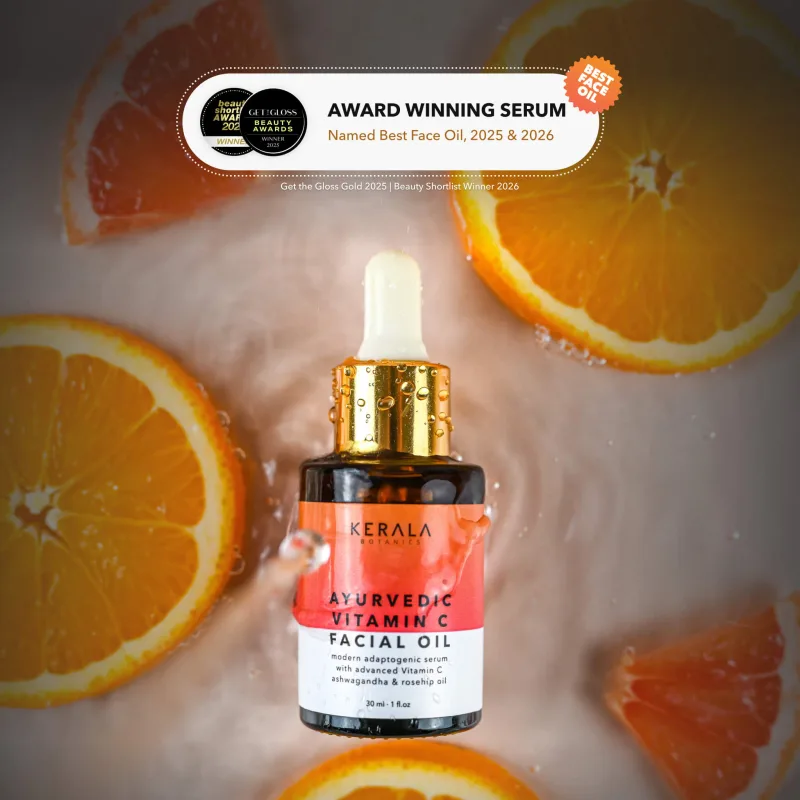
Ayurvedic Vitamin C Face Oil
Kerala Botanics
$49
★★★★☆
Adenosine vs the other wrinkle actives
A quick reality check on where it lands.
| Ingredient | Evidence strength | Irritation risk | Best for |
|---|---|---|---|
| Tretinoin / retinoids | Strongest, decades of trials | Moderate to high | Visible lines, long-term results |
| Adenosine | Modest, regulator-recognized | Low | Sensitive skin, gentle maintenance |
| Peptides | Varies widely by type | Low | Firming support |
| Bakuchiol | Limited but growing | Low | Retinol-averse users |
| Argireline | Weak | Low | Not much; see our Argireline breakdown |
Adenosine sits in a nice middle spot. More regulatory backing than most “gentle” actives, much less intensity than retinoids.
Mistakes to avoid
- Expecting retinol-level results. The approval is real. The effect size is modest.
- Buying on the word “adenosine” alone. Check the formula, and look for brands that disclose concentration.
- Stacking five adenosine products. More isn’t better. One good one is enough.
- Skipping sunscreen. We said it already. We’ll say it again.
Putting it all together
Adenosine earns its spot because it’s gentle, well tolerated, and recognized by Korea’s MFDS for wrinkle improvement. The trials behind that recognition measured real things, like wrinkle depth and roughness from skin replicas and image analysis, usually over 8 to 12 weeks. They’re also small, often company-run, and focused on fine lines near the eyes.
So here’s our take. If your skin can’t handle retinol, or you want a low-effort maintenance step, adenosine is a smart addition. If you want dramatic change, pair it with a retinoid and daily SPF, and treat adenosine as the supporting act.
Pick one good product, use it twice a day, take a photo, and give it three months. Quiet ingredients work quietly. That’s the whole point.